For more than 50 years, CSPI has worked to improve the quality and safety of food, remove harmful food additives from shelves and lunchrooms, provide access to nutritious meals, assure informative and accurate food labeling, and advance public health while fighting for better regulations against misleading (and dangerous) food and supplement marketing.
In 2025, we faced many challenges. Our role as your go-to organization for protecting public health was more crucial than ever, as the administration took aim at critical components of a healthy country, including food and vaccine access, reliable information about food insecurity, a well-staffed food safety system, and scientifically sound policies for diet and disease prevention. Through it all, CSPI kept working—and winning—to improve food safety, nutrition, and health for all.
We close this year with a list of accomplishments that include the removal of harmful additives from the food supply, better oversight for keeping infant foods safe, healthy retail policies that work in the real world, and a major win in the courts that restored thousands of biomedical grants wrongfully canceled from scientific research.
Because we accept no donations from industry, we are able to do this work only with support from people like you. Here’s what we accomplished together in 2025.
Food safety wins in 2025
This year, CSPI led and supported efforts that reduced risk to consumers by targeting potentially dangerous ingredients and practices. We collaborated with policymakers, scientists, and communities to push for changes that protect the most vulnerable in our food system and ensure safer products across the market. Our work helps ensure that what ends up on the grocery shelf and in the lunchroom is not only nourishing but safe.
- In 2022, CSPI and 23 other organizations and prominent scientists petitioned the FDA to finally keep its promise—made in 1990—and ban all remaining uses of Red 3. In January, in response to a petition from CSPI, the FDA moved to eliminate Red 3 from foods, dietary supplements and ingested drugs. Learn more: Red 3: FDA finally bans cancer-causing food dye
- With CSPI’s support, in Sep. 2025, the California legislature passed a landmark food safety and school nutrition bill—Assembly Bill 1264, which enshrines a definition of ultra-processed food, or UPF, that integrates nutritional concerns and more comprehensively captures chemical safety concerns. Learn more: How does CA AB 1264 categorize foods?
- Our work to close the “GRAS” loophole—an often-abused gap in FDA oversight that allows food manufacturers to use any ingredients they like without notifying the agency—compelled Sec. Robert F. Kennedy, Jr.’s HHS to consider GRAS reform. Learn more: Is RFK Jr. walking the walk? MAHA Report promises updates while New York acts on GRAS
- Following years of pressure to remove certain harmful additives from the food supply, especially petroleum-based food dyes, some corporations are running ahead of the FDA and voluntarily cleaning up their ingredients lists—and we’re keeping watch to make sure they follow through. Learn more: Synthetic Dyes Corporate Commitment Tracker
- CSPI joined other consumer advocates, public health groups, food companies and trade associations in writing a letter urging Sec. Kennedy to support the Foodborne Diseases Active Surveillance Network (FoodNet), the only active foodborne illness surveillance network in the United States, as well as other programs critical for solving foodborne illness outbreaks within the US. Learn more: Letter to HHS Sec. Kennedy: Restoring the Foodborne Diseases Active Surveillance Network
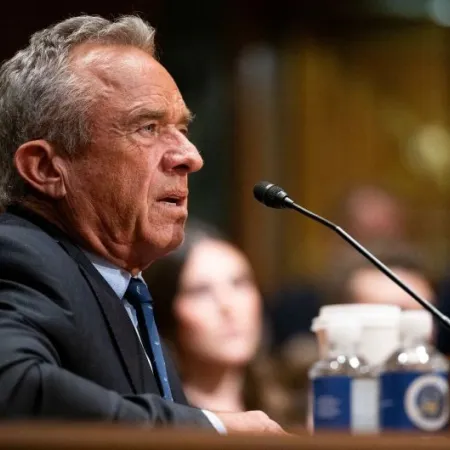
- CSPI was successful in leading an effort to restore funding to the CDC Division of Environmental Health Science and Practice. After Sec. Kennedy eliminated the entire office that protects the public from exposure to environmental health hazards, we sounded the alarm in a letter signed by a dozen groups. That led to congressional questioning of Kennedy and coverage by National Public Radio of the consequences of shuttering the office that is responsible for protecting against contaminants in food and water, infectious disease outbreaks in restaurants and on cruise ships, air pollution, radiation and chemical weapons exposures, mold, and other outbreaks caused by toxic substances. Learn more: Health groups call on RFK, Jr., to restore fired staff in lead prevention, other environmental health programs
- CSPI and our partners in the Safe Food Coalition are urging the Trump administration to take immediate action to protect the safety of infant formula following the outbreak of Clostridium botulinum infections linked to ByHeart infant formula. The ongoing outbreak has exposed dangerous deficiencies in the inspection and public health systems that should ensure the safety of the nation’s youngest and most vulnerable consumers. Learn more: Safe Food Coalition urges FDA to strengthen inspection and regulation of infant formula in the wake of ByHeart botulism outbreak
Public health achievements in 2025
One of the year’s most significant victories was a court decision that restored thousands of biomedical research grants wrongfully canceled by NIH. This ruling not only salvages critical research projects but also demonstrates the importance of fair, evidence-based decision-making in awarding and maintaining research grants.
- CSPI’s Litigation Department and its co-counsel at the ACLU, Protect Democracy Project, and the Emery Celli law firm sued NIH and HHS, challenging a new policy that led to the abrupt and unlawful cancellation of research grants based on the Trump Administration’s claim that they involved certain disfavored topics, such as DEI, gender identity, vaccine hesitancy, and more. Plaintiffs include organizations whose work involve health research and four individual researchers, including Peter Lurie, CSPI’s President and Executive Director. In June, the court ruled in our favor and ordered that the new policy and resulting grant terminations be set aside. The Defendants appealed and sought to stay (that is, pause the enforcement) of the Order. That issue went all the way to the U.S. Supreme Court on its Emergency Docket. As such, there was no oral argument or full briefing. The Court issued a preliminary 5-4 decision, staying the part of the Order on the grant terminations, but not the part on the new policy. As of the time of this writing, we are defending the decision on appeal, with oral argument scheduled for early January, and we are litigating remaining issues at the district court. Once the appeal decision comes down, we might end up back at the Supreme Court, this time for a full appeal on the merits. Learn more: CSPI’s NIH Grants Termination case
- 2025 saw many changes to federal vaccine policy and programs, some of which threaten to harm the health and safety of millions of Americans. In response, in May 2025, CSPI launched The Straight Shot, our ongoing list to watch for federal vaccine policy updates. This list—drawn from news reports and other information—ranks the most significant changes to vaccination policy, with brief commentary from the editors. Learn more: The Straight Shot
- In September, the FDA agreed for the first time to release documents explaining why it had refused to approve a drug, allowing the public much more visibility into drug approval processes. Learn more: FDA releases denial letters for unapproved drugs, a step toward transparency
- When Sec. Kennedy fired an entire federal vaccine advisory panel, he described the unprecedented move as necessary to rid the committee of industry influence. Our research showed that wasn’t true at all. “Secretary Kennedy is right that conflict of interest is an important issue, but he is wrong that it is present at substantial levels on HHS vaccine advisory committees,” said co-author Peter Lurie, president of the Center for Science in the Public Interest and former FDA associate commissioner. Learn more: Conflicts of interest on CDC vaccine panel were at historic lows before RFK Jr. dismissal
- In August, Chicago Mayor Brandon Johnson signed an executive order establishing nutrition standards for foods and beverages sold or served on city-owned property. Through our partnership with CityHealth, CSPI provided technical assistance to city officials as they developed the policy. Learn more: Mayor Johnson Signs Executive Order Establishing Nutrition Standards For Foods And Beverages Sold Or Served On City Property
CSPI’s work to improve kids’ health
Protecting the youngest consumers remains a top priority. In 2025, CSPI championed stronger oversight and clearer standards for infant foods, advocating for oversight mechanisms that detect and prevent unsafe formulations. The push toward stricter testing, more transparent labeling, and rapid response to emerging safety concerns reflects our commitment to safeguarding infants and families.
- With CSPI’s support, the California legislature passed SB646, the first law in the nation to require testing and public disclosure of toxic heavy metals in prenatal supplements. This landmark bill will protect maternal and fetal health by requiring manufacturers to test for and disclose levels of arsenic, cadmium, mercury, and lead—substances that can impair neurodevelopment and cause other serious harms. Learn more: CA legislature passes bill to protect against toxic heavy metals in prenatal vitamins
- In September, the California legislature passed yet another landmark food safety and school nutrition bill—Assembly Bill 1264—following up on last year’s California School Food Safety Act and the California Food Safety Act of 2023. The bill will benefit public health by eliminating foods from school cafeterias that are clearly nutritionally unhealthy and laden with unsafe additives and help industry identify products to reformulate or discontinue. Learn more: California continues leading charge on advancing school food safety and nutrition
- In January, following years of urging from CSPI and other organizations, the FDA issued final guidance for lead action levels in baby foods. Though this action is imperfect, it does improve the safety of children’s foods. Learn more: FDA issues final guidance for lead action levels in baby food
- In February, CSPI sent a letter to the Better Business Bureau’s Children’s Food and Beverage Advertising Initiative (CFBAI), citing 10 digital marketing violations by five major food companies of voluntary pledges not to advertise food to kids. We found the violations on YouTube Kids. The CFBAI responded by removing the offending marketing. Learn more: CSPI and advocates urge crackdown on youth-targeted predatory food marketing citing new TikTok ad study
- With support from CSPI, New York and Colorado joined seven other states in guaranteeing healthy school meals for all students at no charge. Our efforts to expand universal school meals are not new, but interest grew rapidly in 2025 as more states passed budgets and legislation to fund school meal programs that provide nourishing lunches and breakfasts to all students, regardless of income. Learn more: The benefits of healthy school meals for all
Transparent and informative labeling wins this year
This year, CSPI’s work advanced labeling transparency to empower healthier choices. These new regulations will help consumers quickly and confidently compare foods and alcoholic beverages, and provide more information to shoppers so they can make healthier choices without reading between the lines of marketing spin.
- CSPI first petitioned the FDA to require clear and concise front-of-package labels in 2006, then again in 2022. In January, the FDA proposed a rule requiring front labels of packaged foods to show whether the foods are high, medium, or low in saturated fat, sodium, and added sugars. Learn more: FDA proposes mandatory front-of-package nutrition labels
- In 2003, CSPI petitioned the Treasury to require similar disclosures. And in 2022, we and two other consumer groups sued the department for 19 years of inaction on our petition. In January, the Treasury Department proposed a rule that would require most alcoholic beverages to carry a Nutrition Facts-like label showing the percent alcohol by volume, alcohol content in fluid ounces, and calories, fat, protein, and carbohydrates per serving. (Sugars would be optional.) A second rule would require labels to disclose major food allergens. Learn more: U.S. government proposes alcohol labeling rules to advance transparency, health, and safety
- The FDA updated its criteria for foods that voluntarily make a “healthy” claim. Under the new rule, which limits added sugars, “healthy” foods must provide servings of fruits, vegetables, protein, whole grains, or low-fat or fat-free dairy. Also allowed: bottles of oils (like olive and most other vegetable oils) that are predominantly unsaturated. Learn more: FDA’s updated definition of 'healthy' aligns food labels with nutrition guidelines
- CSPI joined a federal appeal attempting to reverse a district court decision that would make it easier for the food industry to deceive consumers. The case against Back to Nature—which labeled a product “whole wheat” despite containing primarily refined white flour—was settled, with the company changing its “whole wheat” claims and agreeing to include a percentage of whole wheat declaration with any whole wheat ingredient listing. Learn more: Back to Nature: 'Whole Wheat' Crackers case
2025 healthy retail achievements
CSPI focused on creating practical, real-world policies for healthier retail environments. We emphasized strategies that retailers can implement without disrupting access or convenience for shoppers, while simultaneously reducing exposure to unhealthy options. These policies are designed to be enforceable, scalable, and effective in everyday consumer settings.
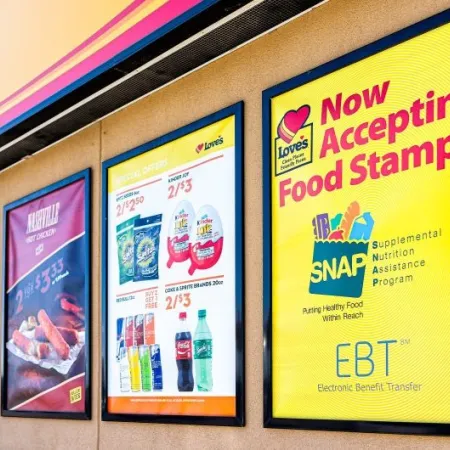
- Contra Costa County, California, became the first county in the nation to pass an ordinance that improves the nutritional quality of the foods and beverages sold in the only place in the grocery store through which every customer must pass : the checkout aisles. On Sep. 16, the county Board of Supervisors unanimously passed the policy, which will require grocery stores to swap out snacks and drinks high in sodium or added sugar at checkout aisles with healthier alternatives. Learn more: Contra Costa County, CA, advances nation's first county-level healthy checkout policy
A note on funding and our mission
CSPI envisions thriving communities supported by equitable, sustainable, and science-based solutions advancing nutrition, food safety, and health. CSPI is able to achieve these goals because we rely on support from people like you: individuals who share our commitment to public health. We do not accept donations from government or industry, which allows us to pursue independent, evidence-based advocacy and accountability.
Join us in 2026
We are grateful for the network of supporters who stood with us in 2025 and helped make these victories possible. Your continued support enables CSPI to keep pushing for safer foods, better labeling, and stronger protections for public health. If you believe in the work we do, consider joining us with a contribution. Together, we can build food and public health systems that are safer, more transparent, more sustainable, and healthier for all.