12 food swaps to lower sodium that may surprise you
Charlize D/peopleimages.com - stock.adobe.com.
A day’s worth of sodium is 2,300 milligrams, max, but it’s not always easy to stick to that target. If you’re trying to cut back on salt, some lower-sodium swaps are simple. The winners of these 12 matchups between competing foods may surprise you.
Note: Take them with, um, a grain of salt. They apply to most brands, but you can find an outlier in some cases. Always check the label.
This article comes from Nutrition Action. We don’t accept any paid advertising or corporate or government donations. Any products we recommend have been vetted by our staff and are not advertisements by the manufacturers. They’re just healthy foods we think you’d like to know about!
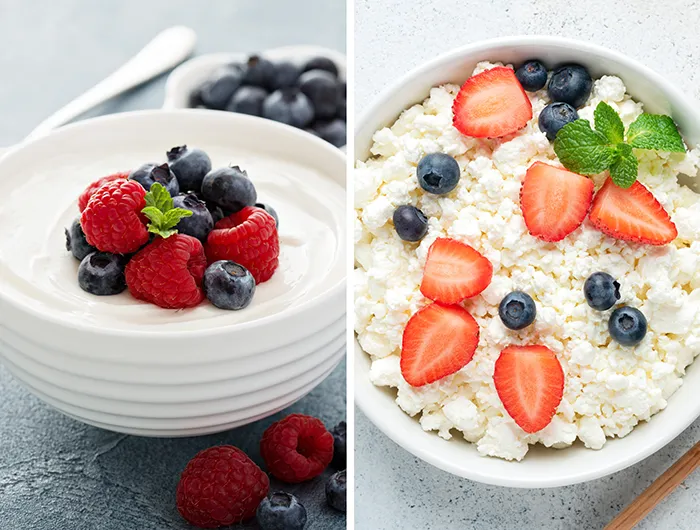
Is Greek yogurt or cottage cheese lower in sodium?
Winner: Greek yogurt. A 4 oz. serving of cottage cheese has around 300 to 500 milligrams of sodium, but a 6 oz. serving of plain Greek yogurt has a mere 50 to 90 mg.
That’s because, unlike cottage cheese, the yogurt has no added salt. And if you’re just having a bowl for a snack, it’s a snap to swap. Plus, you’ll get at least as much protein and calcium from the yogurt.
Love cottage cheese? Your best bets are brands that stay below 400 mg of sodium per 4 oz. serving (like Good Culture or Daisy).
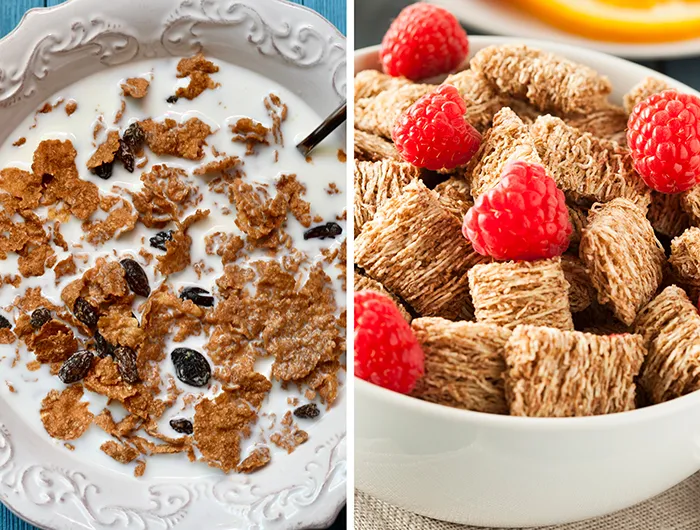
Winner: Shredded wheat. Cereal doesn’t taste salty, but added salt is common. That explains how a serving of most raisin brans, bran flakes, Wheaties, or Grape-Nuts fills roughly 10% of your daily sodium allotment.
Not so for shredded wheat (plain or sweetened). While Kellogg’s Raisin Bran has 210 milligrams of sodium, a typical shredded wheat cereal has 0 mg...and just as much fiber as the raisin bran (7 grams).
That said, sodium in any cereal isn’t sky-high. But if you enjoy a salt-free pick, it’s an easy way to save. And you can always add your own raisins.
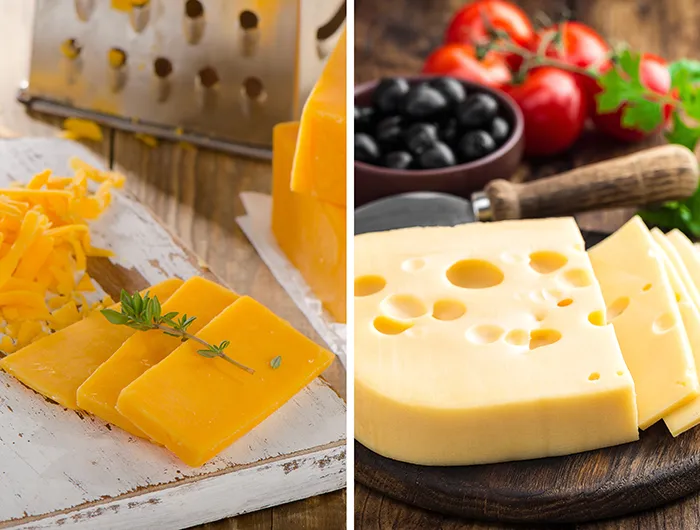
Winner: Swiss. The bad news: Cheese is a top source of sodium in the average US diet. The good news: Subbing Swiss for cheddar can shrink the amount of sodium that comes from your cheese. While 1 oz. of cheddar has around 200 milligrams of sodium, Swiss typically has no more than 100 mg. And it’s a smart swap for sandwiches.
More ways to cut your sodium intake: Top salads or bowls with soft goat cheese instead of feta, or make pizza with slices of fresh mozzarella instead of the usual shredded (“low moisture”) mozzarella.
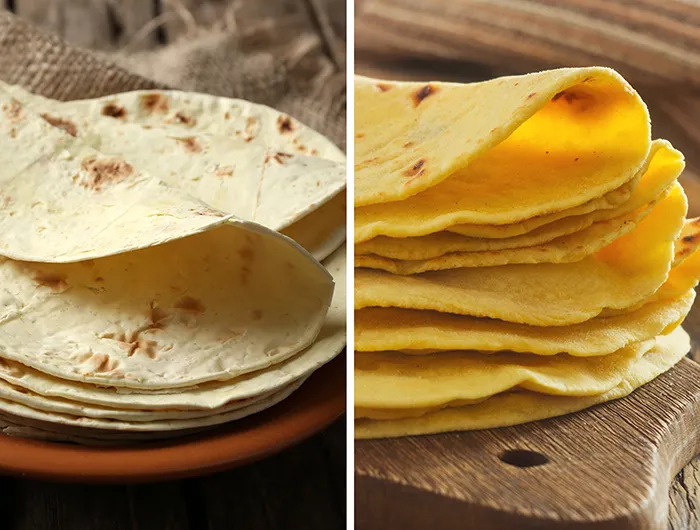
Africa Studio (flour tortillas)/ gossip7 (corn tortillas) - stock.adobe.com.
Winner: Corn tortillas. Choosing soft corn tortillas over flour can save you hundreds of milligrams of sodium. It doesn’t matter if the corn tortillas are white, yellow, or blue or if the flour tortillas are whole wheat or white.
Why? Flour tortillas add salt and other sodium-containing ingredients. Corn tortillas have neither. For example, a Mission soft taco flour tortilla has 410 mg of sodium, while the same-size serving of Mission corn tortillas has next to none (20 mg).
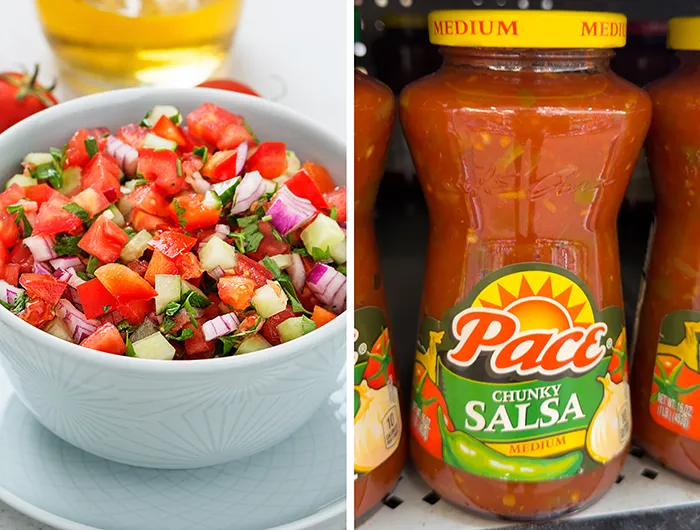
Nelea Reazanteva (pico de gallo)/ khosrork (pace salsa) -stock.adobe.com.
Winner: Pico de gallo. Refrigerated fresh salsas like pico de gallo or salsa fresca are typically made with chopped tomato, onion, and jalapeño plus a little salt. In contrast, jars contain shelf-stable salsas that have a tomato paste or purée base and, usually, more than a little salt.
For every two-tablespoon serving, you can expect at least 200 milligrams of sodium in most jarred salsas, but only 100 mg or so in most refrigerated ones.
A few hundred milligrams of sodium from a jarred salsa may not sound like much. But two tablespoons is a pretty small serving. If you’re dipping a pile of chips, the servings (and the sodium) can stack up.
So why not try a refrigerated fresh salsa? They’re not just lower in sodium. You might also prefer their fresh taste or firmer texture. Pico de gallo also makes a great topping for fish, chicken, tacos, or bowls.
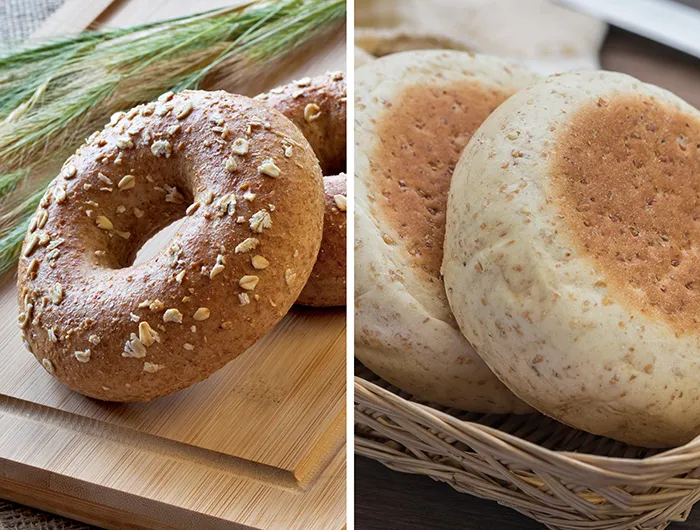
Winner: English muffin. An English muffin typically has less sodium than a bagel, but it’s largely a matter of portion size. For example, Thomas’ English muffins weigh 2 oz. each and bagels weigh 3 oz. each, so it’s no surprise that the muffins have roughly two-thirds as much sodium as plain bagels (240 vs. 390 milligrams). Whole-wheat varieties are similar (230 vs. 320 mg).
If you like both eating English muffins and saving salt, it pays to compare labels. Dave’s Killer Bread Rockin’ Grains has 300 mg of sodium, Thomas’ 100% Whole Wheat has 230 mg, and Food for Life Ezekiel 4:9 Sprouted Grain has just 160 mg. (Ezekiel is often found in the freezer case, not the bread aisle.)
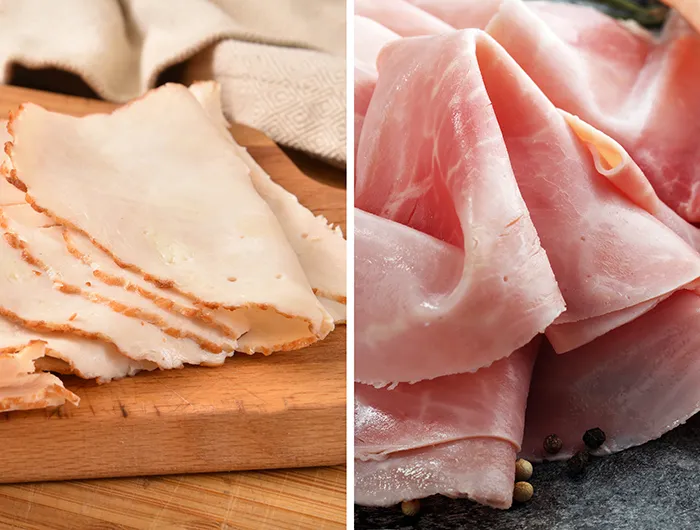
Winner: Deli turkey. Deli turkey typically has less sodium than deli ham, but the turkey doesn’t deserve much of a victory lap.
For starters, the savings aren’t huge...and the (2 oz.) servings are small. Take Hormel Natural Choice. Its Oven Roasted Deli Turkey has less sodium (460 milligrams) than its Smoked Deli Ham (560 mg) or Honey Deli Ham (590 mg). But with 20% of a day’s sodium max, the turkey is still high.
Like smoked deli turkey? You could end up with more sodium than you would with the plain roasted version. (Hormel’s smoked turkey has 490 mg.)
And keep in mind that all deli meats are processed meats, which have been linked to an increased risk of colorectal cancer. You’re better off stuffing your sandwich with fresh cooked (or leftover) chicken or turkey, chicken salad, or seasoned slabs of tempeh or tofu when you can.
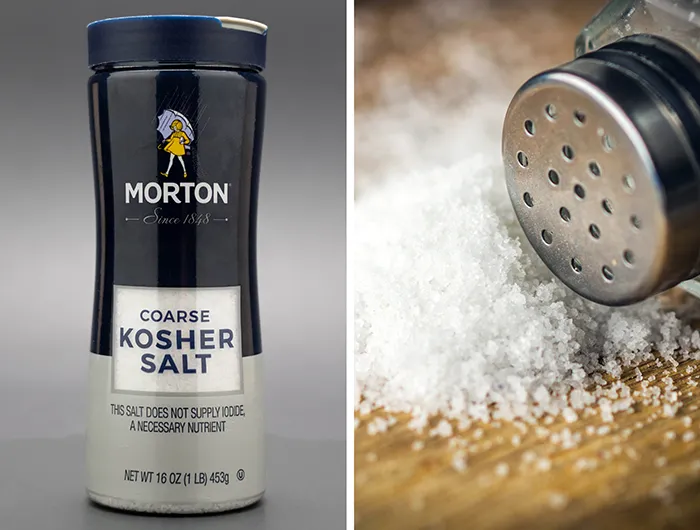
SRP (Morton kosher salt)/ Daniel Vincek (table salt) - stock.adobe.com.
Winner: Kosher salt. This one’s tricky. If you’re talking teaspoons, kosher salt wins: If you’re talking weight, it’s a tie.
All salt we use for cooking is made up of just two elements: it’s 40% sodium and 60% chloride. So if you weigh out 1 gram of kosher salt and 1 gram of table salt, they will have the same amount of sodium. Here’s the catch: kosher salt crystals are larger, which means there’s more air between them than between the tiny crystals of table salt. So if you measure out a teaspoon of kosher salt, it will contain less salt than a teaspoon of table salt. And less salt means less sodium.
How much less? A quarter teaspoon of a typical table salt like Morton has 590 milligrams of sodium. The company’s Coarse Kosher Salt Flakes have 480 mg. Even lower: Diamond Crystal Kosher Salt Flakes have hollow crystals, so you’ll get just 280 mg.
That gives you more wiggle room. Adding salt to taste? Each pinch of kosher salt delivers less sodium…which makes it easier to avoid over-salting your food.
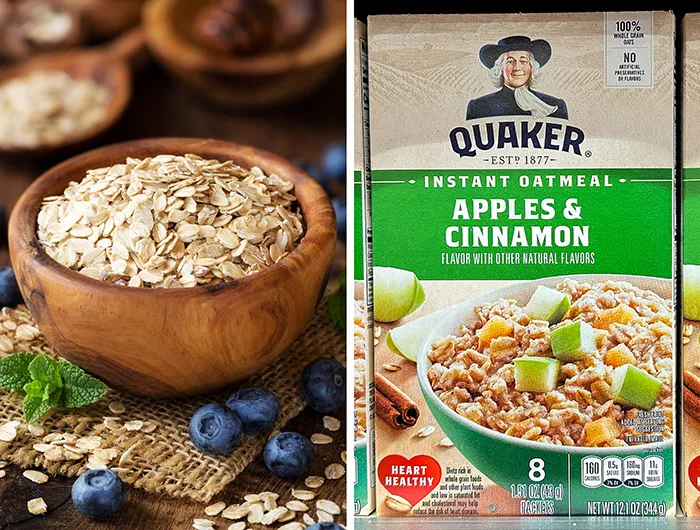
kuvona (oats)/ miro (Quaker apples cinnamon) - stock.adobe.com.
Winner: Popcorn. Popcorn outmatches pretzels...if you pick your popcorn wisely. (It’s easier to find lightly salted popcorn in pre-popped bags than in microwave bags.)
While a 1 oz. serving of pretzels has 250 to 400 milligrams of sodium, a 1 oz. serving of pre-popped popcorn can have less than 200 mg. Among the brands that make the cut: Skinny Pop Original (130 mg), Smartfood Simply Sea Salt (150 mg), Smartfood Simply White Cheddar (180 mg), and Whole Foods 365 Organic Classic Salted (190 mg).
What makes pretzels so reliably salty? The sodium is baked inside, not just sprinkled on top (like popcorn or chips). Even if you buy unadorned pretzels—like Snyder’s of Hanover Unsalted Mini Pretzels—you still get some sodium. (A serving of Snyder’s has 90 mg.) That’s true for both crunchy and soft pretzels.
What’s more, popcorn comes with another big plus: It’s 100% whole grain. In contrast, the grain in most pretzels is 100% white flour.
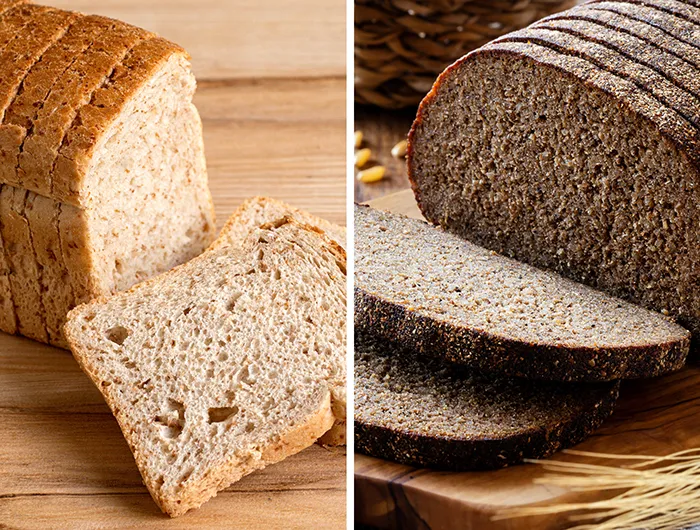
Moving Moment (whole wheat bread)/ kuvona (rye bread) - stock.adobe.com.
Winner: Whole wheat bread. You’d be surprised by how much sodium we get from bread. That’s not because a slice of bread is as salty as, say, a cup of soup or a slice of pizza. It’s because bread is a staple food and we eat so much of it. And that means finding a lower-sodium bread can make a big difference over time.
Among the saltiest: rye and pumpernickel. Brands differ, but every 1 oz. slice typically contains about 200 milligrams of sodium, twice as much as whole wheat bread’s 100 mg. In a two-slice sandwich, that’s 400 vs. 200 mg before you add any salty fillings like cheese, meat, or condiments.
Another way to cut back on sodium in bread: Lighten your loaf. Thin-sliced varieties have less bread, which means less salt, per slice.
New Africa (shrimp)/ chernikovatv (salmon) - stock.adobe.com.
Winner: Salmon. Like all meat and seafood, salmon or shrimp with no added salt still has a little naturally occurring sodium—roughly 60 milligrams (salmon) to 130 mg (shrimp) in a raw 4 oz. serving. That’s a difference, though not a big one.
But that’s about as high as plain salmon goes. Not so for shrimp; while brands vary, many add extra salt or sodium-containing additives (like sodium tripolyphosphate) to help retain moisture or color. In that case, a single serving of shrimp can supply as much as 500 mg of sodium...or more or less.
If you can, check the Nutrition Facts label. That’s easy to do on a frozen package. At the seafood counter, you can dodge sodium additives by asking for “untreated” shrimp. To avoid the same problem with scallops, check the label or ask the fishmonger for “dry-pack” scallops.
And keep in mind that some refrigerated or frozen raw chicken that looks plain has also been pumped with extra sodium. A phrase like “containing up to 10 percent of a solution of water and seasoning” on the front of the package is a clue. Check the Nutrition Facts label to see if it lists more than the 50 to 100 mg of naturally occurring sodium you’d get in 4 oz. of raw chicken.
CSPI heavily relies on our grassroots donors to fuel our mission. Every donation—no matter how small—helps CSPI continue improving food access, removing harmful additives, strengthening food safety, conducting and reviewing research, and reforming food labeling. We don't take donations from corporations, and our flagship publication, Nutrition Action, doesn't run any ads. That means that everything we do is fiercely independent and unbiased from any bad actors, no matter how powerful. To help keep this online content 100% free, consider donating today to support CSPI.