8 of the best healthy groceries to save time in the kitchen
New Africa - stock.adobe.com.
Why stockpile a stable of groceries that saves time in the kitchen? If you want to make your life easier, then your pantry, fridge, or freezer is a smart place to start. When life gets hectic, you can still get a healthy meal on the table in 15, 10, or even 5 minutes. Just pick a protein (we’ve rounded up four ideas), pick a carb (we’ve got four of those too), add a vegetable, and you’re in business.
This article comes from Nutrition Action. We don’t accept any paid advertising or corporate or government donations. Any products we recommend have been vetted by our staff and are not advertisements by the manufacturers. They’re just healthier foods we think you’d like to know about!
4 healthy proteins that save time in the kitchen
These easy proteins are all pre-prepped, pre-seasoned, or pre-cooked. And we’re talking tofu, salmon, and chicken breast, so they’re also heart healthy. (By the way, so are beans—we’ve got plenty of ideas on that front too.) To keep the sodium in some pre-seasoned proteins modest, we had to be choosy, so check labels if you shop other brands.
1. Canned salmon
Marlena Koch – CSPI.
With no defrosting or cooking, canned salmon is low maintenance…but that’s not all. Compared to canned tuna, salmon is also lower in mercury and higher in healthy omega-3s. (Why worry about mercury? The developing nervous system is especially sensitive to it, so young children and anyone who is pregnant, breastfeeding, or planning a pregnancy face the greatest risks.)
The easy part: You can treat your canned salmon pretty much just like canned tuna. Three ideas:
Salmon salad: Jazz up canned salmon with some mayo or yogurt, celery, pickles, etc., then eat on bread or crackers.
Bean salad: Toss canned salmon with scallions, white beans, extra-virgin olive oil, a squeeze of lemon, freshly cracked pepper, and fresh parsley, dill, or chives.
Rice bowl: Mix canned salmon with sriracha mayo and pile it atop a bowl of brown rice and vegetables (try carrots, cucumbers, edamame, and/or bell peppers).
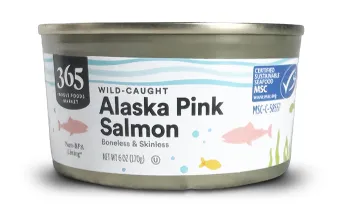
Canned salmon isn’t just a healthy shortcut. It also comes with an environmental bonus. What’s in the can is often wild salmon (pink or sockeye) that has been sustainably caught. Look for a blue “MSC” (Marine Stewardship Council) logo on the label. For more tips, check the Monterey Bay Aquarium’s sustainable salmon guide.
Tip: If you don’t want small bones, opt for boneless salmon that’s sold in flat tuna-sized cans (like the can in the photo), not tall ones. But if you’ve never had canned salmon with bones, you might be surprised. They’re soft enough to eat (honest!), and they come with 15% to 20% percent of a day’s calcium in 3 oz. Just mash the bones into the fish with a fork before you dive in.
2. Pre-seasoned tofu
Marlena Koch – CSPI.
Tofu doesn’t need to be cooked, so pre-seasoned tofu can leap straight from package to plate if you like it cold. (Chilled noodle salad, anyone?) And even if you’re heating up seasoned tofu for a warm dish, it only takes a minute or two.
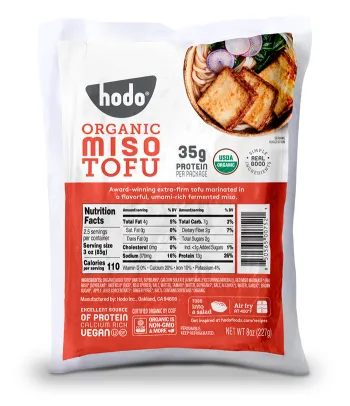
As for flavor, it’s hard to find a brand that seasons its tofu better than Hodo. For many Asian-inspired dishes, you can’t go wrong with Hodo Organic Miso Tofu (red miso paste, tamari, garlic, ginger purée). A 3 oz. serving offers 13 grams of protein with a reasonable dose of sodium (370 milligrams) and added sugars (less than 1 gram). If your supermarket doesn’t stock Hodo, try Nasoya Sesame Ginger TofuBaked. And if you prefer a dose of heat, try Trader Joe’s Sriracha Flavored Baked Tofu.
Note: On August 31, Hodo voluntarily recalled certain lots of the company’s Lightly Fried Chili Crisp Tofu because printing ink from the product packaging may have migrated into the product.
3. Raw chicken breast cuts
Marlena Koch – CSPI.
If you’ve ever plopped a chicken breast into a skillet, you probably had more than a little time on your hands until it finished cooking through. Cutting the raw breast into strips or bite-size pieces saves cooking time but adds prep time.
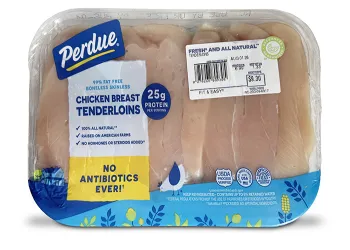
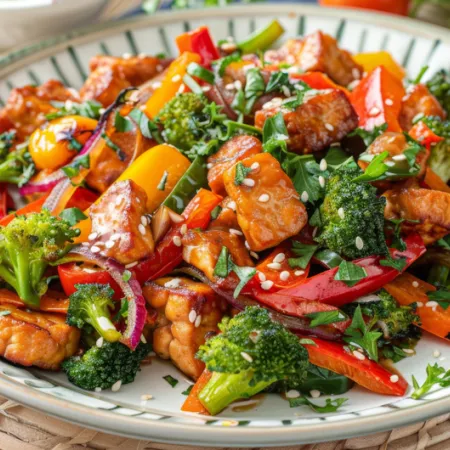
Solution: Buy raw chicken breast tenderloins. The thinner, more tender, and more delicate cut comes attached to the chicken breast but is often removed and sold separately as boneless, skinless “tenderloins.” And starting with those smaller tenderloins cuts down on the time it takes to sauté or stir-fry chicken breast.
Another option: Buy thin-sliced chicken breasts or cutlets. They’re boneless, skinless, and have already been cut into thin slices that cook through in a flash. For raw chicken, that’s as close to fast food as you can get.
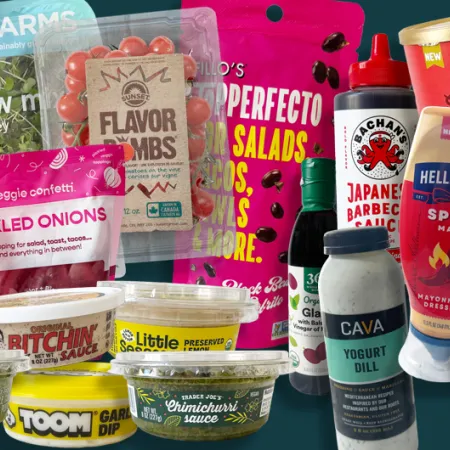
What happens next? If you need a dressing or sauce that adds fast flavor, pick one of our favorites. When you have more time, try one of our recipes that call for thin-sliced chicken breast or tenderloins:
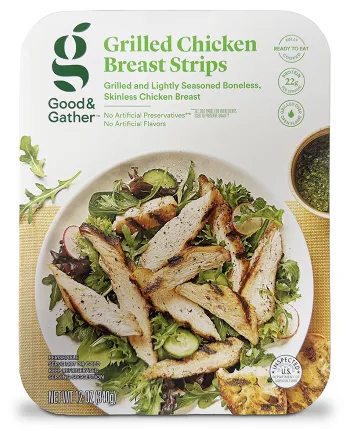
It’s hard to imagine how refrigerated grilled chicken strips could get any simpler. Step one: Open package. Step two: Add to your salad, wrap, pasta, or grain bowl. Step three: Eat. Granted, you’ll pay more than you would for raw chicken, but it beats paying a premium for takeout when time is tight.
But not all brands are equal. Some are saltier than others. For example, a 3 oz. serving of Perdue Shortcuts Grilled Chicken Breast Strips (410 milligrams of sodium) or Applegate Naturals Grilled Chicken Breast Strips (400 mg) approaches 20% of an adult’s daily recommended sodium maximum. To shave some salt, look for Target’s Good & Gather Grilled Chicken Breast Strips (260 mg in 3 oz.), Trader Joe’s Grilled Chicken Breast (230 mg), or another brand in the same ballpark.
Many supermarkets also carry shredded pre-cooked chicken, which is great for tossing with barbecue sauce, making chicken salad, or adding to soup. But with a little planning, it’s a snap to save a few bucks and make your own shredded chicken with this hands-off method:
Place a few raw boneless, skinless chicken breasts in a slow cooker.
Add enough water or broth to cover the chicken.
Cook on low for about 4 to 5 hours.
To be sure the chicken is done, check the internal temperature. (A digital food thermometer inserted in the center should show 165º F or higher.)
While the chicken is still warm, transfer it to a cutting board and shred with two forks, then refrigerate.
Tip: Want a plant-based quick “chicken” alternative? Daring, Abbot’s, and Beyond make some of the best ones we’ve found.
4 healthy carbs that save time in the kitchen
To save time on healthy carbs, choose whole grains that are pre-cooked or quick-cooking and opt for starchy vegetables that you don’t need to peel.
1. Whole wheat pasta
Marlena Koch – CSPI.
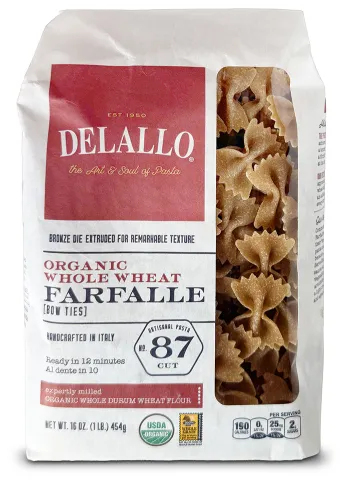
Whole wheat berries have a nutty, satisfying taste and texture, but they can take up to an hour to cook. Whole wheat pasta offers that same nuttiness but on a tighter timetable. Once your water is boiling, most shapes hit “al dente” in under 10 minutes. “Thin spaghetti,” capellini, or angel hair gets there faster (about 3 to 6 minutes).
More good news: You’re getting top-tier whole-grain goodness. A 2 oz. (dry) serving of whole wheat pasta—which makes about 1 cup cooked—is a rich source of fiber (5 grams) and delivers 8 grams of protein and 10% to 15% of a day’s iron, magnesium, and zinc.
Can’t eat wheat? If you need a fiber-rich gluten-free alternative, try a legume pasta made from chickpeas, lentils, or beans. While whole wheat pasta is usually a bargain, legume pasta doesn’t always come cheap. But it’s worth it if you need to avoid gluten or want a vegetarian protein source; most varieties of legume pasta naturally have at least 50% more protein than whole wheat pasta.
2. Pre-cooked whole grains
Lindsay Moyer - CSPI.
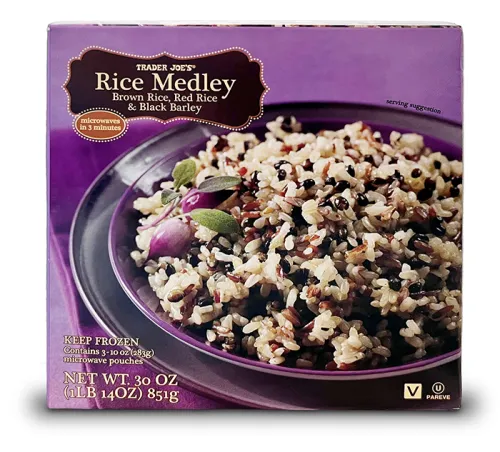
Quinoa takes at least 15 minutes to cook. Brown rice takes 30 to 45 minutes. But shelf-stable or frozen pre-cooked pouches of those whole grains take just 1-1/2 to 3 minutes to reheat in the microwave. Talk about timesavers! Maybe that’s why so many brands offer pouches nowadays. Which to choose? Three things to consider:
Brown rice, quinoa, or a blend? Most brands offer brown (or purple) whole-grain rice, but a few toss in quinoa or other grains (like the blend of brown and red rice and black barley in Trader Joe’s Rice Medley). Quinoa or other whole grains can bump up the 3 grams of fiber and 5 grams of protein in a typical 5 oz. cup of brown rice by a couple grams or so…and add a satisfying chew.
Frozen or shelf-stable? Both are speedy. You can microwave shelf-stable products in 90 seconds or frozen ones in 3 minutes. If you won’t use a full pouch at once, a frozen grain is your friend. That way, you can heat up your serving in a bowl and stow the rest in the freezer. And frozen rice often exits the microwave tasting a little more freshly steamed.
Salted or unsalted? We found a bunch of whole-grain pouches with a reasonable dose of added salt—that is, 300 milligrams of sodium or less per serving—but some have hundreds of milligrams more, so check the Nutrition Facts Labels. Or just check our list (see below). Better yet, go with an unsalted product (we also have a list of those). That way, you gain the flexibility to add a salty sauce or your own salt later, depending on what you’re cooking.
Tip: Don’t want to worry about heating any chemicals that might be in the packaging? You can empty the contents of a microwaveable pouch into a microwave-safe ceramic or glass bowl beforehand.
Frozen whole grains with no added salt
Birds Eye Steamfresh Whole Grain Brown Rice
Grain Trust Steamed Brown Rice
Trader Joe’s Brown Rice
Trader Joe’s Organic Brown Rice
Trader Joe’s Rice Medley
Whole Foods Market 365 Organic Whole Grain Brown Rice
Shelf-stable whole grains with no added salt
Earthly Grains Whole Grain Brown Rice
Jasberry Organic Original Superfood Rice
Seeds of Change Organic Brown Basmati Rice
Target Good & Gather 90 Second Cultivated Wild Rice
Target Good & Gather Organic 90 Second Whole Grain Brown Rice
Shelf-stable whole grains with added salt (300 mg sodium or less per serving)
Eat Regal Brown Rice with 5 Ancient Grains (250 mg)
Seeds of Change Organic Quinoa & Brown Rice with Sea Salt (290 mg)
Seeds of Change Organic Spanish Style Rice with Quinoa, Peppers & Corn (300 mg)
Whole Foods Market 365 Organic White & Red Quinoa Blend (170 mg)
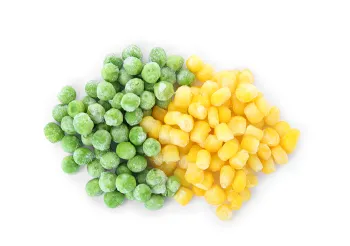
Because peas and corn are vegetables and starchy carbs, they can replace grains or potatoes. Or they can bulk up your grains with extra volume, sweetness, and staying power. And since peas are a legume, they come with a protein bonus: A 1/2-cup serving packs 4 grams of fiber and 4 grams of protein into just 60 calories. If you double the serving size, those numbers jump to bean territory. Corn has roughly half as much fiber and protein as peas (for about the same number of calories).
Frozen peas and corn are almost foolproof to heat, as long as you don’t overcook them. Need a little inspiration? For a simple side, sauté sliced mushrooms in olive oil until browned, add sliced scallions and thawed frozen peas and let them heat through, then season with salt. For frozen corn, try using cherry tomatoes instead of mushrooms. Or jazz up your cooked grains, stir-fries, or fried rice with a handful of either vegetable.
4. Delicata squash
MSPhotographic - stock.adobe.com.
Don’t get us wrong. We love digging into a pile of hearty butternut squash. But prepping it can be a labor of love, thanks to the peeling, de-seeding, chopping, and roasting. To simplify winter squash, do the delicata.
A delicata squash is more, well, delicate. You don’t need to peel its thin (edible) skin and you can easily cut it into halves or slices. Most of the time it takes to cook—that is, roasting in the oven—is hands-off. And, like any winter squash, you can expect a good helping of fiber, potassium, and other nutrients. Lucky you!
To prepare a delicata:
Cut it in half lengthwise.
Scoop out the seeds.
Brush with olive oil and place cut side down (or slice into inch-thick half-moons and toss with olive oil).
Roast in a 450º F oven until soft (about 30 minutes).
Tip: Delicata may be a “winter squash,” but you can find it as soon as summer winds down. The typical season runs from September to December.
CSPI heavily relies on our grassroots donors to fuel our mission. Every donation—no matter how small—helps CSPI continue improving food access, removing harmful additives, strengthening food safety, conducting and reviewing research, and reforming food labeling. We don't take donations from corporations, and our flagship publication, Nutrition Action, doesn't run any ads. That means that everything we do is fiercely independent and unbiased from any bad actors, no matter how powerful. To help keep this online content 100% free, consider donating today to support CSPI.