Most coffee creamers have a teaspoon of added sugars in every tablespoon. If they have cream—from cows or coconuts—it adds a gram or so of saturated fat. Is that a little or a lot? It depends on how many tablespoons of creamer you like in your cup…or cups…of coffee. Here’s what to consider.
This article comes from Nutrition Action. We don’t accept any paid advertising or corporate or government donations. Any products we recommend have been vetted by our staff and are not advertisements by the manufacturers. They’re just healthier foods we think you’d like to know about!
1. What does your serving of creamer look like?
An official “serving” of liquid creamer is only 1 tablespoon, Nutrition Facts labels say. But a serving of half and half is 2 tablespoons. And many coffee mugs hold at least 12 ounces—more coffee, more creamer. If your brew ends up looking more tan than brown, you might be using 3 or more tablespoons of creamer.
That’s why our picks for the healthiest creamers—we call them Best Bites and Honorable Mentions—keep a lid on saturated fat (no more than 1 gram per tablespoon). It also explains why our Honorable Mentions are capped at 2 grams of added sugars and our Best Bites have none.
But it’s important to keep things in perspective. A full day’s max is 20 grams for sat fat and 50 grams for added sugars. So if your favorite creamer isn’t as low as a Best Bite or Honorable Mention, its few extra grams aren’t going to derail a healthy diet. (For a closer look, try tracking what’s in the foods you eat for a few days.)
On the other hand, it is good to know how much creamer you’re getting. Our advice: Whip out a tablespoon and measure your typical pour.
Tip: Many brands lean sugary. By the time your coffee is as creamy as you want, it might be sweeter than you need. Solution: Start with a tablespoon of sweetened creamer, then top it off with dairy milk or unsweetened plant milk.
2. The healthiest dairy ‘creamer’ is milk
When you’re looking at just a tablespoon, any kind of dairy milk is low enough in saturated fat (half a gram or less). And you get a little natural sweetness from the milk’s lactose (milk sugar), with zero added sugars. Hello, Best Bites!
In contrast, sugar-sweetened flavored dairy creamers like Chobani, Natural Bliss, and Starbucks Sweet Cream have at least a teaspoon (4 or 5 grams) of added sugars in every tablespoon. Newcomer Too Good & Co. cuts that down to 3 grams. While Too Good just misses our Honorable Mention cutoff, it does better than most sugar-sweetened dairy creamers (and it’s delicious).
3. Plant milk creamers have perks
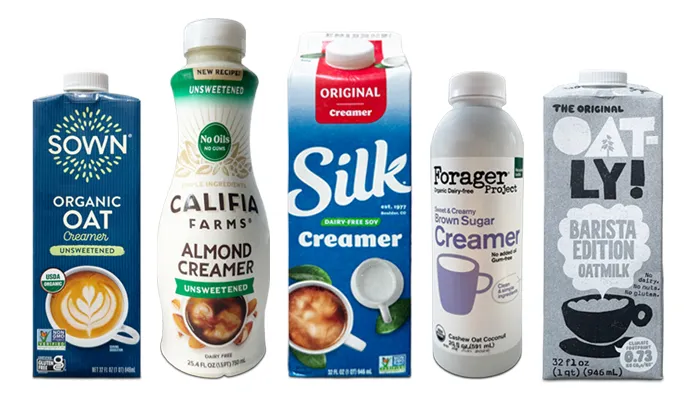
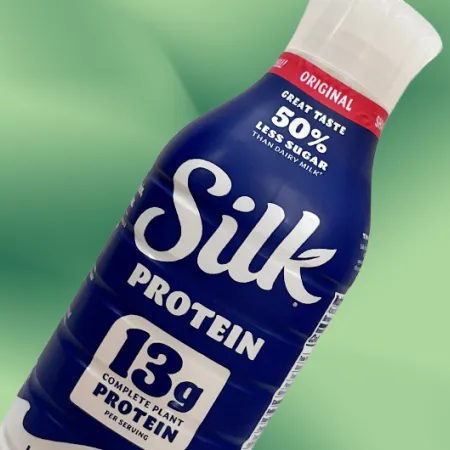
Not sure where to start with plant milk creamers? Try one of our favorite Best Bites (Sown Organic Unsweetened Oat, Califia Farms Unsweetened Almond) or Honorable Mentions (Silk Original Soy, Forager Project Organic Brown Sugar, Oatly Barista Edition Oatmilk).
Marlena Koch – CSPI.
Most of our Best Bites and Honorable Mentions are plant milk creamers. Even if you typically drink dairy milk, plant creamers are worth a sip. (Check the photo for some great-tasting picks.) Among their perks:
You get mostly healthy fats. Most plant creamers get their fat from nuts or healthy oils like sunflower or canola, so a tablespoon rarely contains more than a trivial amount of saturated fat. Exception: Some creamers contain enough coconut cream to add a gram or so of sat fat.
Unsweetened options abound. Califia, Elmhurst, Forager Project, NutPods, and Sown churn out an impressive array of almond milk, oatmilk, cashew, and almond-coconut plant-based creamers with no added sugars or sweeteners. And NutPods even offers unsweetened flavors like Caramel, Hazelnut, Coffee Cake, and Toasted Marshmallow.
Barista blend milks can double as creamer. They’re not labeled “coffee creamer,” but barista plant milks, which are intended for lattes, cappuccinos, and more, are designed to hold up to foaming and not separate in coffee. And a creamer-size serving typically contains little or no added sugars.
Plant creamers can come with a shelf-life bonus. Dairy creamers typically last a week in the refrigerator after you open them, but many plant creamers last at least twice that long (check the label).
All plant creamers are lactose-free. Lactose intolerant? Plant creamers are free of the lactose that’s found in dairy milk.
4. Don’t confuse plant milk creamer with ‘non-dairy’ creamer
Make no mistake. Plant milk creamers tend to be healthier than what we like to call “sugar & oil” creamers (see our chart below). Those liquid creamers, along with their powdered counterparts, often have names like “non-dairy creamer.”
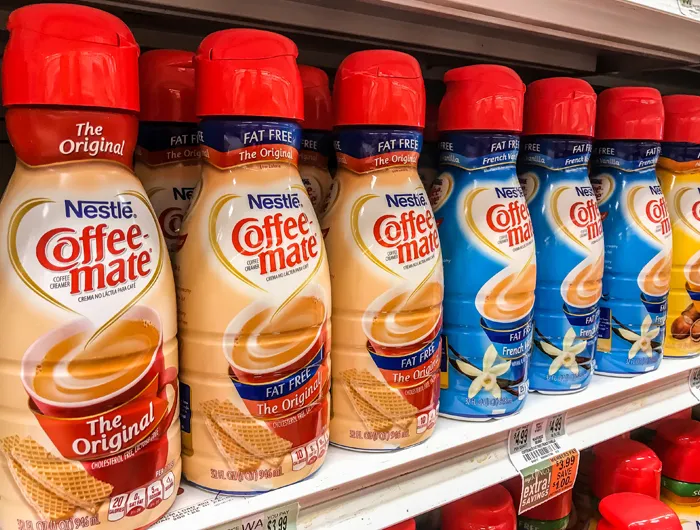
International Delight, Coffee-Mate, and similar sugar & oil creamers have no real milk. They’re mostly water, sugar, oil, and a smattering of food additives (including milk derivatives like sodium caseinate). Some sugar & oil creamers may be lactose-free (check the label). But if you have a milk allergy, don’t assume that “non-dairy” means they’re safe for you to consume.
5. Some low-calorie sweeteners are safer than others
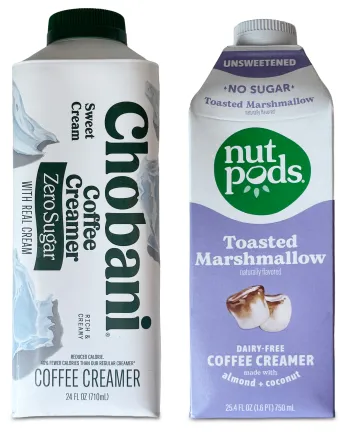
How two Best Bites dodge added sugars: Chobani gets plenty of sweetness from stevia extract plus allulose. NutPods is unsweetened. Which to choose? Follow your taste buds.
Marlena Koch – CSPI.
Most “zero sugar” creamers from big brands like Coffee-Mate and International Delight are sweetened with sucralose and acesulfame potassium, which we rate as “avoid” on our Chemical Cuisine additives guide because they may pose a cancer risk.
On the upside, Natural Bliss Zero Sugar and Chobani Zero Sugar creamers shun both of those ingredients in favor of a safer low-calorie sweetener: stevia extract.
Chobani also adds a little allulose, a naturally occurring sugar that our bodies don’t completely digest and absorb, so it may cause GI troubles in sensitive people who consume too much at one time. That’s why we rate allulose as “cut back.”
In one study, allulose led to diarrhea, bloating, or abdominal pain in some people after they consumed a drink with a single high dose (about 34 grams for a 150-pound person), but not after a lower dose (27 grams). That’s just one study—and it didn’t test people with irritable bowel syndrome or children—but it’s reassuring, given the tiny amount of allulose in the Chobani creamers.
A tablespoon of Chobani Zero Sugar has less than 1 gram of allulose. (How do we know? Nutrition Facts labels must count allulose in the grams of total carbohydrates, but not sugar. And Chobani’s label shows “<1 g” carbs per 1 Tbs. serving.)
On the downside, some people detect an aftertaste from low-cal sweeteners like stevia extract. If your taste buds prefer sugar, try any of our plant milk Honorable Mentions. Silk Soy Original and flavored creamers from Elmhurst, Forager Project, and Malk add just 1 or 2 grams of sugars per tablespoon. Nice!
6. Some gums or emulsifiers are safer than others
Many plant-milk and non-dairy creamers keep their oil, water, and other ingredients from separating by adding gums or emulsifiers like cellulose gel, gellan gum, and lecithin. That’s fine.
But other creamers add cellulose gum, carrageenan, or polysorbate 60, all of which we rate as “caution” in our Chemical Cuisine additives guide because they may pose a risk of cancer or digestive problems. With so many better options, we disqualified those creamers from earning a Best Bite or Honorable Mention.
Note: Cellulose gel (aka cellulose) and cellulose gum may sound similar, but they’re different ingredients (the gum is made by reacting cellulose with another compound).
7. It’s easy to avoid titanium dioxide
Titanium dioxide whitens foods, so it used to be a regular in coffee creamers. But nowadays, most big brands of liquid creamers don’t use the color additive, which is linked to DNA damage and is banned in Europe as a result. (Damaging DNA is one way that chemicals can lead to cancer or other health problems.) We rate titanium dioxide as “avoid.”
Titanium dioxide can still be used in creamers, so check the ingredients list. Unfortunately, that’s no guarantee, since the additive can hide behind vague names like “color added” or “artificial color,” which could mean titanium dioxide or safer colors. (There’s no way to tell unless you ask the company.)
8. Want cold foam? Try making your own
Want less added sugars and fewer additives than store-bought cold foam creamers? Make your own.
Marlena Koch – CSPI.
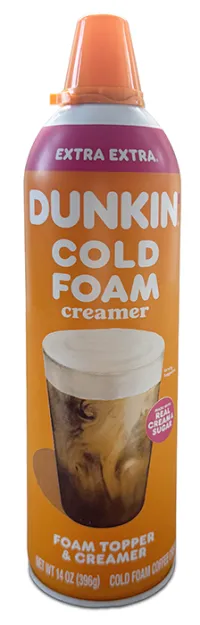
Cold foam has made its way from coffee shops to supermarkets. The trendy whipped-cream-like cans of foam dispense aerated creamer to top off your iced coffees or lattes in style.
We found just one cold foam creamer that’s free of disqualifying additives. But with its 4 grams of added sugars in 2 tablespoons, Silk Cinnamon Caramel Oat exceeds our Honorable Mention cutoff. (Cold foams have more air, so they have a larger, 2 Tbs. serving size.)
Another option: Make your own cold foam using a rechargeable milk frother. (They work on hot or cold milk or creamer.) Froth yours until it foams up, then pour it over your cup of coffee.
Our chart comparing the added sugars, saturated fat, and additives in coffee creamers
Best Bites (✔✔) and Honorable Mentions (✔) have no more than 1 gram of saturated fat in 2 tablespoons (cold foam creamers) or 1 tablespoon (all other creamers). Best Bites have no added sugars; Honorable Mentions can have no more than 2 grams.
We disqualified creamers (marked with •) that contain one or more of these additives: acesulfame potassium, carrageenan, cellulose gum, polysorbate 60, sucralose, or titanium dioxide.
Note: Unless otherwise specified, the numbers apply to all flavors in a product line. Within each section, creamers are ranked from least to most added sugars, then saturated fat.
Donate to CSPI today
CSPI heavily relies on our grassroots donors to fuel our mission. Every donation—no matter how small—helps CSPI continue improving food access, removing harmful additives, strengthening food safety, conducting and reviewing research, and reforming food labeling. We don't take donations from corporations, and our flagship publication, Nutrition Action, doesn't run any ads. That means that everything we do is fiercely independent and unbiased from any bad actors, no matter how powerful. To help keep this online content 100% free, consider donating today to support CSPI.