Which plant-based milks are healthy and higher in protein?
Lindsay Moyer - CSPI.
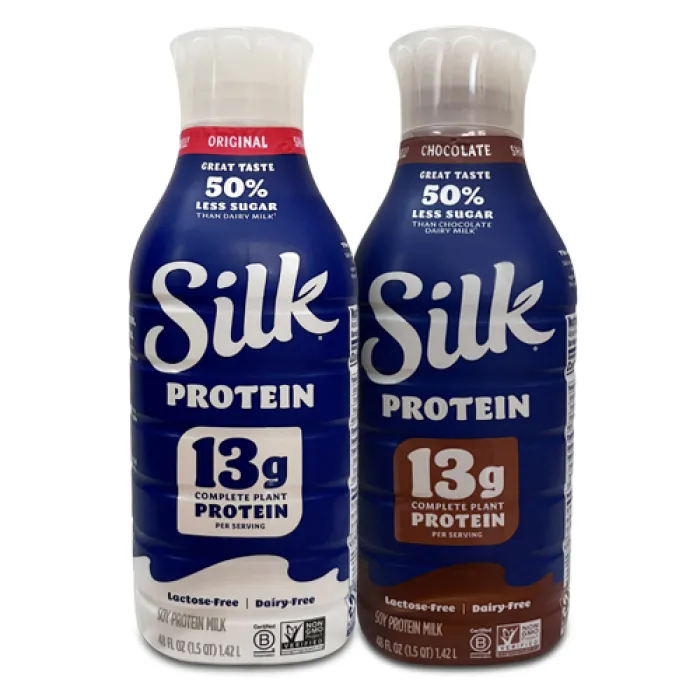
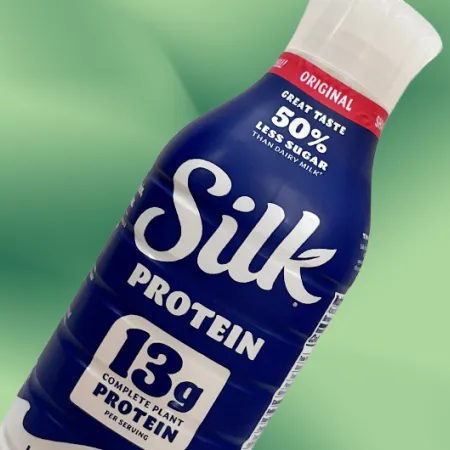
“Say hello to the pour that gives you more,” says Silk about its new Silk Protein Original, which the plant-based milk giant launched late last year.
More, indeed. While many companies are adding more protein to chips, pretzels, Pop-Tarts, and other junk foods we’re better off without, Silk is doing something right. They’re making sure healthy plant-based products have enough protein, vitamins, and minerals to mimic the cow’s milk they replace.
If you’re ditching dairy, here’s which plant-based milks from Silk and other brands are among the best options.
This article comes fromNutrition Action. We don’t accept any paid advertising or corporate or government donations. Any products we recommend have been vetted by our staff and are not advertisements by the manufacturers. They’re just healthier foods we think you’d like to know about!
What’s in Silk Protein?
True to its name, Silk Protein has more protein (13 grams per cup) than regular cow’s milk or soy milk (8 grams). That’s because it’s made from soymilk plus a little extra soy protein isolate.
The protein-boosted fortified soymilk also contains at least as much calcium, potassium, and vitamins A, D, and B-12 as dairy milk. And if you opt for Silk’s Original (not Chocolate) variety, each cup comes with just 3 grams of added sugars.
How does Silk Protein taste? Surprisingly sweet, considering that the Original variety has little added sugars and zero low-calorie sweeteners. The milk is also ultra-creamy yet low in saturated fat, thanks to its healthy (unsaturated) fats from soybeans.
More healthy plant-based milks that are higher in protein
Lindsay Moyer - CSPI.
While we haven’t found any major brands of plant-based milk that top Silk Protein’s 13 grams, many soy or pea protein milks have the same 8 grams of protein you’d get from dairy milk. Many—but not all—brands are also fortified with dairy milk’s key nutrients.
If you’re shopping for a healthy soy or pea protein milk that minimizes added sugars, here’s what to look for in a 1-cup serving:
No more than 5 grams of added sugars
No more than 1-1/2 grams of saturated fat
At least 300 milligrams of calcium (25% of the Daily Value)
At least 2.5 micrograms of vitamin D (15% of the Daily Value)
At least 8 grams of protein (but if a product has a little less—say, 7 grams—don’t sweat it)
You can check any soy or pea protein milk’s Nutrition Facts against that list of criteria. Or you can just look for one of these milks that fits the bill:
Silk Original Soymilk
Silk Protein Original
Silk Kids Oatmilk Blend Original (oatmilk with pea protein)
Ripple Kids—Unsweetened Original or Original
Ripple—Unsweetened Original or refrigerated Original*
*Note: the shelf-stable version of Ripple Original is slightly higher in added sugars (6 grams) than the refrigerated version.
Does “complete protein” matter?
“Unlike some protein sources, ours is a complete plant protein,” says Silk Protein Original. “All 9 of the essential amino acids your body can’t make on its own.”
Yes, the protein in soybeans—along with the protein in all dairy, meat, poultry, fish, and eggs—is “complete.” That means it contains adequate amounts of all the amino acids your body can’t make. Many other plant proteins fall short in some places. Grains, for example, are low in the essential amino acid lysine, and beans and peas are low in methionine.
But that only matters if you’re getting all your daily protein from a single food. When you eat a variety of plant foods (as most people do), you end up getting what you need. So if you prefer a plant-based milk made with pea protein (like Ripple or Silk Kids), don’t worry about the fact that peas aren’t a “complete” protein.
What’s a healthy plant-based milk for kids?
If you’re serving kids a plant-based milk, keep in mind that most almond, coconut, oat, and rice milks are low in protein (unless they have added protein from soy or peas). And as with adults, it’s also important for children to consume plant-based milks that have been fortified with the key vitamins and minerals that are found in dairy.
Depending on the age group, kids need nearly as much (or more) calcium and vitamin D as adults. That means all the recommended plant-based milks included in our list above are also good choices for children.
What about chocolate milk, the perennial kid favorite?
Most chocolate plant-based milks have more added sugars than “original” varieties. New Silk Protein Chocolate is the lowest in added sugars that we’ve found (7 grams), but it’s partly sweetened with stevia extract. That’s fine for adult chocolate lovers, but we don’t recommend giving any low-calorie sweeteners to youngsters because those sweeteners haven’t been tested for long-term safety in children.
Ripple Kids Chocolate skips the low-calorie sweeteners but adds a few extra grams of added sugars. With 9 grams per cup, it’s better consumed as an occasional treat than a daily staple. That’s especially true for younger children, who need fewer calories and have less room in their diets for added sugars (which have calories but no vitamins or minerals).
CSPI heavily relies on our grassroots donors to fuel our mission. Every donation—no matter how small—helps CSPI continue improving food access, removing harmful additives, strengthening food safety, conducting and reviewing research, and reforming food labeling. We don't take donations from corporations, and our flagship publication, Nutrition Action, doesn't run any ads. That means that everything we do is fiercely independent and unbiased from any bad actors, no matter how powerful. To help keep this online content 100% free, consider donating today to support CSPI.