What’s the best plant-based chicken that’s not breaded?
Lindsay Moyer, Marlena Koch – CSPI.
It’s been a big year for plants that taste like chicken.
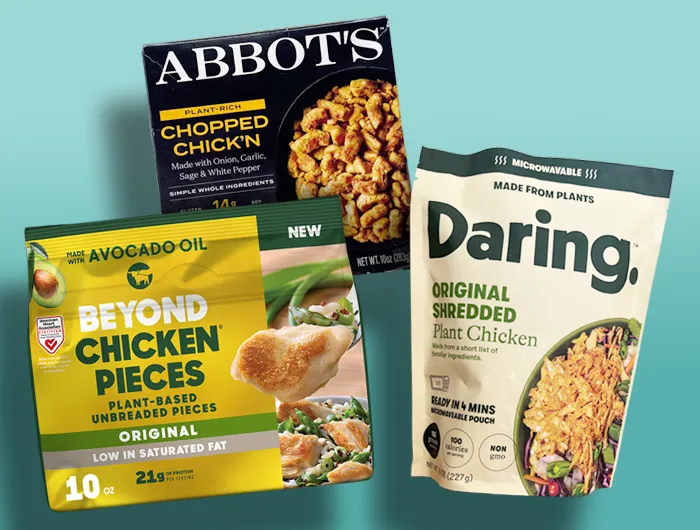
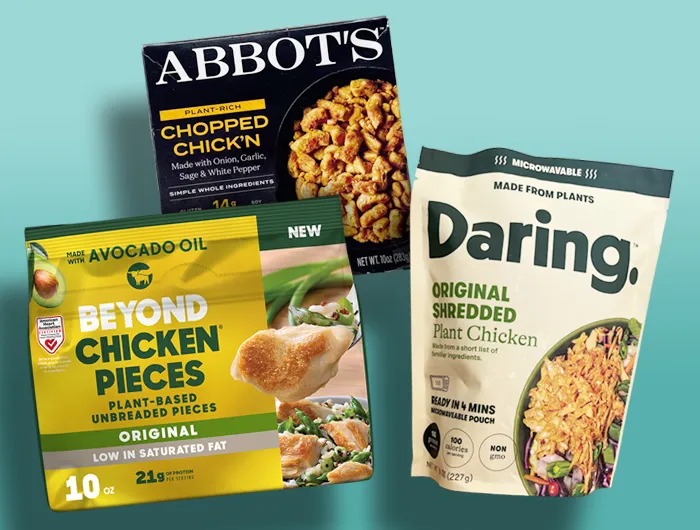
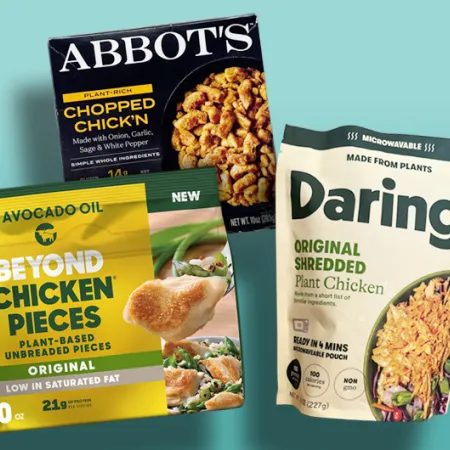
Last May, plant-based meat behemoth Beyond unveiled its new Beyond Original Chicken Pieces. And in November, Daring added Original Shredded and Original Diced Plant Chicken to its existing lines of pieces and breaded “wings.”
Take-home message: If you’ve always shied away from unbreaded “plant chicken,” it may be time to reconsider.
This article comes fromNutrition Action. We don’t accept any paid advertising or corporate or government donations. Any products we recommend have been vetted by our staff and are not advertisements by the manufacturers. They’re just healthier foods we think you’d like to know about!
The case for buying plant-based ‘chicken’
For decades, plenty of brands of plant-based chicken (or “chick’n”) have offered crispy breaded nuggets, patties, and tenders that taste, well, like chicken. But it’s proven more challenging to dupe the taste and texture of unadorned, unbreadedchicken.
We’re glad to see that Beyond, Daring, and other brands have finally cracked the code. It’s never been a better time to find a healthy...and tasty...plant-based chicken that can stand in for boneless, skinless chicken breast—whether you eat it as-is or in recipes like tacos, pastas, or stir-fries.
Why bother, though, if skinless chicken breast is healthy? For starters, vegetarians and vegans may want to toss a new taste into their tofu-tempeh-beans rotation. And anyone who’s trying to lighten their impact on the planet knows that producing foods made of soy, wheat, peas, or other beans is likely to emit fewer greenhouse gases than raising flocks of chickens.
On the other hand, plant-based chicken is typically more expensive. For example, our local Wegmans supermarket sells a 10 oz. bag of Beyond Chicken Pieces for $7.50. That works out to $12 a pound. Non-organic skinless chicken breast goes for $2.50 to $8 a pound.
So if you (or your pocketbook) prefer chicken breast, don’t sweat it. It’s still a healthy way to go.
What’s the healthiest plant-based chicken?
Lindsay Moyer, Marlena Koch – CSPI.
Pretty much any unbreaded plant-based chicken beats breaded varieties because it’s missing the refined (white) flour that surrounds breaded tenders, patties, and nuggets.
On the downside, even without breading, most plant-based chicken comes with more sodium than you might add yourself. You can usually expect less from “original” or unflavored varieties than from flavored ones (like Daring’s Cajun or Beyond’s Spicy Buffalo). A 3 oz. serving of any of these four “chickens” limits itself to roughly 15 percent of a day’s 2,300-mg sodium limit for adults:
Daring Original Shredded Plant Chicken (310 mg)
Beyond Original Chicken Pieces (340 mg)
Abbot's Plant-Rich Chopped Chick’n (380 mg)
Daring Original Diced Plant Chicken (420 mg)
Note: Daring Original Plant Chicken Pieces are noticeably saltier (530 mg).
Beyond helps reduce the sodium by adding potassium chloride (a salty-tasting potassium salt) to all three varieties of its plant-based chicken pieces. The Lemon & Herb (460 mg) and Spicy Buffalo (420 mg) have more sodium than the Original (340 mg). (The Lemon & Herb and Spicy Buffalo, which will hit supermarket freezer cases sometime this spring, are available now at beyondtestkitchen.com.)
Another plus: Beyond’s protein is almost as high as chicken breast’s (21 vs. 26 grams in 3 oz.) for about the same calories (130 vs. 140). Daring’s and Abbot’s plant chickens range from 14 to 18 grams of protein (for roughly 100 calories), so they’re not far behind.
What’s more, Beyond, Daring, and Abbot’s all have at least as much iron and potassium as chicken breast. They’re also just as low in saturated fat, thanks to healthy oils like avocado, olive, canola, and sunflower.
Tip: If you can’t eat gluten, stick to Daring or Abbot’s. Beyond contains soy protein and wheat gluten. Daring (soy protein) and Abbot (pea protein) are labeled gluten-free.
How to cook unbreaded plant-based chicken
Products vary, so follow the instructions on the package for your method of choice. Our favorite: a quick sauté. Don’t forget to add oil to the pan and break up any thick chunks or clumps as the pieces defrost. That’s the key to getting more of their surface area crispy and browned (hello, flavor!).
We even preferred Daring’s “microwavable” plant chickens after we gave them a crisp browning in a pan on the stovetop (just follow the packages’ instructions for pan-frying instead of microwaving). The shredded variety, with its thin and delicate pieces, is ready especially quickly when you sauté it. And its 310 mg of sodium is impressive for plant-based poultry. Winner, winner, chicken dinner!
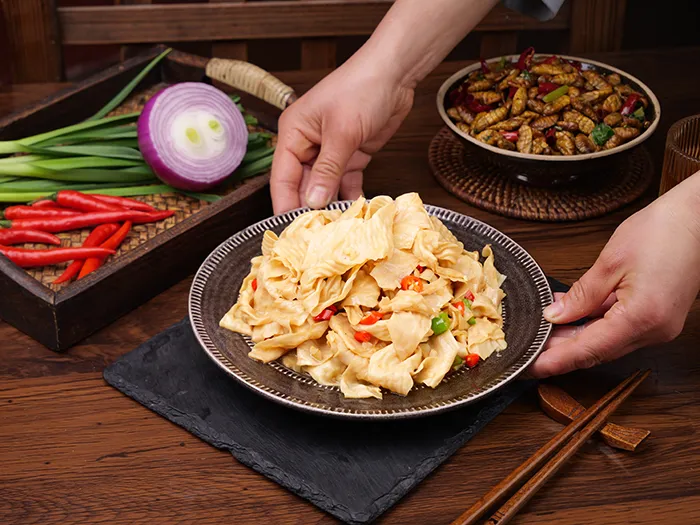
Need a substitute for unbreaded plant-based chicken? Try yuba.
CanVan - stock.adobe.com.
While it may not taste just like chicken, the pleasantly chewy texture of thin, pull-apart yuba sheets sure reminds us of plant-based chicken pieces like Beyond’s. That’s no surprise, since both are made from soy.
What’s yuba? We’re glad you asked. The staple of Japanese and Chinese cuisines is made from the delicate “tofu skin” that forms on top of soy milk when it’s heated. Its taste is like tofu, but its texture isn’t.
Ready to give yuba a whirl? Try one of our recipes:
CSPI heavily relies on our grassroots donors to fuel our mission. Every donation—no matter how small—helps CSPI continue improving food access, removing harmful additives, strengthening food safety, conducting and reviewing research, and reforming food labeling. We don't take donations from corporations, and our flagship publication, Nutrition Action, doesn't run any ads. That means that everything we do is fiercely independent and unbiased from any bad actors, no matter how powerful. To help keep this online content 100% free, consider donating today to support CSPI.