What to know about ‘healthmaxxing’ trends on social media
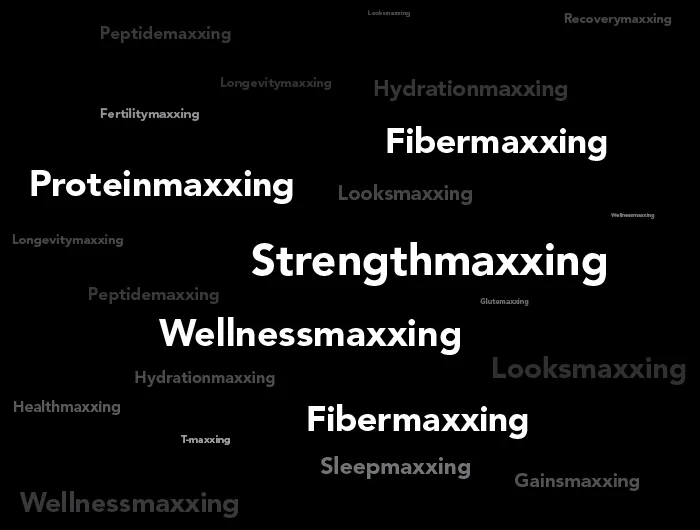
What’s “maxxing”? It’s “the suffix that tells us to ruthlessly optimize everything,” says the New York Times. It started with looksmaxxing—young men trying to increase their physical appeal through grooming, fitness, even surgery. Today, you name it, there’s probably a maxxing for it. That’s especially true when it comes to our health. And it goes well beyond healthmaxxing. There’s sleepmaxxing, proteinmaxxing, fibermaxxing, strengthmaxxing, recoverymaxxing. And that’s just scratching the surface. What works, what’s risky, and what’s a waste of money? Here are 5 examples, plus how to be a healthy skeptic and prioritize what matters most for your health.
1. Proteinmaxxing? It’s just a marketing ploy.
If you want “a stronger, leaner body,” you need to start proteinmaxxing, says one social media influencer. Really?
Protein matters for muscle, but most US adults already eat more than the Daily Value (50 grams). And while extra protein can slightly increase muscle gain in younger adults who strength train, the training has a much bigger impact than the protein.
Where else can extra protein deliver gains? A food company’s bottom line.
“We’re focused on modernizing our menu with innovative, relevant, and hype-worthy products that will resonate with our customers,” gushed a Starbucks exec in a statement announcing the chain’s protein lattes.
Companies are “leaning into the protein-fortified food trend to unlock growth,” says an article from the US Chamber of Commerce, a pro-business group. Brands are “rolling out products to meet consumer demand for protein that target not only ‘gym bros’ but women too.”
Protein powder is being tossed into everything from Doritos to Kraft mac & cheese in order to “unlock growth.” Popcorn, pretzels, chips, crackers, bars, cookies, brownies, donuts, soda, water, candy, mashed potatoes, rice cakes, ice cream, you name it!
Most people don’t need to eat more protein, but proteinmaxxing is a marketer’s dream. Why else would protein sodas, sticky buns, taco shells, and ice creams exist?
Marlena Koch – CSPI.
But processed “protein” foods typically come with baggage. One big problem: Because of their added sugars, fat, or white flour, many protein cookies, bars, and similar products cost you more calories per gram of protein than healthy lean protein foods do.
For example, 100 calories of chicken or turkey breast, egg whites, chunk light tuna, or low-fat cottage cheese deliver about 15 to 20 grams of protein. You’d have to eat a 440-calorie Lenny & Larry’s Chocolate Chip Protein Cookie or a 340-calorie Peanut Butter Perfect Bar to get roughly that same number. Two exceptions: Bottled protein shakes made with low-fat or fat-free ultrafiltered milk typically supply protein at a lower calorie cost. So do homemade shakes, as long as you’re careful about what you mix the protein powder with.
Some people do need to pay attention to protein because they eat less. For example, appetite often drops in older adults and people on GLP-1 weight-loss medications. But a lighter appetite makes it even more important to choose foods that supply protein with fewer calories...not protein junk foods.
The bottom line: Most people get more than enough protein from the foods in a healthy diet. Here’s how much you need and what’s in typical servings.
2. Strengthmaxxing? Keep it simple.
Exercise trends come and go—remember “Buns of Steel”?—but one trend we can get behind is the recent push to optimize our muscles with strength training. It’s one of the few wellness trends where the data justifies the enthusiasm. Strength training helps maintain our independence as we age, prevents falls, lowers blood sugar, and more. It may even help us live longer.
But if social media does one thing, it takes straightforward, good advice and makes it complicated...or extreme. We’re talking about iffy, rigid prescriptions to optimize strength training based on your age, diet, sex, or hormones. Our advice: Ignore it all and stick to the basics. That means simple and steady.
One takeaway from the American College of Sports Medicine’s latest guidelines on resistance (aka strength) training: Consistency beats perfection.
“The biggest jump in results happens when you go from no resistance training to any resistance training,” the group writes on its website. “Keep it simple and focus on showing up regularly.”
After reviewing the evidence from randomized trials that enrolled more than 30,000 participants, the guidelines' authors noted that it’s possible to personalize your workouts for what you want most: muscle strength, size, or power.
Looking to build stronger muscles? Lift heavier loads for 2 to 3 sets per exercise. But if your goal is bigger muscles, aim for more sets (roughly 10 per week for each muscle group).
Then there’s muscular power, which is your ability to apply strength quickly. That can keep you more agile and help prevent falls. To build that, use moderately heavy loads and lift them as fast as possible. (As you return to your starting position for the next rep, slow down to control the weight.)
Ready for some strengthmaxxing? If you’re new to strength training, book a few sessions with a personal trainer to learn proper technique. They can also help develop a program that’s tailored to your goals and preferences.
Jordi Mora - stock.adobe.com.
You can also strength train in a number of ways: Use elastic bands, your own body’s weight (think pushups, planks, air squats, and lunges without holding any extra weight), dumbbells, kettlebells, barbells, or machines. Join a gym or get strong at home. Try group classes or go solo.
And if you find yourself overwhelmed by social media posts that use terms like “complex periodization” or “training to momentary muscle failure,” keep scrolling. According to the new position paper, research hasn’t found that those methods consistently change results in the average adult.
What does matter: proper form. If you’re new to strength training, it’s not a bad idea to book a few sessions with a personal trainer to hone your technique. That will help you maximize your workouts and prevent injuries.
Just don’t push aside your walking, biking, jogging, or swimming habit in the name of maxxing your muscles. Strength training may be hot, but aerobic fitness is as important as ever. For your heart’s sake, aim for 2½ hours a week at a moderate intensity (like brisk walking) or 1 hour and 15 minutes at a vigorous intensity (like jogging or running).
The bottom line: Work each muscle group at least twice a week with whatever form of strength training you enjoy.
3. Fibermaxxing? Do it right.
Social media influencers tout fibermaxxing for heart health, gut health, and more. One TikToker’s take: “Fibermaxxing might be the most genius American diet fad ever.”
They have a point. More than 9 out of 10 US adults fall short of fiber targets...and they miss by a mile. The average man eats 18 grams of fiber a day, and the average woman eats 15 grams. The Daily Value is 28 grams. (That’s based on getting at least 14 grams of fiber for every 1,000 calories you eat.)
To close that fiber gap, maxxers tend to promote recipes that contain naturally fiber-rich whole foods like chia seeds, beans, lentils, peas, oats, and fruits and vegetables like Brussels sprouts, kiwis, pears, and berries. Bravo!
Many fibermaxxers start their day with a healthy chia seed pudding (milk and yogurt mixed with chia seeds) that thickens as it gels. Just 3 tablespoons of the tiny seeds have an impressive 10 grams of fiber.
M.studio - stock.adobe.com.
That’s great advice. Follow it, and you’ll get most of your fiber from a variety of plants, each with its own mix of fibers. Fiber isn’t a single thing. To max out its health benefits, you need to play the field.
But many manufacturers pad their fiber numbers with just one or two kinds of processed or synthetic fiber, like chicory root (aka inulin) or soluble corn fiber. (The FDA allowed both to be listed as fiber on the Nutrition Facts label because they can boost calcium absorption, not for the regularity or cholesterol-lowering benefits you’d expect from plant foods or psyllium fiber.)
For example, Siggi’s Fruit & Fiber yogurt, Fiber One Soft Baked chocolate fudge brownies, refrigerated Olipop prebiotic sodas, Halo Top ice creams, and many brands of fiber gummies get some or all of their fiber from chicory or inulin.
Some ads even dress up those processed fibers as “maxxing.” “Fibermaxxx your latte,” says an Instagram ad for Poca, a brand of sugar-free flavored syrups made with 3 grams of chicory root fiber per serving. What the ad doesn’t tell you: Some digestive systems are sensitive to chicory, inulin, or other processed fibers, which can cause gas and bloating.
Digestive discomfort can also come from fibermaxxing with naturally fiber-rich foods...if you overdo them. The solution: Go slow. Not eating any beans yet? Add a half-cup once a day, not a cup at lunch and another cup at dinner.
And if you’re not sure where to start, consider a fiber audit. Log everything you eat for a week in a free phone app like Cronometer. That will tell you whether you are (or aren’t) getting enough fiber and can help you track changes over time.
The bottom line: Most of us could use more fiber from healthy plant foods. Just don’t max out too quickly. To start, find out how much is in the foods you eat most often.
4. Wellness maxxing? Injections or IVs for ‘wellness’ are risky.
“‘It’s a peptide wild west’: how RFK Jr is clearing way for a market of untested drugs,” ran The Guardianheadline in July.
Peptides—short chains of amino acids that give specific instructions to the cells they bind to—took the wellness spotlight this year. Influencer posts flooded social media, promising that the largely unregulated group of injectables could boost muscle growth, melt away fat, and give your skin a natural glow.
Too bad there’s no evidence from randomized trials to support the craze. What’s more, the FDA has noted that people who take the understudied compounds could face serious safety risks like harmful immune responses, chest tightening, headaches, nausea, and diarrhea.
But that hasn’t stopped Health Secretary Kennedy from declaring that he’s “a big fan” of the injectables. So it came as no surprise when he reconfigured an advisory panel that would vote on whether to allow compounding pharmacies to prepare seven different peptides, stacking it with several members who have financial ties to the peptide industry.
CSPI president Peter Lurie told the advisory panel at its July meeting that there is far too little evidence on the safety or effectiveness of the seven peptides to approve them for compounding. The FDA’s own scientists agreed.
Nevertheless, the panel greenlit six of the seven peptides. That doesn’t mean they are now FDA-approved, though. They have to pass through a long rulemaking process before they can legally be compounded. (And, of course, legal doesn’t automatically mean safe.) Stay tuned.
In the meantime, America is not just injecting peptides. IV hydration therapy has taken the medspa near you by storm. Purveyors are happy to exchange your hard-earned cash for intravenous compounds they claim can do everything from slowing aging to boosting your immune system to curing a hangover.
Unsurprisingly, there’s no good evidence to support the use of trendy IV therapies. (IV therapy can help people with known nutrient deficiencies or specific medical conditions, but those treatments will be given by a healthcare provider, not a medspa.)
Skip the IV therapy at your local medspa. Serious adverse events—like endotoxin poisoning and death—have been documented this year in people receiving IVs at wellness clinics, which are notoriously poorly regulated.
FranciscoJavier - stock.adobe.com.
And also unsurprisingly, no one is minding the store. In a 2025 paper co-authored by Lurie, researchers found that not a single state had enacted legislation to regulate IV hydration facilities (though Texas has since passed a law to regulate who can order and give IV therapy).
And don’t expect medspas—or the companies that supply their peptides and other injectables—to keep you safe.
In July, dozens of people became sick and three were hospitalized after receiving IV glutathione, a popular antioxidant peptide, at medspas in at least four states. One of the three became critically ill after suffering shock and abnormal blood clotting.
The problem? The compounding pharmacies had prepared the injectables using dietary-supplement-grade glutathione meant for oral tablets or capsules. As a result, the medspa customers received IVs contaminated with bacterial endotoxins, which led to chills, fever, nausea, vomiting, and low blood pressure.
Also in July, a New York woman died after receiving an IV infusion at a wellness center from someone without a medical license in the US. Air entered her bloodstream through the IV line and traveled to her heart, causing a fatal cardiac air embolism that medical examiners have ruled a homicide.
The bottom line: Most injectables—peptides that you buy online or IVs that you get at a medspa—are poorly regulated, lack evidence to support their use, and pose real health risks. Skip them.
5. Hydrationmaxxing? Don’t waste your money.
Ever heard of “stacked water”? The latest hydration trend “stacks” plain water with creatine, collagen, or other powders plus a little fruit or juice.
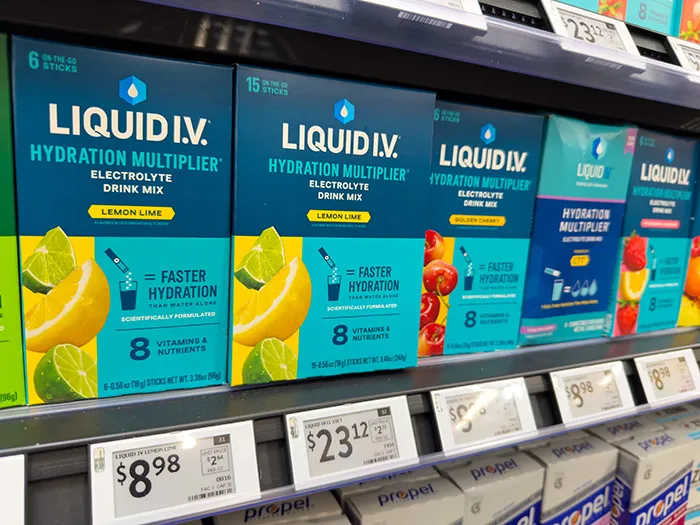
Popular mix-ins include hydration powders like Cure, Liquid I.V., and Hydrant. Their selling point is electrolytes, which means they typically deliver 250 to 500 milligrams of sodium per packet—10% to 20% of a day’s recommended limit. While that’s not a disaster, most of us already consume too much sodium. And you don’t even need a drink to replace electrolytes unless you’re engaging in sweaty, strenuous exercise for more than an hour without drinking water or snacking on food that contains sodium and potassium.
Then there’s the cost. Cure, Liquid I.V., and Hydrant sell for roughly $1 to $1.50 per packet. If you can swallow that price tag (plus some salt and sugar), go ahead. Just don’t fall for the hype that you need a hydration boost when tap water will do.
Liquid I.V. and other electrolyte powders typically cost at least $1 per serving, and you probably don’t even need their sodium.
Jammer Gene - stock.adobe.com.
And skipsuper-salty electrolyte powders like LMNT unless you’re, um, trying to boost your blood pressure: Every packet of LMNT has 1,000 mg of sodium.
Here’s an idea: If tasty mix-ins make it easier to drink water, “stack” your tap water with a healthy flavor booster from your fridge. Try a squeeze of citrus, some fresh mint sprigs, or muddled berries or cucumber.
The bottom line: Plain water is already optimized to hydrate you for everyday activities.
Commonsense maxxing? Now that sounds good.
If iffy health trends for maxxing, optimizing, or stacking have your head spinning, you’re not alone. But you can turn down the social media noise—we’re calling it a “digital detox”—and focus on what matters most for your health.
Need a digital detox? Be a healthy skeptic about social media advice.
Social media can let you connect with old friends, watch cute animal videos, and find new recipes. But it’s also a source of poorly vetted information and conspiracy theories that keep us online.
That’s by design. “The algorithms used by social media platforms are largely shaped by emotions like rage and fear and play to our political leanings,” says Timothy Caulfield, research director of the Health Law Institute at the University of Alberta in Canada. And that keeps us “doomscrolling.”
To create a healthier relationship with your digital environment, here’s what can help:
Take a beat. Before you share a post, pause. Verify the accuracy...and go beyond the headline. “That’s even more important if the headline makes you feel enraged or self-righteous,” says Caulfield. Fact-checking websites like Snopes or Google’s Fact Check Explorer can help.
Check expertise. When it comes to health information, ask yourself whether the person sharing it is an expert in a specific area. And keep in mind that being a doctor doesn’t mean someone is an expert in, say, nutrition or a medical specialty outside of their own.
Follow science communicators. You’re looking for people who clearly describe nuance and uncertainty in the evidence. “Overly complex language and what I call science-y word salad should give you pause,” says Caulfield. “That suggests they’re trying to confuse or manipulate you.”
Sales pitches are a red flag. Be suspicious of people trying to sell you supplements or products that promise extreme—and unlikely—health outcomes.
Healthy eating: What matters more than optimizing.
Even when nutrition advice for “maxxing” or optimizing is accurate, it’s often akin to a drop of water. These 6 evidence-backed basics are more like buckets.
Kate Sherwood - CSPI.
To cut salt and boost flavor, try one of our recipes for homemade soups and stews (like this Smoky Bean & Butternut Stew).
1. Put plants first. This one’s a no-brainer. To put a steady diet of plants on autopilot, have a piece of fruit with breakfast, fill half your plate or bowl with vegetables at lunch and dinner, and reach for fruit at snack time.
2. Find the fiber heavy hitters. Most people don’t eat enough fruits and vegetables to rely on their fiber alone, so you’ve got to reach for whole grains or legumes a few times a day. Most whole grains like whole wheat, barley, rye, teff, and quinoa will get you 3 to 5 grams of fiber per serving (exception: brown rice has just 2 grams). Most beans and lentils deliver 5 to 8 grams.
3. Pick a healthy protein at mealtime. The add-protein-to-everything obsession misses the point. Just try to work a serving of a protein-rich food like soy, chicken, seafood, or low-fat cottage cheese or Greek yogurt into every meal. For healthy plant foods that offer a smaller dose of protein—like beans, lentils, peas, nuts, or seeds—eat a larger serving, or pair two together.
4. Be a heart-healthy cook. Think substitute, not subtract. Limit unhealthy saturated fat from beef, pork, coconut milk, cream, butter, and full-fat cheese by shifting to healthy, largely unsaturated fats that still add richness. Put pesto on your pasta instead of alfredo, toss toasted nuts on your salad instead of cheese, or spread avocado on your bagel instead of cream cheese.
5. Watch what you drink. Your safest bet is to minimize alcohol, if you drink at all. (Even moderate drinking is linked to an increased risk of somecancers.) As for soda, juice, tea, and coffee, go for unsweetened drinks over sugary ones. You can’t beat water.
6. Slash sodium where it counts. To keep a lid on your blood pressure without tracking every milligram of sodium, target salt-laden foods like canned soup (make your own) and deli meats (go for fresh-cooked chicken, turkey, or tofu). And keep in mind that most restaurant food—no matter the cuisine—packs a salty wallop…even if it doesn’t taste salty. So pump up the volume by ordering a side salad or a side of vegetables. That way, you can take home leftovers and have less sodium in one go.
CSPI heavily relies on our grassroots donors to fuel our mission. Every donation—no matter how small—helps CSPI continue improving food access, removing harmful additives, strengthening food safety, conducting and reviewing research, and reforming food labeling. We don't take donations from corporations, and our flagship publication, Nutrition Action, doesn't run any ads. That means that everything we do is fiercely independent and unbiased from any bad actors, no matter how powerful. To help keep this online content 100% free, consider donating today to support CSPI.