Trendy, expensive IV therapies are not worth the risk
Trsakaoe - stock.adobe.com.
Medical spas hawking intravenous (IV) therapy services are popping up everywhere, with offerings that promise to rid you of your hangover, boost your immune system, and even slow or reverse aging (so you can “glow from the inside out!”). These treatments can cost hundreds of dollars. The evidence for the effectiveness of IV therapies is nonexistent. But the risks? Those are real.
What is IV therapy?
You’ve probably seen a patient receiving fluids or medication from an IV before, either on TV or in real life. IVs are a common way for doctors to make sure that patients who are sick, injured, dehydrated, or having surgery can stay hydrated. They’re also sometimes used to deliver medications directly into the blood.
In recent years, though, offerings for IV therapy outside of hospitals have exploded. According to a 2024 industry report, the number of so-called medical spas (non-hospital locations that often offer IV therapies, among other treatments) nearly doubled (from 5,431 to 10,488) between 2018 and 2023.
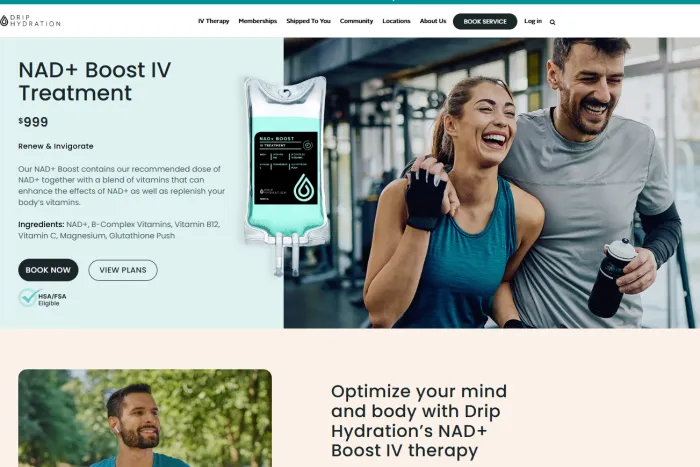
And those spas pull in real cash, with an average annual revenue of $1.4 million per spa. Depending on what spa you go to and what your goals are, IV treatments (which can be done on site or even in your own home) can cost a pretty penny. For example, we found services claiming to “prevent unnecessary aging” (for $199 per treatment), provide a “detoxifying” cleanse ($299), and even “optimize your mind and body” ($999).
No wonder the average trip to a medical spa costs $527—an expense that will likely not be covered by your insurance.
Are claims made by IV therapy companies backed by science?
If these IV therapies could actually help us age slower, lose weight, be better athletes, or even beat the common cold (all claims that various medical spa websites make), it might make sense to pay those high prices. But the evidence isn’t there.
Many of the more common IV treatments offered at spas include high doses of vitamins, supposedly to treat jet lag and hangovers or to offer an “immune boost.” But a 2023 review found no high-quality evidence in support of IV vitamin therapies for people without a severe vitamin deficiency (like scurvy, a deficiency of vitamin C) or those who have a critical illness or specific medical condition (like a problem absorbing vitamins B and C due to hemodialysis, a treatment for kidney disease). If you’re a healthy adult searching for vitamins and minerals, look no further than a balanced diet. Of course, you can take an oral supplement if you can’t eat a balanced diet or if you have specific nutritional needs (like pregnant people or people who might become pregnant, who should take a folic acid supplement). And conditions like a hangover or jet lag will always go away on their own. So why waste hundreds of dollars on a “treatment” with no supporting evidence? These promises fall into the same category as trendy wellness fads like detox supplements and cleanse diets—flashy but not backed by evidence.
Who oversees medical spas?
Unfortunately, because they’re called medical spas, patients might assume that they’re going to be treated by a doctor. But the American Medical Association (AMA) raised the alarm this year, reporting that roughly 70 percent of medical spas lack any affiliation with a medical practice. The AMA called for state laws that protect patient safety by ensuring that a physician is present at every site and requiring that non-physicians wear identification that clearly communicates that they are not physicians.
Instead of federal oversight, states are generally responsible for regulating medical spas. But the states aren’t doing much. A recent paper co-authored by CSPI’s Executive Director, Peter Lurie reviewed state laws and policies on IV hydration and medical spas across the United States and examined the websites for 255 medical spas. The researchers also contacted 102 medical spas while posing as “secret shoppers,” pretending they were seeking treatment for specific problems.
They found that no state had legislation in place to regulate IV hydration facilities (although Texas has since passed a law that regulates who can order and give IV therapy). The medical spa employees they spoke with were often willing to offer advice and make false claims about IV therapy as a treatment for specific ailments, including headaches and colds. None of the spas accepted insurance for their services and “treatments.”
The authors concluded that “more stringent oversight may be necessary to protect public health, including standards for facility registration and reporting of product information, benefits, and risks.”
What are the risks of IV therapy?
In the secret shopper study, when medical spas were asked about the potential risks of IV therapy, just 24 percent offered any information about what could go wrong. That’s a problem, because treatment at medical spas can come with serious side effects.
“Complications can happen anywhere,” said M. Laurin Council, director of dermatologic surgery at the Washington University School of Medicine in St. Louis, in an interview with the AMA. “But the reality is that board-certified dermatologists and other specialized physicians are going to have medical training to better avoid and treat complications of medical procedures. They also know how to appropriately manage them.”
What kinds of complications? “Anything we place in the human body can carry risk, including those things which are thought to be natural, such as vitamins or fluids,” says Brent A. Bauer, director of research at the Mayo Clinic section of Integrative Medicine, in an interview with Mayo Clinic Press. “High doses of certain vitamins and minerals have been linked to kidney damage, heart rhythm abnormalities, blood pressure changes, gastrointestinal symptoms and damage of the peripheral nerves.”
The IV itself might be risky, too. Infections at the site of the IV placement can lead to bloodstream infections or sepsis, and repeated IV administrations could cause inflammation, bruising, and even vein damage or collapse. And there’s always the risk that a person might have benefited from a proven therapy, even as they opt for IV hydration instead.
A 2021 statement from the FDA warned that some medical spa employees may be mixing, or compounding, the IV therapies themselves without following standardized sanitary procedures. The FDA describes “a 50-year-old female patient who was hospitalized and treated for suspected septic shock with multi-organ failure after receiving an IV-vitamin infusion in her home.” Her blood tested positive for bacteria that may have come from the unsanitary facility in which the IV therapy was compounded, where inspectors also found expired pharmaceutical ingredients.
Bottom line: Expensive IV therapy isn’t backed by science and could be risky for your health
If you’re worried about a vitamin deficiency or you’re not feeling your best, talk to your doctor about testing and treatment options before dropping hundreds of dollars at unproven and potentially risky medical spas.
CSPI heavily relies on our grassroots donors to fuel our mission. Every donation—no matter how small—helps CSPI continue improving food access, removing harmful additives, strengthening food safety, conducting and reviewing research, and reforming food labeling. We don't take donations from corporations, and our flagship publication, Nutrition Action, doesn't run any ads. That means that everything we do is fiercely independent and unbiased from any bad actors, no matter how powerful. To help keep this online content 100% free, consider donating today to support CSPI.