Researchers tracked 159,347 health professionals for 6 to 26 years. Those whose diets most closely resembled a DASH (Dietary Approaches to Stop Hypertension) diet had a 41 percent lower risk of self-reported cognitive decline (like worsening memory, executive function, or attention) than those whose diets least resembled a DASH diet. Vegetables and fish were most strongly linked to healthy brains, while processed meats and fried potatoes were tied to more decline.
Among the participants aged 70 or older who took cognitive tests, those who ate the most DASH-like diet scored roughly one year younger in verbal fluency and working memory than those who ate the least DASH-like diet.
What to do
This study can’t prove that a DASH diet can maintain your brain, since something else about those people may have lowered their risk. But if a DASH diet only keeps a lid on your blood pressure, it’s still a win.
Scientists randomly assigned 466 people aged 45 or older who had knee pain due to arthritis to either:
a 20-minute session with a physical therapist offering advice (about muscle strengthening, range of motion, weight loss, etc.), written information, and exercise instruction, or
a 1-hour session with a physical therapist offering the same advice, info, and exercise instruction plus a fitted knee brace (to stabilize the area most affected by the participant’s arthritis), a 30-minute follow-up 2 weeks later, and texts with reminders to use the brace.
After six months, Knee Injury and Osteoarthritis Outcomes Scores—especially the pain scores—were better in the brace group, but the differences were small and were no longer significant after a year.
What to do
Got knee arthritis? Consider a brace...but don’t expect miracles.
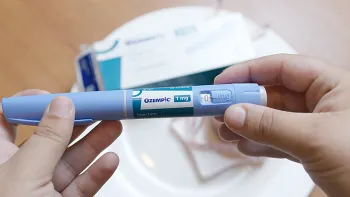
Tirzepatide that has been compounded with vitamin B-12 may contain an impurity with unknown risks, warned Eli Lilly, which recently tested samples of the compounded GLP-1 drug. (Lilly’s tirzepatide—it doesn’t contain added vitamin B-12—is sold as Mounjaro for type 2 diabetes and as Zepbound for weight loss.)
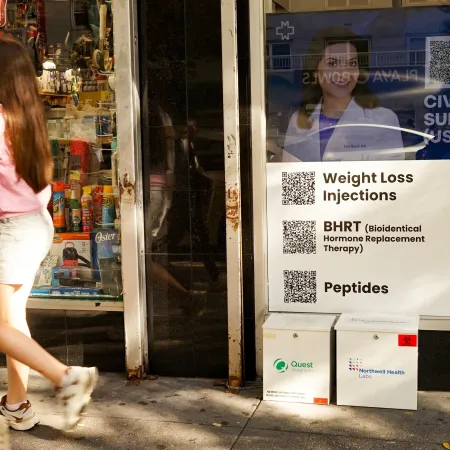
Some compounding pharmacies, medspas, and telehealth companies sell tirzepatide plus B-12 as “personalized” medications. But they require no FDA approval for safety or efficacy. And over 60,000 vials of compounded GLP-1 drugs have been recalled since 2023, mostly because of sterility concerns.
What to do
Need a GLP-1 drug? Get it from a reliable source. (LillyDirect might have lower prices.) For more on compounding, check out our article on buying GLP-1s online.
Does using proton-pump inhibitors cause stomach cancer?
Monkey Business - stock.adobe.com.
Long-term use of proton-pump inhibitors (PPIs)—often used to treat gastric reflux—isn’t linked to a higher risk of gastric non-cardia adenocarcinoma (a type of stomach cancer).
Using nationwide registries from 5 Nordic countries, researchers found that roughly 10 percent of people with or without that type of stomach cancer had used PPIs for more than a year.
What to do
This kind of study can’t prove that PPIs don’t raise your risk of stomach cancer, but it’s reassuring.
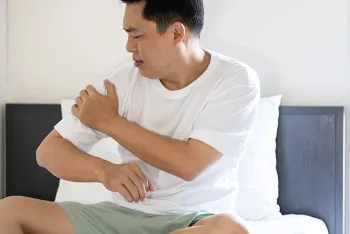
Got shoulder pain? Don’t rush to get an MRI to look for a tear in your rotator cuff.
Finnish researchers did MRI scans on the shoulders of 602 adults aged 41 to 76. Only 18 percent had reported shoulder pain or disability.
The scans found rotator cuff abnormalities in 99 percent of all shoulders, including 96 percent of shoulders of people who reported no pain. Most of the abnormalities (roughly 62 percent) were partial-thickness tears, 11 percent were full-thickness tears, and 25 percent were tendinopathy.
What to do
Got shoulder pain? Think twice about an MRI. Unless you’ve had an acute injury (like a dislocation or fracture), try rest, pain meds (like NSAIDs), or physical therapy. Most pain resolves in two months without surgery.
Can GLP-1 drugs like semaglutide and tirzepatide curb the risk of endometrial cancer in women with benign uterine abnormalities?
Researchers examined the health records of 18,414 women who were taking GLP-1 drugs plus progestin versus 426,406 women who were taking only progestin to treat endometrial hyperplasia or benign uterine pathology. The GLP-1 takers had a 66 percent lower risk of endometrial cancer than those taking only progestin (and a 70 percent lower risk than those taking metformin plus progestin).
What to do
This study can’t prove that GLP-1 drugs prevent endometrial cancer, since something else about GLP-1 takers might lower their risk. But if you have uterine abnormalities, ask your doctor about GLP-1s.
Scientists tracked 131,821 health professionals, typically for 37 years. Those who reported consuming roughly 2 to 3 (8 oz.) cups of caffeinated coffee or 300 mg of caffeine a day had about a 20 percent lower risk of dementia than those who consumed none. Higher intakes of coffee or caffeine weren’t linked to further protection.
One cup of caffeinated coffee or 1 to 2 cups of tea a day were linked to roughly a 10 percent lower risk. Decaf coffee wasn’t linked to dementia risk.
What to do
This study can’t prove that caffeine can protect your mind. Something else about people who consume caffeine may explain their lower risk, though the researchers adjusted for many factors, including genetic risk of dementia.
But if you’re a coffee or tea drinker, enjoy! Just keep in mind that many mugs hold 10 to 12 oz. At Starbucks, if you want 8 oz., you need to order a “short.” (A tall has 12 oz., a grande has 16 oz., and a venti has 20 oz. if hot or 24 oz. if iced.)
Scientists enrolled 128 people aged 65 or older who were already eating the Recommended Dietary Allowance for protein (0.36 grams for every pound of body weight). Each was randomly assigned to consume either a placebo or enough whey protein to reach double the RDA.
After 24 weeks, the whey takers had no greater muscle power, strength, or mass than the placebo takers. And those outcomes were no better in participants randomly assigned to take a daily dose of potassium bicarbonate to see if it would neutralize acid that might break down muscles.
CSPI heavily relies on our grassroots donors to fuel our mission. Every donation—no matter how small—helps CSPI continue improving food access, removing harmful additives, strengthening food safety, conducting and reviewing research, and reforming food labeling. We don't take donations from corporations, and our flagship publication, Nutrition Action, doesn't run any ads. That means that everything we do is fiercely independent and unbiased from any bad actors, no matter how powerful. To help keep this online content 100% free, consider donating today to support CSPI.