Titanium dioxide: Hiding in holiday treats, dairy, and more
Perlphoto - stock.adobe.com.
We're not opposed to having sweets during the holiday season—but the food color titanium dioxide can potentially cause DNA damage, is found in Christmas treats and dairy products, and should be avoided whenever possible. Here's what to look out for and how you can help call for the dairy industry to ditch titanium dioxide.
Where titanium dioxide lurks in holiday treats
Real talk: Everyone is aware that candy and other sweets are not the healthiest choice. We’re not saying no one should ever have a treat; some candies—like peanut butter cups—have a bit of protein, and a little something sweet can be a bright spot on a chilly winter evening. Sharing festive food with loved ones is an important part of the holiday season! But if you’re avoiding ingredients that are deemed dangerous enough to be banned in the European Union, then titanium dioxide should be toward the top of your list.
MAHA has largely ignored titanium dioxide
So far, Health Secretary Robert F. Kenney, Jr.’s actions on food colors have relied on voluntary policy tools and ignored titanium dioxide. On April 22, 2025, the FDA announced plans to "phase out" from the food system six petroleum-based synthetic dyes (Blue 1, Blue 2, Green 3, Red 40, Yellow 5, and Yellow 6) by the end of 2026. However, the agency did not issue a ban; instead, the FDA asked food manufacturers to voluntarily comply with the agency's request to remove these food dyes. Because using synthetic food dyes has always been voluntary, there is no incentive from the announcement for manufacturers to switch to safer food colors.
In addition, as the “Make America Healthy Again” movement has focused on food dyes, it has largely ignored titanium dioxide, another unsafe food color.
What is titanium dioxide?
Titanium dioxide (TiO2) is a chemical currently approved for use in the US as a color additive in foods. As with other food colors, titanium dioxide does not have a nutritional or preservative function, but instead is used solely for superficial purposes, like adding a white color and brightness to foods and beverages.
Despite health concerns, the FDA has failed to ban titanium dioxide
A safety evaluation by the European Food Safety Authority (EFSA) concluded that titatnium dioxide is not safe for use in food because evidence suggests that when people ingest food-grade titanium dioxide, small particles—or “nanoparticles”—can potentially accumulate in the human body over time and cause genetic damage. In turn, damage to DNA is one way that chemicals can cause cancer and other health problems. Accumulation of TiO2 nanoparticles in the body may also damage the immune and nervous systems. Based on these concerns, the European Union banned the use of titanium dioxide in foods in 2022.
Due to the possible negative health effects of ingesting titanium dioxide nanoparticles, CSPI’s Food Additives Safety Ratings tool, Chemical Cuisine, currently advises consumers to avoid food products containing this additive. However, some food labels do not directly list titanium dioxide as an ingredient, instead hiding the ingredient behind terms like “color added” or “artificial color.” This makes it more difficult for consumers to determine whether TiO2 is in a particular product, increasing the need for government action to protect consumers from the additive.
Despite EFSA’s extensive review of evidence and the subsequent EU ban, the FDA still allows for the use of titanium dioxide in foods in the US. CSPI and four other food safety and public health advocacy groups petitioned the FDA in March 2023 to revoke approval of titanium dioxide as an additive in food products. The FDA is required to address petitions within 180 days, but the agency has not yet responded.
While we wait for the FDA to do its job and for industry to do the right thing and eliminate titanium dioxide from the food supply, you can protect your health and your family in the interim by following CSPI’s recommendation to avoid foods containing titanium dioxide.
Which holiday treats contain titanium dioxide?
While CSPI and our partner organizations work to eliminate titanium dioxide from all foods, the best thing consumers can do is be aware and avoid the chemical when possible. To help you sort through your goodies this holiday season, we’ve rounded up a list of popular candy and snack items that might find their way into your home.
Peppermint candies
Ozgur Coskun - stock.adobe.com.
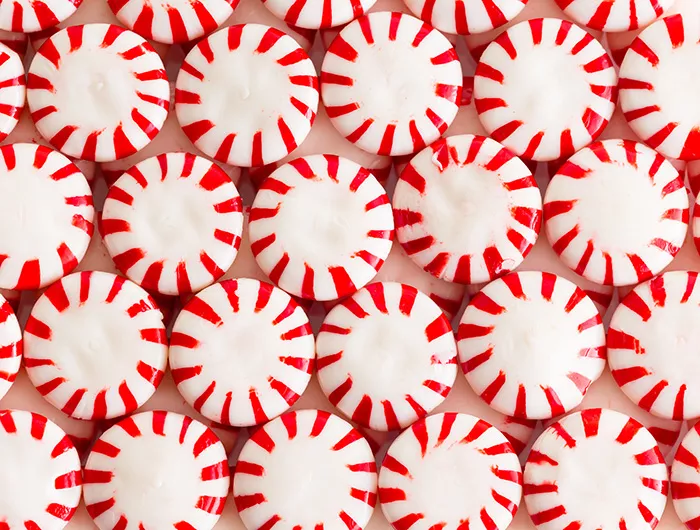
From candy cane to bark to pinwheels, peppermint is a classic Christmas flavor. Unfortunately, some of these peppermint candies contain titanium dioxide. For example, Brach’s Star Brites Peppermint Candy has titanium dioxide along with the carcinogenic synthetic food dye Red 3—which manufacturers have until January 2027 to remove from their products thanks to the FDA ban that came earlier this year following CSPI’s 2022 petition. And although iconic Christmas peppermint candy canes do not always contain titanium dioxide, some specific colors and varieties—such as Brach’s Wintergreen Candy Canes—do contain this harmful additive.
Gingerbread house kits
Avamarie - stock.adobe.com.
Assembling gingerbread houses with family and friends is a fun part of the December holidays. However, some do-it-yourself gingerbread house kits contain titanium dioxide. For example, Target exclusive brand Favorite Day makes a Christmas Classic House Gingerbread House Kit that contains titanium dioxide. Likewise, Williams Sonoma’s DIY Candy Cane Gingerbread House Kit contains titanium dioxide in its starlight mints. And Dylan’s Candy Bar uses titanium dioxide to make the sour fruity gummy rings and other parts of its Gingerbread House Kit.
Cookie decorating kits
Marcin Jucha - stock.adobe.com.
Similarly to gingerbread house kits, cookie decorating kits can be fun for the whole family, but some of these kits do contain titanium dioxide. For example, Target exclusive brand Favorite Day’s Christmas Trim the Tree Cookies Decorating Kit contains titanium dioxide in the cookies, icing, and sprinkles.
Dairy products
Pamela D. McAdams - stock.adobe.com.
If you are using dairy ingredients to make any festive winter treats, be aware that dairy products can contain titanium dioxide. However, titanium dioxide is not always declared explicitly on ingredients lists, as companies are allowed to label it as “artificial color” or other similar terms. And when TiO2 has been added to butter, cheese, or ice cream, companies need not declare it at all on ingredient lists, although some companies do so voluntarily.
During the holiday season, watch out for titanium dioxide in holiday-themed ice cream products: Blue Bunny’s Holiday Edition Mini Bars Candy Cane Crunch and Mini Swirls Hot Cocoa both have TiO2.
Tell the dairy industry to ditch TiO2
Titanium dioxide is banned from food in Europe because of safety concerns, but the dairy lobby joined forces with other industry groups and successfully fought to strip titanium dioxide from laws passed in California in 2023 and 2024 that banned unsafe additives from foods sold statewide and in schools. Recently, the dairy industry promised to remove some food colors from some of their products (specifically, synthetic food dyes from ice cream and products sold or served in schools) over the next several years. Yet the dairy industry has not committed to eliminating titanium dioxide from common food products.
There's no need for titanium dioxide in milk, ice cream, or any other dairy product—or any food for that matter—and there's no reason Big Dairy should be fighting so hard to keep this unsafe chemical legal. Sign our petition demanding that the International Dairy Foods Association commit to removing titanium dioxide from all dairy products sold in the US by the end of 2026.
CSPI heavily relies on our grassroots donors to fuel our mission. Every donation—no matter how small—helps CSPI continue improving food access, removing harmful additives, strengthening food safety, conducting and reviewing research, and reforming food labeling. We don't take donations from corporations, and our flagship publication, Nutrition Action, doesn't run any ads. That means that everything we do is fiercely independent and unbiased from any bad actors, no matter how powerful. To help keep this online content 100% free, consider donating today to support CSPI.