

Historic California legislation would close food chemical safety loopholes
Ryan Quintal - unsplash.com.
State would conduct pre-market review of new food additives in harmful processed foods
Legislation introduced in the California State Assembly would dramatically reform the regulation of food chemicals in the state, giving health officials a new mandate to independently review the safety of potentially harmful additives often used widely in packaged foods. The legislation is sponsored by the nonprofit Center for Science in the Public Interest, which says the groundbreaking bill would have national implications, given the longstanding failure of the Food and Drug Administration to protect consumers from unsafe and poorly tested food chemicals.
Introduced by Assemblymember Dawn Addis, AB 2034 takes aim at the loophole in federal regulations that lets food and chemical companies decide on their own, and in secrecy, which food chemicals are generally recognized as safe, or GRAS, and add them to foods without ever telling FDA. For any food chemical introduced after 1958, companies would be required to provide evidence to the California Department of Public Health showing that their food chemicals are safe if they have not undergone FDA pre-market review. CDPH will post those notices in a public database, allowing the Department, FDA, researchers, and the public access to independently review the safety of these chemicals and identify those that are unsafe or poorly tested. CDPH would be required to review the evidence of at least 10 food substances every three years that are on the market and prohibit the use of unsafe and poorly tested food chemicals in foods sold in California. The legislation introduced today would also prohibit carcinogenic substances from being declared GRAS in the state.
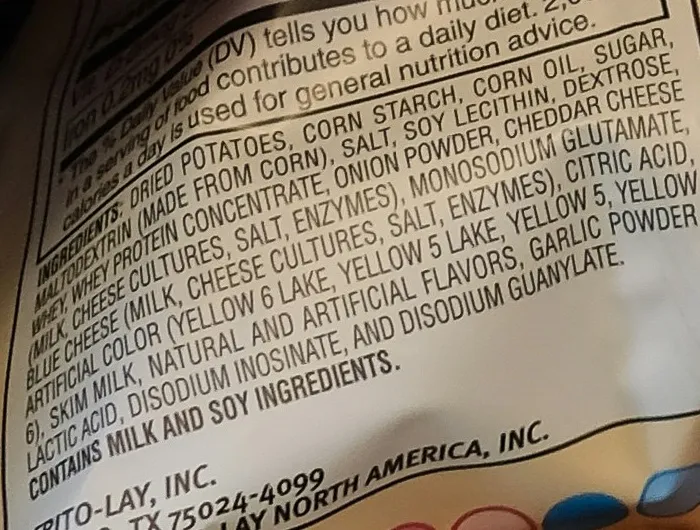
Companies that currently choose not to fully disclose all ingredients on their product ingredient lists, and instead use vague FDA-permitted terms like “artificial flavor,” “natural flavor,” “spices,” or “artificial color” will be required to publicly disclose those ingredients in a state database managed by CDPH. Full public disclosure of ingredients, as will be mandated under AB 2034, will allow state and federal regulators to understand and evaluate what chemicals are being added to food. Consumers who need or want to avoid certain ingredients due to allergies or religious or ethical reasons can also benefit from public disclosure.
“Healthy foods are essential to a healthy life, and Californians deserve clear, honest information about what they’re putting in their bodies,” said Assemblymember Dawn Addis (D-Morro Bay). “For far too long, companies have exploited vague labeling and federal loopholes to conceal dangerous chemicals in the foods that families trust. AB 2034 will close those loopholes and strengthen transparency. No one should have to guess what’s in their food or worry that they’re unknowingly exposing themselves or their children to harmful chemicals simply by sitting down to eat.”
This week on 60 Minutes, Health and Human Services Secretary Robert F. Kennedy, Jr., and former FDA Commissioner Dr. David Kessler agreed that the GRAS loophole allowed companies to introduce harmful chemicals into the food supply. Governor Gavin Newsom’s 2025 “executive order to crack down on ultra-processed foods” asked state agencies for feasible action against harmful ingredients and unreviewed GRAS substances. This legislation fills a void left by FDA, which does not know the universe of chemicals added to foods and cannot vouch for their safety, and provides a feasible means for California to evaluate the safety of food chemicals.
“For far too long, consumers and FDA have been kept in the dark about the chemicals food companies use to engineer processed packaged foods,” said Thomas Galligan, CSPI principal scientist for food additives and supplements. “While the FDA and legislators in New York and other states have proposed reforms that require greater transparency in the GRAS process, California’s bill goes further by requiring independent pre-market review by government authorities. These safety reviews will not only protect Californians from poorly understood chemicals but will surely lead food companies to choose safer ingredients across the nation.”
A 2022 outbreak associated with a product sold by Daily Harvest illustrates how the GRAS loophole harms consumers by leaving safety up to the food industry. Nearly 400 consumers became sick, with 133 hospitalized, some with severe liver toxicity. FDA, caught flat-footed, had no GRAS notices on file for the implicated ingredient, tara flour. Two years after the outbreak, FDA concluded that there was no evidence indicating tara flour was safe for use in food, removing it from the market.
While Robert F. Kennedy, Jr., pledged to reform GRAS, food industry groups have already met with White House officials to oppose the Secretary’s GRAS transparency efforts, warning that even requiring GRAS notices with any review will lead to legal challenges from industry. Secretary Kennedy previously pledged to limit synthetic dyes, but supported state legislation and encouraged voluntary reformulation, rather than directing FDA to take regulatory action.
“California has led the country in the ongoing nationwide crackdown on unsafe food chemicals, and it has the opportunity to continue doing so by passing AB 2034 and closing the loopholes that allow these chemicals in our foods,” Galligan said.
CSPI maintains its own database that rates the safety of some of the most commonly used food additives. Additional resources can be found here and here.
# # #
Tags
Topics
Contact Info: Lisa Flores, 202-777-8368 or Jeff Cronin, 202-777-8370