5 new processed foods that look healthier than they are
nonnie192 - stock.adobe.com.
What’s one way for marketers to sell processed foods that are made with added sugars, salt, juice, or refined grains? Slap on a healthy-ish buzzword like “protein,” “fiber,” “hydration,” “simple,” or “zero sugar.” Here’s a look at five of the latest examples.
This article comes fromNutrition Action. We don’t accept any paid advertising or corporate or government donations. Any better alternatives we recommend have been vetted by our staff and are not advertisements by the manufacturers. They’re just healthier foods we think you’d like to know about!
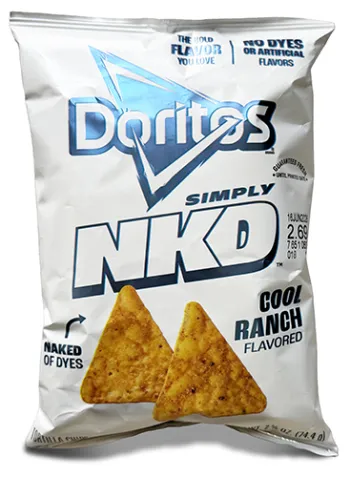
1. Simply NKD Cool Ranch Doritos
Marlena Koch – CSPI.
Are new Simply NKD Cool Ranch Doritos better than regular Cool Ranch Doritos? Yes. That’s largely because they’re “naked of dyes.” Translation: You don’t need to worry about ingesting the Red 40, Blue 1, and Yellow 5 that are in non-naked Cool Ranch Doritos. We rate all those synthetic dyes as “avoid.”
Just don’t confuse “better than” with “healthy.” Compared to the original Cool Ranch, a 1 oz. serving of the NKD chips has almost as much sodium (140 vs. 160 milligrams), the same main ingredients (corn and oil), the same calories (150), and the same paltry dose of fiber (1 gram). That’s simply unimpressive.
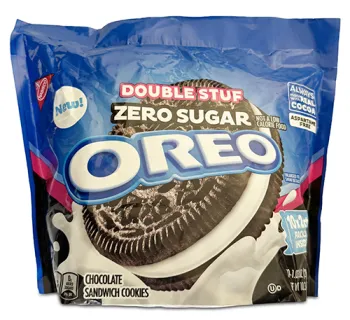
2. Zero Sugar Double Stuf Oreo
Marlena Koch – CSPI.
True to its name, a two-cookie serving of new Zero Sugar Double Stuf Oreos has 0 grams of added sugars. A serving of regular Double Stuf Oreos has 13 grams. That’s the good news.
The bad news: The No. 1 ingredient in Zero Sugar Double Stufs is refined flour. And the sugar alcohol maltitol, which helps replace the cookies’ sugar, isn’t calorie-free. So a serving of the Zeros manages to have nearly as many calories (120) as the regular Double Stufs (140).
Caution: The Zero Sugar Double Stufs say “ASPARTAME FREE,” but they contain sucralose and acesulfame potassium, two other low-calorie sweeteners that we also rate as “avoid.” And if you’re sensitive to maltitol or the processed fiber polydextrose, you’d do well to heed the warning (in small print) that’s on the package: “Excess consumption may have a laxative effect.”
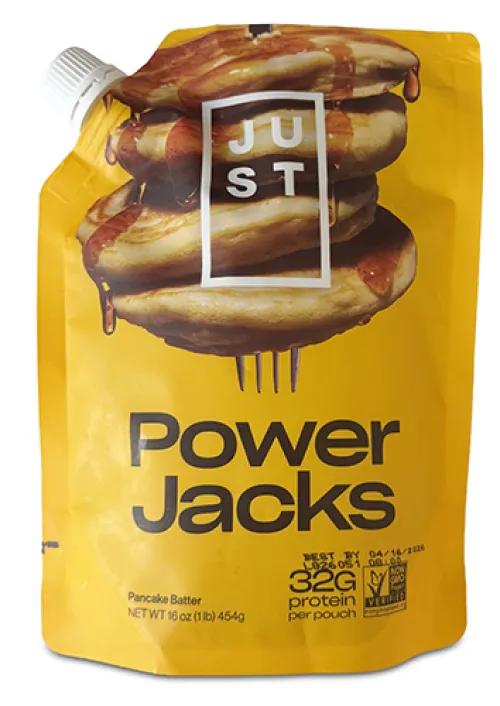
3. JUST Power Jacks
Marlena Koch – CSPI.
“32G protein per pouch,” touts the package of JUST Power Jacks, a squeeze-and-cook plant-based pancake batter. Wow! That’s a big chunk of the 50 grams of protein that’s the Daily Value for a typical adult.
The catch: The pouch holds eight servings...so you’d have to eat more than 1,000 calories’ worth of Power Jacks to get those 32 grams of protein. A single serving (a 2 oz. pancake) has just 4 grams of protein…and zero grams of fiber. (Most of the batter’s calories come from refined—not whole-grain—flour.)
Now that’s some powerful marketing.
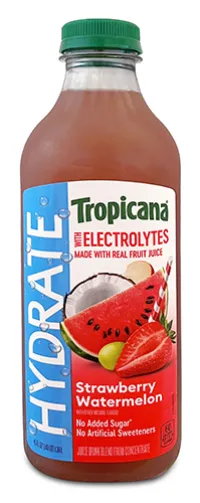
4. Tropicana Hydrate Strawberry Watermelon
Lindsay Moyer - CSPI.
Tropicana Hydrate Strawberry Watermelon is a “juice drink blend from concentrate” that’s made “with electrolytes” (from fruit juice, coconut water, and added magnesium chloride).
Ding ding ding! “Hydrate” is a no-brainer buzzword for selling beverages. Never mind that pretty much any fluid hydrates you (that includes water, juice, coffee, tea, and milk).
For most of us, getting extra electrolytes doesn’t matter. Unless you’re doing prolonged, sweaty exercise, all you need to stay hydrated is plain water plus the electrolytes that are naturally present in the food you eat.
But if you are reaching for a drink to replace the electrolytes lost in sweat during a prolonged exercise session, you’ll probably want one that has more sodium. Tropicana’s juice drink has only 15 milligrams per cup (it adds magnesium chloride, but not sodium chloride).
And as for the “juice drink blend from concentrate” name, it’s a clue that Tropicana Strawberry Watermelon has more grape juice and apple juice than strawberry or watermelon. Tricky, Tropicana!
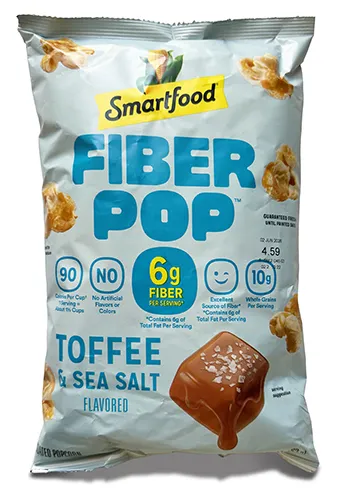
5. Smartfood FIBER POP Toffee & Sea Salt Popcorn
Marlena Koch – CSPI.
FIBER POP Toffee & Sea Salt Popcorn has “6g fiber per serving” only because Smartfood adds 5 of those grams from processed soluble corn fiber. The company also adds enough sugar (6 grams) and oil to boost the calorie density (the calories per bite) higher than that of many popcorns. Why does that matter? Because it means that it only takes 1-1/2 cups of FIBER POP to reach a 1 oz. serving (and 130 calories).
In contrast, a 1 oz. serving of a popcorn with no added sugars—like Skinny Pop Original or Angie’s Boomchickapop Sea Salt—has roughly double the volume (at least 3 cups) for just 20 more calories (150). That makes for a more filling snack. And you’re still getting the 2 grams of intact fiber that are naturally present in the popcorn.
Bottom line: All popcorn is a whole grain. For a truly smart snack, go with whatever brand you like that adds the least sugar, salt, and saturated fat. Don’t worry about extra fiber.
CSPI heavily relies on our grassroots donors to fuel our mission. Every donation—no matter how small—helps CSPI continue improving food access, removing harmful additives, strengthening food safety, conducting and reviewing research, and reforming food labeling. We don't take donations from corporations, and our flagship publication, Nutrition Action, doesn't run any ads. That means that everything we do is fiercely independent and unbiased from any bad actors, no matter how powerful. To help keep this online content 100% free, consider donating today to support CSPI.