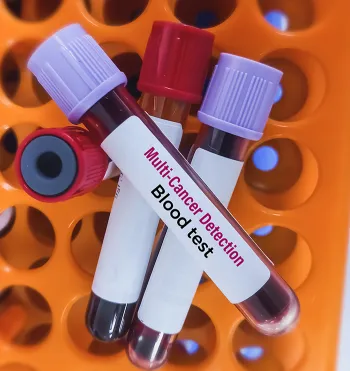
The Galleri blood test, which claims that it can detect more than 50 cancers, failed to reach its key goal in a large clinical trial run by England’s National Health Service and funded by the test’s manufacturer.
Scientists randomly assigned 142,924 adults aged 50 to 79 to have three blood samples taken about a year apart over two years either analyzed with the Galleri test or not. Although the full results have not yet been published, the company reported that the test failed to reduce the incidence of advanced (stage III and IV) cancers—which was the trial’s primary goal.
The test did detect more early (stage 1 and II) cancers, but that might not be of much benefit, since many of those cancers might never cause any harm.
What to do
Think twice about whether it’s worth the cost (about $950) to get the Galleri test. While it hasn’t been approved by the FDA, it’s available as an LDT (laboratory developed test), which the FDA doesn’t regulate.
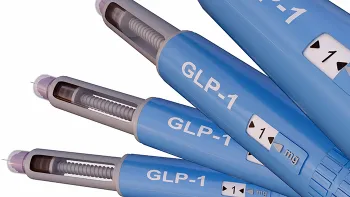
When researchers ordered GLP-1 meds like semaglutide or tirzepatide from 45 websites, 87% of the prescriptions they received were for compounded (rather than brand-name) formulations. And 69% of the compounded GLP-1 drugs had added supplements like vitamin B-12 or B-6, glycine, or carnitine.
What to do
Want a GLP-1? Skip the unnecessary supplements. To play it safe, check out price cuts on brand-name meds at LillyDirect, NovoCare Pharmacy, or Medicare’s GLP-1 Bridge Program.
Does too little sleep make you more likely to put on pounds?
Researchers pooled the results of two trials that randomly assigned 95 people aged 20 or older to get either: their usual (7 or more) hours of sleep per night, or 1½ fewer hours of sleep than usual by delaying their bedtime for 1½ hours.
All participants spent 6 weeks in each group in random order.
On average, they gained 1 pound and 0.2 inches of waist size during the less-sleep period. And they were sedentary for 17 more minutes a day when sleeping less.
What to do
Keep in mind that getting too little sleep may lead to weight gain over the long term.
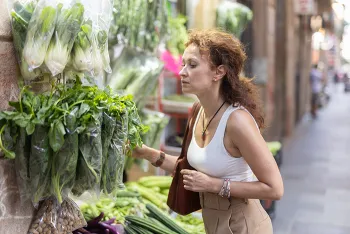
Can vitamin K1 from leafy greens help prevent COPD?
JackF – stock.adobe.com.
Do leafy greens curb the risk of chronic obstructive pulmonary disease?
Scientists tracked 179,062 people aged 40 to 69 who didn’t have COPD. Over the next 10 1/2 years, those who reported consuming the most vitamin K1 from foods (about 250 micrograms a day) had a 16% lower risk of COPD than those who reported eating the least (about 35 mcg a day). The vitamin K1 eaters had no lower risk of asthma. Vitamin K2 (found in meat, eggs, and dairy foods) wasn’t linked to COPD.
What to do
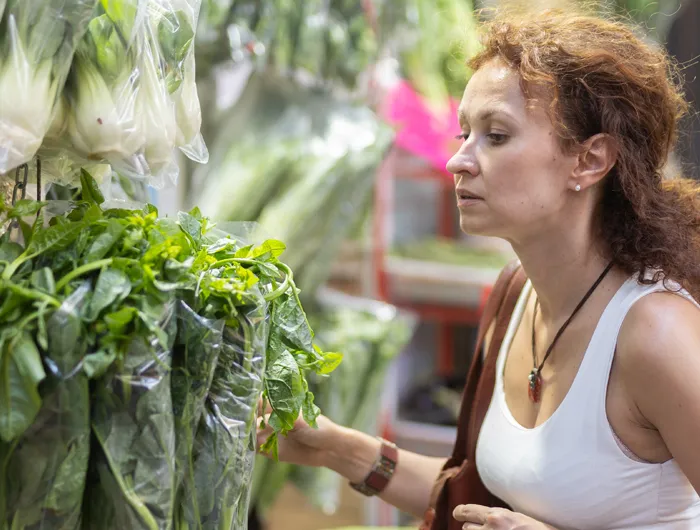
This study can’t prove that vitamin K1 lowers the risk of COPD because something else about greens eaters may have protected their lungs. But collards, kale, spinach, Brussels sprouts, broccoli, and cabbage are rich in K1. So why not enjoy your favorite?
Fujirebio’s Lumipulse blood test, which was approved by the FDA to detect two hallmarks of Alzheimer’s disease (beta-amyloid and p-tau 217) may report inaccurate results.
Scientists examined Lumipulse test results in 252 patients who had undergone a brain PET scan to look for beta-amyloid or a lower back puncture to look for beta-amyloid and p-tau in their cerebrospinal fluid. (Some of the investigators had received fees or funding from Fujirebio or other drug or device companies.)
The blood test correctly identified all patients who had beta-amyloid in brain scans or lumbar punctures. But it mistakenly reported beta-amyloid in 40% of the participants who didn’t have any.
What to do
Don’t rely solely on a blood test to diagnose Alzheimer’s. When the authors told Fujirebio about the results, the company replaced some test chemicals. And the Mayo Clinic and some other institutions may use their own beta-amyloid or p-tau cutoffs to avoid errors. Still, no blood test is sufficient to diagnose Alzheimer’s.
Can statins boost the odds of surviving breast cancer?
Taras Grebinets - stock.adobe.com.
Researchers examined the health records of 7,389 women who had been diagnosed with non-metastatic breast cancer between 1995 and 2013.
After roughly 7 years, those who took statins after their diagnosis had a 41% lower risk of dying of breast cancer than those who didn’t. And among the statin takers, the risk was lower in those with hormone receptor-positive tumors and some HER2-positive tumors.
What to do
If you have breast cancer and high cholesterol, ask your doctor about taking a statin. This study can’t prove that they lower the risk of dying of breast cancer because something else about the women who took statins could explain their longer lives. But statins are safe and inexpensive.
Scientists pooled data from 11 studies that tracked roughly 1.5 million adults, typically for 11 to 31 years.
The risk of hepatocellular carcinoma (the most common type of liver cancer) was 10% higher for each daily serving of a sugar-sweetened beverage that was consumed.
In contrast, diet drinks weren’t linked to the risk of hepatocellular carcinoma.
What to do
This study can’t prove that sugary drinks cause liver cancer because something else about people who drink them might raise their risk. But sugary drinks are empty calories linked to obesity and type 2 diabetes (which the study took into account), so why risk it?
Researchers offered 52 adults a lunch of beef chili made with either spicy (hot) paprika or mild (mostly sweet) paprika on different occasions. (The study was partly funded by the research arm of McCormick & Company, which sells spices.)
Participants ate the mild chili meal 11% faster than the spicy chili meal and consumed 13% more of the mild chili (roughly 50 more calories’ worth) than the spicy chili.
And the 34 participants who got chicken tikka masala ate it roughly 20% faster when it was made with mostly-sweet paprika than with hot paprika. They consumed 25% more of the less-spicy masala (roughly 100 more calories’ worth) than the spicy masala.
What to do
Want to eat less? Spicier foods might help, though their impact might fade as you get used to them.
CSPI heavily relies on our grassroots donors to fuel our mission. Every donation—no matter how small—helps CSPI continue improving food access, removing harmful additives, strengthening food safety, conducting and reviewing research, and reforming food labeling. We don't take donations from corporations, and our flagship publication, Nutrition Action, doesn't run any ads. That means that everything we do is fiercely independent and unbiased from any bad actors, no matter how powerful. To help keep this online content 100% free, consider donating today to support CSPI.