The Dietary Guidelines for Americans and other health authorities have long recommended limiting your intake of saturated fat, in part by choosing low or non-fat dairy. Maybe you’ve heard that saturated fat isn’t actually harmful…or that it’s fine if it’s from dairy. We’re here to clear up the confusion and answer your questions about saturated fat.
It matters what you replace saturated fat with. Study after study shows that the risk of heart disease is slashed by replacing saturated fats with polyunsaturated fats, like those found in nuts, seeds, and vegetable oils. Replacing saturated fats with refined carbs or trans fats will not lower risk of heart disease.
Studies report contradictory findings on the health effects of whole and non-fat dairy. More research is needed. Given the harms of saturated fat overall, it remains reasonable to recommend mostly low- and nonfat dairy options, though there is likely room for some whole-fat dairy in healthy diets.
The meat and dairy industries fund studies that are often designed to show no harm of saturated fats. This approach sows doubt about the established harms of saturated fat.
What are saturated fats and what are the major sources of saturated fat in our diets?
All fats in the diet are a mix of saturated, monounsaturated, and polyunsaturated fatty acids, though people usually categorize them by the fatty acid that predominates.
Chemically speaking, all fatty acids are chains of carbon and hydrogen atoms. Saturated fatty acids have no double bonds between carbon atoms. Unsaturated fatty acids have one (monounsaturated) or multiple (polyunsaturated) double bonds between some carbon atoms.
Fats and oils that are predominantly saturated fatty acids (like butter, lard, tallow, and coconut oil) tend to be solid at room temperature, while those that are predominantly unsaturated fatty acids (like olive and other vegetable oils) tend to be liquid at room temperature.
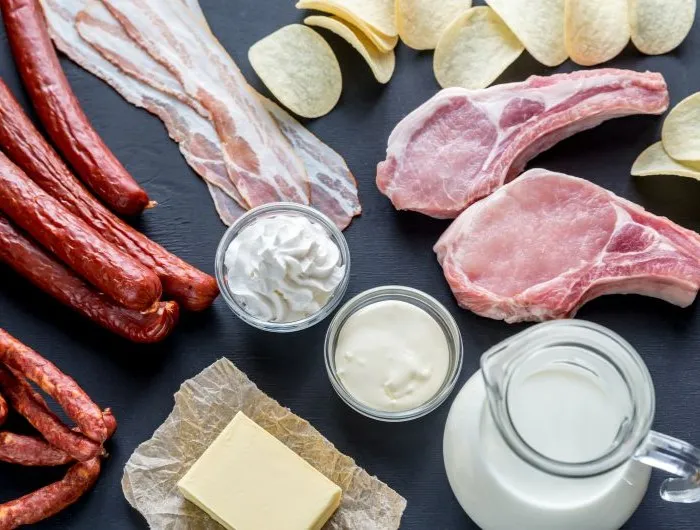
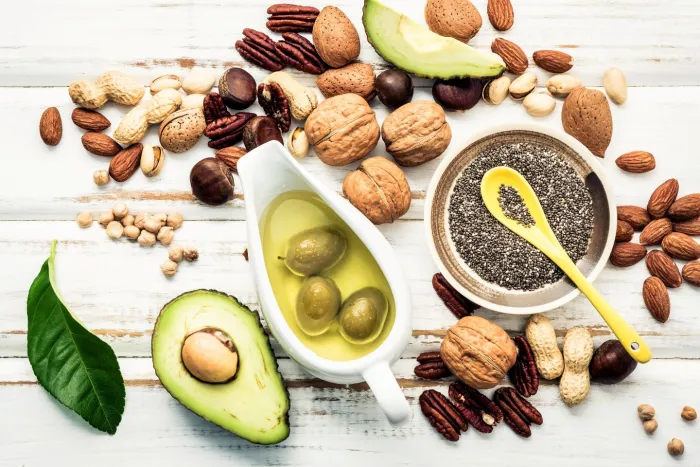
Saturated fat is commonly found in higher amounts in meat; full-fat dairy products like whole milk, ice cream, cheese, and butter; coconut oil; and palm oil. Mixed dishes and processed foods that contain these ingredients (for example: sandwiches, pizza, desserts) are major sources of saturated fat in our diets. Unsaturated fats are relatively higher in plant-based foods, like avocados, nuts, seeds, and plant-based oils like olive, canola, soybean, sunflower, and flaxseed. Omega-3 polyunsaturated fats are also found in fish and shellfish.
What do the Dietary Guidelines say about saturated fat?
The 2020-2025 Dietary Guidelines for Americans recommend that people aged two years and older limit their intake of saturated fats to less than 10 percent of calories per day, which equates to about 20 grams of saturated fat for a 2,000 calorie diet. As a result, that’s also the Daily Value (recommended limit) on Nutrition Facts labels. The 2020-2025 Dietary Guidelines also recommend replacing saturated fats with unsaturated fats, particularly polyunsaturated fats. According to the Guidelines, a healthy dietary pattern can also include fat-free and low-fat milk, yogurt, and cheese, as well as fortified soy beverages, as long as you stay within recommended calorie and saturated fat limits.
More than 80 percent of the US population exceeds the recommended limit for saturated fat intake, and the Dietary Guidelines have named saturated fat a “nutrient of public health concern” due to widespread overconsumption. Older children are particularly prone to overconsuming saturated fat: Approximately 90 percent of kids aged 9-18 consume too much saturated fat.
Given that small amounts of saturated fat are found in healthy foods like nuts and seeds, whole grains, poultry, and lean meat, the 2020-2025 Dietary Guidelines state that there is very little room for additional saturated fat after meeting food group needs with nutrient-dense foods. For example, dairy foods and beverages can be important sources of nutrients like vitamin D and calcium, but the 2020-2025 Dietary Guidelines recommend choosing fat-free or low-fat milk instead of whole milk to minimize excess saturated fat. One cup of whole milk has around 5 grams of saturated fat, or about one quarter of the daily recommended limit, but one cup of skim milk has zero grams while providing equal or higher amounts of calcium, vitamin D, and other important nutrients. Butter is 66 percent saturated fat and 4 percent polyunsaturated fat, while soybean oil is roughly the opposite: 60 percent polyunsaturated fat and only 16 percent saturated fat, making soybean oil (and nearly all other vegetable oils) a more heart-healthy choice. Choosing low-fat dairy and plant-based oils higher in unsaturated fat helps keep your saturated fat intake under the recommended limit. However, keep in mind that some plant-based fats, including coconut oil, palm oil, and cocoa butter, have a similar or even higher proportion of saturated fat than animal fats and should also be replaced with oils that are higher in unsaturated fat.
kerdkanno - stock.adobe.com.
What does the science say about saturated fat and disease risk? Does it matter what you replace saturated fat with?
We’ve known for a long time that replacing saturated fat with unsaturated fat lowers the risk of cardiovascular disease.
One of the first clues that saturated fat intake was related to cardiovascular disease risk came from the Seven Countries Study. Between 1958 and 1983, researchers gathered data on diet and health outcomes in the United States, Finland, Greece, Italy, Japan, the Netherlands, and the former Yugoslavia. They found that deaths due to cardiovascular disease were more common in places where people ate more saturated fat.
But the Seven Countries Study couldn’t prove that saturated fat was responsible for the higher risk of cardiovascular disease because the study didn’t collect data on individuals and their saturated fat intakes.
However, in the decades that followed, scientists conducted many randomized trials to further explore the link between saturated fats and cardiovascular disease. In 2017, a Presidential Advisory from the American Heart Association described the best of those trials as the four “core” trials based on the quality of their study design and execution. A meta-analysis of the core trials concluded that replacing saturated fats with polyunsaturated fats lowered the risk of heart disease by 29 percent over four to eight years. After considering the totality of the evidence, the Advisory stated that “we conclude strongly that lowering intake of saturated fat and replacing it with unsaturated fats, especially polyunsaturated fats, will lower the incidence of [cardiovascular disease].”
In a 2025 analysis that included six randomized trials (including three of the same trials considered the “core trials” by the American Heart Presidential Advisory), researchers found that replacing saturated fat with polyunsaturated fats reduced the risk of a non-fatal heart attack by 25 percent over roughly four years.
In addition to the evidence from clinical trials, in which people are assigned to eat different diets, studies that ask people what they eat and then follow them for decades have reached similar conclusions. For example, a study that tracked roughly 127,000 adults for up to 30 years estimated that substituting 5 percent of calories from saturated fats with equivalent calories from unsaturated fats was linked to a 17 percent lower risk of heart disease.
So what belongs on your plate? Based on evidence from randomized trials as well as substitution modeling studies, the Scientific Report of the 2025 Dietary Guidelines Advisory Committee describes what happens when you make the switch from saturated to unsaturated fats. For example, replacing butter with plant-based oils and spreads decreases LDL (“bad”) cholesterol and may also lower your risk of heart disease. You can also cut your risk of cardiovascular disease by swapping out red meat in favor of whole grains, vegetables, and plant-based sources of protein, like tofu, beans, and lentils.
What won’t help? Replacing saturated fat calories with a similar amount of calories from refined starches (like white bread and pastries) or added sugars isn’t going to do your heart any favors. For more info on where to find the good fats, check out our guidance.
Is it true that there are no randomized trials showing a direct link between saturated fat intake and heart disease?
Randomized trials are the gold standard of evidence, and ideally, we’d have randomized trial-generated evidence to tell us if saturated fat causes heart disease. But in 1962, a committee established with the support of the National Heart, Lung, and Blood Institute concluded that a randomized trial to test the impact of dietary fats on coronary heart disease in middle-aged American men would require a population of up to 100,000 with a follow-up of 4 to 5 years to demonstrate a 20 percent change in risk. In 1971, a task force assembled at NHLBI’s request concluded that a so-called National Diet-Heart Trial was not feasible, in part because subjects might not adhere to their assigned diet and the estimated costs ($500 million to $1 billion or more in 1971) would be formidable due to the large number of subjects and long follow-up. As a result, no such study has been conducted.
The task force was right to be concerned about the feasibility of conducting such a study. In 1982, researchers published results from the Multiple Risk Factor Intervention Trial (MRFIT) that tested the effects of lowering cholesterol (by cutting back on saturated fat and increasing polyunsaturated fats), along with improving blood pressure (via medication) and reducing cigarette smoking in nearly 12,900 American men at high risk for heart disease, in a randomized trial. Despite significant improvements in all three risk factors in the intervention group, there was no reduction in mortality from heart disease (or any other cause) compared to the control group.
Trials like MRFIT and others are often put forth by sat fat doubters as proof that the Diet-Heart Hypothesis—that is, the theory that dietary fat, especially saturated fat raises blood cholesterol and leads to heart disease—is not rooted in evidence. But MRFIT doesn’t refute the Diet-Heart Hypothesis. It’s results are due, at least in part, to the fact that the control group also improved in all three risk factors over the seven-year study period. It’s not clear why the control group saw such improvements, though the authors speculate that a cultural shift in U.S. health education aimed at modifying those risk factors during the study period may have had an influence. This study underlines how difficult it is to conduct a long-term trial because people’s habits—like diet, physical activity, and smoking status—change over time, no matter what intervention they’re told to follow.
But there is evidence that saturated fat is directly linked to heart disease, adding further support to the Diet-Heart Hypothesis. In the Oslo Diet-Heart Study, 412 men who had experienced a heart attack in the previous two years were randomly assigned to a diet intervention that emphasized eating more vegetable oil and fewer animal fats or to follow their usual diet. After five years, those in the intervention group slashed their risk of having another heart attack by 37 percent compared to those who continued eating their typical diet. The Oslo Diet Heart Study likely found a more pronounced reduction in risk compared to other studies because the population—men who had already experienced a heart attack—is at a higher risk of having a subsequent heart attack than is a general population of having a first heart attack. It provides strong evidence that replacing saturated fats with unsaturated fats is a heart-health promoting approach.
And meta-analyses (that is, pooling and further analyzing the results of several studies) of smaller randomized trials have looked at the effect of saturated fat on cardiovascular disease endpoints. Those meta-analyses (found here, here, here, and here) repeatedly show that replacing saturated with unsaturated fats lowers the risk of cardiovascular disease by roughly 20 to 30 percent.
Charlie's - stock.adobe.com.
Isn’t there research showing that saturated fat doesn’t increase the risk of heart disease?
When proponents of saturated fat intake cite studies that find no link between saturated fat and risk of heart disease, it’s essential to consider what the saturated fat was replaced with. When you change one part of someone’s diet, something else has to change, too in order to keep total calorie intake constant. For example, if you lower the amount of saturated fat someone eats, you’re not just removing it—you’re likely replacing it with something else to provide calories, like polyunsaturated fat or carbs.
Many studies—including randomized trials and observational studies—compare the effects of consuming foods rich in saturated fats with foods that have a neutral effect or increase disease risk (and that the Dietary Guidelines for Americans have consistently recommended limiting) like those rich in trans-fat, added sugars, or refined grains. By comparison, those swaps make saturated fat look neutral or beneficial. However, the highest quality trials show that replacing saturated fats with polyunsaturated fats lowers heart disease risk.
In some instances, studies that show no link between saturated fat intake and disease risk draw conclusions that are not supported by the results. For instance, a highly publicized meta-analysis concluded that “[c]urrent evidence does not clearly support guidelines that encourage high consumption of polyunsaturated fatty acids and low consumption of total saturated fats.” However, that conclusion ignored the results of its own meta-analysis (included in a supplement), which showed a 19 percent reduction in the risk of heart disease when the authors appropriately excluded the only trial that replaced saturated fat with a margarine high in trans fats.
What about the charge that the largest study to manipulate dietary fat intake has been excluded from the Dietary Guidelines Advisory Committee’s list of studies considered when making saturated fat recommendations? The study in question is the Women’s Health Initiative, which was a randomized trial designed to test if a diet low in all fats could lower the risk of breast cancer over the course of eight years in nearly 49,000 women. It didn’t. Nor did it lower the risk of heart disease.
The study volunteers weren’t told to replace saturated fat with unsaturated fats, and they didn’t. Rather, they slightly reduced all types of fat in their diet and replaced them with carbohydrates. That means that the Dietary Guidelines Advisory Committee was right to exclude the Women’s Health Initiative from its analysis aimed at answering questions about saturated fat and heart disease.
Does lowering saturated fat lower the risk of early death?
A common criticism from those who think that saturated fat has been wrongfully villainized is that randomized trials that test the effects of reducing saturated fat find no benefit on mortality. But it is nearly impossible to conduct a randomized controlled trial that has an endpoint of death in a healthy population because most trials don’t last nearly long enough—and aren’t large enough—to show an impact of a specific diet on death. On top of that, it’s unrealistic—and nearly impossible—to get people to consistently follow a diet that they did not choose for years on end, as evidenced by trials like MRFIT. As the authors of one analysis that found no mortality effect of reducing saturated fat or replacing it with polyunsaturated fats in randomized trials noted in a follow-up editorial, “this perhaps was not surprising with mean trial durations of 4-5 years.”
Does saturated fat raise LDL (“bad”) cholesterol?
Yes. Randomized study after randomized study shows that when you increase saturated fat intake, LDL rises. When you reduce it, LDL falls. But, again, it matters what you replace it with. In one of the most comprehensive analyses of this question ever done, researchers looked at the effect of swapping saturated fats for polyunsaturated fats in 69 tightly controlled feeding trials. For every 1 percent of saturated fat in the diet replaced with the same amount of polyunsaturated fat, LDL fell by just over 2 mg/dL.
I’ve heard that raising LDL might not be a problem.
This is false. There are few findings in medical research as solid as the link between LDL and cardiovascular disease. High LDL is not simply a risk factor. The American Heart Association, American College of Cardiology, and others note that high LDL levels are a well-established causeof cardiovascular disease. That’s based on evidence from over 200 studies of various designs, including randomized trials that have included over 2 million participants with over 20 million person-years of follow-up.
Take, for example, the inherited disorder Familial Hypercholesterolemia (FH), an inherited defect in the body’s ability to “recycle” LDL. As a result, people with FH have high blood levels of LDL as well as premature heart disease. In one study of 12,601 Dutch adults with FH and 25,375 unaffected relatives, those with FH had far higher blood levels of LDL (roughly 200 mg/dL versus 120 mg/dL) and a 3.7-fold higher odds of having coronary artery disease compared to their relatives without the inherited gene.
On the other hand, some genes are linked to lower LDL levels. Inheriting one of those genes is like being randomly assigned to an LDL-lowering therapy like a statin. And studies that consider the genetic effects (called Mendelian randomization studies) on LDL consistently show that people with genes that cause lower blood levels of LDL have a lower risk of heart disease and those with genes that result in higher LDL levels have a higher risk.
But the strongest evidence comes from randomized controlled trials in which drugs that reduce LDL also lower the risk for heart disease. In one analysis that included findings from 49 trials of lipid-lowering therapies (mostly pharmaceuticals like statins, though diet and ileal bypass surgery trials were also included) in roughly 312,000 study volunteers found that the risk of cardiovascular events was 23 percent lower for every 39 mg/dL drop in LDL.
That solid, consistent body of evidence is why, if you have elevated cholesterol, your doctor will likely tell you that you should try lowering it with drugs or lifestyle changes, according to guidelines issued by the American Heart Association, American College of Cardiology, and other professional organizations.
monticellllo - stock.adobe.com.
Is dairy fat healthier than other forms of saturated fat?
Nearly 60 percent of fat in dairy foods is saturated, making dairy a longtime target of recommendations aimed at lowering the risk of cardiovascular disease. However, many meta-analyses and systematic reviews of long-term observational studies (often funded by the dairy industry) have reported that dairy foods or high-fat dairy foods are not associated with an increased risk of cardiovascular disease.
But to determine if whole fat dairy truly has neutral or even beneficial effects, it’s important to consider what foods it’s being compared to. For example, whole fat dairy may be no worse—or perhaps better—than refined grains, sugary drinks, starchy vegetables, or meat. But how does dairy fat stand up against foods that are rich in unsaturated fat (think: nuts, seeds, fish, or vegetable oils)? One study that tracked roughly 222,000 U.S. adults for up to 32 years made that comparison. The authors estimated that every 5 percent of calories from dairy fat that was substituted with 5 percent of calories from polyunsaturated fats was linked to a 26 percent lower risk of heart disease. Those findings are consistent with evidence from trials and observational studies on total saturated fats.
Does dairy fat raise LDL?
Carefully controlled trials that provide study participants with all their food (called “feeding trials) report higher levels of LDL when people are fed higher levels of saturated fat from dairy foods rather than mono- or polyunsaturated fats (such as those in olive and soybean oil).
For example, in one study, researchers randomly assigned 113 healthy adults to either a high–saturated fat or a low–saturated fat diet group. Within each group, participants followed three 4-week diets, each providing 12 percent of calories from a distinct protein source: red meat, white meat, or non-meat. The three high–saturated fat diets delivered 13–14 percent of calories from saturated fat, compared to 7–8 percent in the low–saturated fat diets, where saturated fat was primarily replaced with monounsaturated fat. According to the authors, the variation in saturated fat content between groups was achieved mainly through the use of high-fat dairy products and butter. LDL was higher on all three high-saturated fat diets (roughly 9 to 11 mg/dL) than on the comparable low-saturated fat diets.
In another study, researchers randomly assigned 92 adults with abdominal obesity to diets rich in saturated fat (roughly 12.5 percent of calories) from either cheese or butter or to three diets that were low in saturated fat (5.8 percent) and rich in either monounsaturated fat, polyunsaturated fat, or carbs for 4 weeks each. The study reported a small difference in LDL on the butter (127.6 mg/dL) vs. cheese (123.4 mg/dL) diets. But LDL was considerably higher on both butter and cheese than when the participants were given a diet high in polyunsaturated (109.8 mg/dL) or monounsaturated fats (117.2 mg/dL).
Overall, these rigorously conducted feeding trials make it clear that saturated fat in dairy raises LDL, which in turn raises the risk of developing heart disease. Some dairy products may raise LDL more than others, though those differences appear to be small, especially when compared to the lower LDL levels seen in people who are fed diets high in poly- or monounsaturated fatty acids.
That said, there is a dearth of randomized trials directly comparing whole to low- or nonfat dairy. In trying to decide whether to recommend that people replace higher-fat with lower-fat dairy foods, the 2025 Dietary Guidelines Advisory Committee identified only three trials that otherwise met their inclusion criteria (trials that lasted at least 4 weeks and enrolled at least 30 participants per study arm, among other criteria). Only one of those trials looked at the effects of whole versus low-fat dairy on LDL (one of the other two studies looked at “good” HDL cholesterol; the other looked at blood pressure).
In that trial, researchers randomly assigned 164 men and women with at least two risk factors for metabolic syndrome to consume either 80 grams of regular cheese, 80 grams of reduced-fat cheese, or a no-cheese carbohydrate (bread and jam) control. After 12 weeks, LDL was not significantly different among the three groups. However, there are several issues that may explain the study’s findings. First, the diets were not tightly controlled. Instead, participants were simply given the test foods and asked not to eat other dairy products but were allowed to choose the rest of the foods in their diet. Second, average saturated fat intake was higher than the currently recommended 10 percent limit in both the regular (14 percent of total calories) and reduced fat (11 percent of total calories) cheese groups. Third, an appropriate control group would have replaced cheese with a food source rich in unsaturated fats (not simple carbohydrates). Finally, as a letter to the editor noted, the study may have been too small to detect a difference.
Until 2025, prior Dietary Guidelines Advisory Committees had not reviewed evidence specifically comparing the effects of higher and lower fat dairy on LDL or other heart disease risk factors. After synthesizing this evidence, the 2025 Committee stated, “A conclusion statement cannot be drawn about the relationship between higher-fat dairy consumption, compared to their lower-fat versions, by adults and older adults and blood lipids, blood pressure and cardiovascular disease mortality because there is not enough evidence available.” However, as noted above, they concluded there was strong evidence that replacing butter (dairy fat) with predominantly unsaturated plant-based oils and spreads decreases LDL. These conclusions, in part, led the Committee to recommend no change in the dairy advice from the 2020-2025 Dietary Guidelines: “Until further definitive studies are conducted [i.e., comparing higher fat and lower fat dairy], it is prudent to support the current Dietary Guidelines recommendation to consume fat-free or low-fat milk, yogurt, or cheese.”
What might make dairy different
It’s possible that the health effects of dairy fat are somehow different than other sources of saturated fat.
One possibility: Not all dairy foods are the same. The process of fermenting milk to make yogurt and cheese may lead to beneficial health outcomes. For example, some observational studies find links between yogurt and/or cheese intake and a lower risk of cardiovascular disease or type 2 diabetes.
However, how fermented dairy imparts benefits (if, in fact, it does) is not well understood and more research is needed to determine how different types of dairy influence weight, gut health, cardiovascular health, type 2 diabetes, and other outcomes.
Another possibility: Low concentrations of unique saturated fatty acids primarily found in dairy are beneficial. Some studies suggest that higher blood levels of those fatty acids (like pentadecanoic acid and heptadecanoic acid) are linked to a lower risk of type 2 diabetes in observational studies. And while those findings are interesting and warrant further research, they don’t automatically mean that you should eat more whole fat dairy foods.
Why not? It’s possible that the higher blood levels of those fatty acids are a result of eating many servings of lower-fat dairy, rather than the assumption that they reflect full-fat dairy intake. What’s more, it’s hard to believe that those fats alone could explain the link between dairy intake and lower diabetes risk, given that they make up less than three percent of the total saturated fat in whole milk. On the other hand, nearly half of the saturated fat in whole milk is palmitic acid, which has strong LDL-raising effects.
It’s also important to consider how people eat dairy. The major source of dairy in most US diets is cheese. But if that cheese is sprinkled on top of a salad or eaten with whole grain crackers and fruit, health outcomes will be different than if eaten as a part of cheeseburgers, pizza, burritos, pasta, and other foods that are typically high in refined carbs, red or processed meats, and salt. And those differences in how dairy is consumed can be difficult to parse out and control for in observational studies, which may explain the inconsistent findings on dairy’s effects on chronic disease.
The bottom line on dairy
Taken together, the body of evidence—including randomized trials and long-term observational studies—shows that dairy fats increase LDL compared to plant-based unsaturated fats. These findings do not support recommending whole milk or other high-fat dairy products in place of food sources of unsaturated fats (like nuts, seeds, etc.). Research also indicates that substituting butter with vegetable oils like olive, canola, and soybean is linked to lower risk of early death.
However, the evidence on full-fat dairy’s health effects is murky, and more research is needed to determine if dairy-specific saturated fats, fermentation, or other characteristics of dairy foods impart neutral or beneficial qualities on overall health. Given the current evidence on the harms of saturated fat overall, we recommend a cautious approach. It remains prudent to recommend mostly low- and nonfat dairy options to help limit overall saturated fat intake, though there is likely room in healthy diets to consume some whole-fat dairy, while maintaining less than 10 percent of daily calories from saturated fat.
What’s more, there’s currently no good reason to encourage more consumption of whole fat dairy in school-aged children. Even with the current standards that limit saturated fat in school meals, nearly 90 percent of children still consume more saturated fat than recommended. Children simply do not need more saturated fat in their diet, especially not the large dose they would get from consuming whole milk in schools. One cup of whole milk (the serving size of a carton served in schools) contains around 4.5 grams of saturated fat, or roughly 20-35 percent of the maximum saturated fat recommended for school-aged children in a day (depending on sex, age, and activity level).
LAONG - stock.adobe.com.
What about studies that show that red meat doesn’t raise bad cholesterol? Does that mean it’s healthy?
Most varieties of red meat—especially ground beef—are higher in saturated fat than comparison foods like white meat and plant-based protein, which means that they should have more potent LDL-raising effects. However, studies are often designed to show little difference between red meat and white meat or plant-based protein, making the results all the more likely to be favorable to the red meat industry.
For example, in one study, researchers divided 113 people into two groups, with half fed high-saturated fat diets and half fed diets low in saturated fat. Within those groups, the researchers further divided participants to receive diets rich in red meat, white meat, or non-meat protein. The high-saturated fat diets led to higher LDL levels than the low-saturated fat diets, regardless of whether people were given red or white meat (although people on the non-meat diet did end up with lower LDL). Unfortunately, a press release from the researchers’ university (and subsequent media reports) claimed that “red and white meats are equally bad for cholesterol.” In fact, it’s no surprise that LDL levels did not differ, given that the red meat and white meat diets had equal levels of saturated fat. The researchers intentionally kept those levels equal by selecting only the leanest cuts of red meat. In reality, most varieties of red meat—especially ground beef—are higher in saturated fat than the varieties used in this and other similar studies. If anything, this study confirms the importance of saturated fat, of whatever source, as a cause of elevated LDL.
Since the mid-1990s, studies (shown here, here, here, here, and here) have reported similar effects on LDL in trials that have pitted very lean cuts of red meat against white meat. These studies do not demonstrate that red meat is heart-healthy or exonerate the saturated fat in red meat for its contribution to heart disease. They simply show that no matter the source, if people consume too much saturated fat, the resulting increase in bad cholesterol will be similar regardless of whether it came from red or white meat.
What’s more, observational evidence indicates that higher intake of red meat is linked to a higher risk of cardiovascular disease. For instance, a recent study that followed nearly 150,000 veterans for roughly four years found that those who reported eating the most red meat (two servings or more per day) had an 18 percent higher risk of developing cardiovascular disease than those who ate less than one serving per week. The authors also estimated that substituting half a serving of red meat with half a serving of nuts each day would lower the risk of cardiovascular disease by 14 percent. Those results bolster findings from randomized trials that show that replacing red meat with plant-based proteins lowers LDL. Given the key role of LDL in the development of cardiovascular disease, the congruent results of these separate studies are not surprising.
Beyond saturated fat content, a growing body of evidence suggests that red meat may be harmful in other ways including raising the risk of heart disease through increased production of trimethylamine N-oxide (TMAO) which is formed in the gut when red meat is digested. Red meat is also linked to a higher risk of certain cancers and is classified as “probably carcinogenic to humans” by the International Association for Cancer Research (IARC). Processed red meats pose even greater risk with an even firmer “carcinogenic” rating from IARC.
If saturated fat should be limited, why are we being told to use beef tallow?
A vocal group that includes social media influencers, alternative health proponents, and Health and Human Services Secretary, Robert F. Kennedy, Jr., have pushed for people and companies to toss their seed oils (more on that below) in favor of beef tallow. But leading health and nutrition experts disagree. Why?
About half of the fat in beef tallow is saturated fat. A tablespoon of tallow has nearly a third of a day’s worth of saturated fat. Some tallow proponents assert that beef tallow doesn’t have the same cholesterol-raising properties as other saturated fats like butter. That’s because about 40 percent of the saturated fat in tallow is stearic acid, a type of fatty acid that doesn't raise LDL compared to other saturated fats. But that’s misleading: Tallow has more palmitic than stearic acid. And palmitic acid reliably raises LDL.
But why focus on individual fatty acids when you can just look at the effect of the foods they’re in? Perhaps because studies that have tested beef tallow’s impact on LDL are hard to come by. But in one tightly controlled study, 10 men lived in a hospital and were fed (in random order) diets that provided 40 percent of their calories from either butter, beef tallow, or olive oil for three weeks each. LDL was highest after the butter diet (it averaged 164 mg/dL) and lowest after the olive oil diet (140 mg/dL), with beef tallow (156 mg/dL) falling in the middle. Translation: Tallow may not be as bad for you as butter, but you can do better by choosing olive oil or soybean, canola, or other unsaturated fats that are known to lower LDL.
Some people also argue that beef tallow is a good source of the fat-soluble vitamins A, D, E, and K. It’s not. The USDA’s nutrient database indicates that one tablespoon of beef tallow has no vitamin A or K, less than 1 percent of a day’s vitamin D, and just 2 percent of a day’s vitamin E. (The UK’s nutrient database reports similar values.)
Don’t replace your vegetable oils with beef tallow. The beef tallow health halo is undeserved.
I've heard that seed oils promote inflammation. Is that true?
No. Seed oils—which include oils like soybean, canola, grapeseed, sunflower, and safflower—have been vilified as being pro-inflammatory due to their omega-6 (a type of polyunsaturated fat) content.
But there are two issues with that line of thinking. First, many seed oils—like canola, sunflower, or safflower—are not particularly high in omega-6 fats. Second, the idea that omega-6 fats cause inflammation is based on an oversimplification of how our bodies use the fats.
Here’s the theory of why omega-6’s might matter for inflammation: Certain enzymes can convert the omega-6 fat linoleic acid into another omega-6 fat called arachidonic acid, which can get converted into other compounds that promote inflammation.
In reality, only 0.2 percent of the linoleic acid we eat is actually converted to arachidonic acid. And in trials that slashed linoleic acid intake by up to 90 percent or boosted it nearly six-fold, blood levels of arachidonic didn’t fluctuate. In an analysis of 30 randomized controlled trials, researchers found that eating more linoleic acid was not linked to higher blood levels of inflammatory markers. So, while there is a mechanism that links omega-6 fats to inflammation, studies in people show that the fats aren’t actually inflammatory.
Why do seed oils get such a bad rap?
Over the course of the twentieth century, Americans’ intake of seed oils has ballooned. And some seed oil detractors note that the rise in seed oil intake parallels the rise in chronic disease. But seed oils are likely just guilty by association. How so? Seed oils are widely used in highly processed and fried foods, which aren’t doing your health any favors. (The Steak ’n Shake chain, for example, recently replaced seed oils with cholesterol-raising beef tallow as the frying fat for its fries, onion rings, and chicken tenders.) But something else about those foods—which are often high in calories, white flour, added sugars, and salt—may be the problem rather than seed oils. Replacing seed oils with beef tallow, palm oil, or coconut oil (all rich in saturated fat) certainly won’t make those foods healthier.
Our advice: Eat fewer heavily processed and fried foods, and your seed oil intake will naturally drop. But don’t throw the baby out with the bath water: There’s no need to worry about seed oils in salad dressing, mayo, buttery spreads, or cooking oil.
CSPI heavily relies on our grassroots donors to fuel our mission. Every donation—no matter how small—helps CSPI continue improving food access, removing harmful additives, strengthening food safety, conducting and reviewing research, and reforming food labeling. We don't take donations from corporations, and our flagship publication, Nutrition Action, doesn't run any ads. That means that everything we do is fiercely independent and unbiased from any bad actors, no matter how powerful. To help keep this online content 100% free, consider donating today to support CSPI.