

Health and science professionals question scientific basis of 2025–2030 Dietary Guidelines for Americans
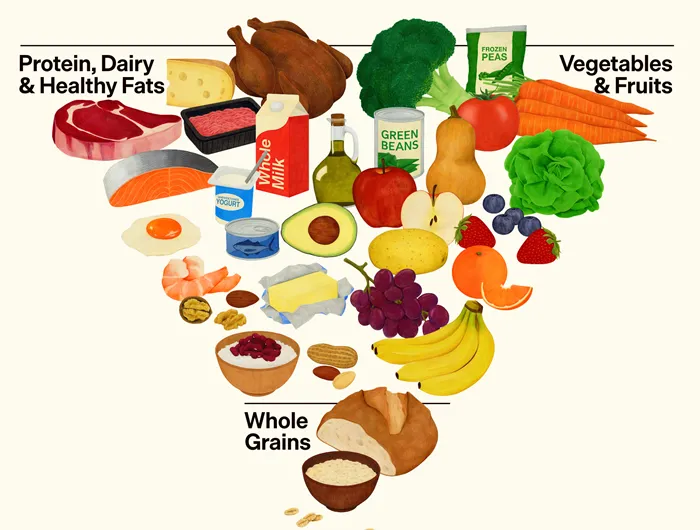
WhiteHouse.gov.
Experts say departures from evidence-based recommendations could mislead the public and harm health
Today, a letter signed by 210 researchers, doctors, and dietitians was sent to Health and Human Services Secretary Kennedy and Agriculture Secretary Rollins expressing concern about the recently released 2025–2030 Dietary Guidelines for Americans (DGA). The letter highlights serious scientific and procedural issues with the DGA, which risk confusing the public, undermining the scientific basis of the DGA, and harming health.
The letter notes that the new DGA rejects the majority of evidence-based recommendations from the 2025 Dietary Guidelines Advisory Committee (DGAC).
"After reviewing the full body of evidence, the 2025 DGAC concluded that increasing intake of plant-based sources of protein and reducing intake of red and processed meats was associated with better health outcomes,” said Dr. Christopher Gardner, a member of the 2025 DGAC. “Disregarding that conclusion and instead relying on a new process with significant conflicts of interest with the meat and dairy industries is not only harmful to the scientific integrity of the DGA but also to public health."
The new DGA relies on a “Scientific Foundation” developed with less rigor, inconsistent standards of evidence, and significant conflicts of interest.
“The administration asserted the need for dietary guidance ‘free from ideological bias, institutional conflicts, or predetermined conclusions,’ yet the new Scientific Foundation embodies all three,” said Aviva Musicus, Adjunct Assistant Professor of Nutrition at Harvard T.H. School of Public Health and Science Director at the Center for Science in the Public Interest. “The majority of authors had clear ties to the meat, dairy, and supplement industries, and the evidence was cherry-picked to fit a predetermined narrative that served those interests. That compromised foundation now undermines the credibility of the 2025–2030 Dietary Guidelines.”
The letter also calls attention to internal inconsistencies in the Guidelines, such as recommending saturated fat limits while simultaneously promoting high intakes of red meat and full-fat dairy. Several recommendations, including increases in protein intake, lack generalizable scientific justification.
“Scientists and physicians have a responsibility to speak out when established evidence is set aside,” said Dr. Walter Willett, a leading signer of the letter and a Professor of Epidemiology and Nutrition at Harvard T.H. Chan School of Public Health. “Public health guidance should be driven by rigorous, independent science—not by commercial interests or shifting political priorities. When the scientific process is compromised, it is not an abstract concern; it directly affects the health of millions of Americans.”
The signatories call on USDA, HHS, and professional associations to issue science-based dietary guidance that truly promotes health and prevents chronic disease and to provide clear, implementable guidance for federal nutrition programs that align with the DGA, like school meals.
Dr. Steven Clinton, Professor of Internal Medicine and Schoenlaub Cancer Research Chair at the Ohio State University, was a member of the 2015 Dietary Guidelines Advisory Committee and is among the 210 signatories on today’s letter.
“This effort should be science based in its entirety, particularly in a nation that suffers an enormous disease burden due to poor nutrition and lack of fitness. It is critical that the very best of our accomplished, experienced, and wise academic scientists continue to collaborate with the HHS and USDA to provide the very best to our nation,” Clinton said.
# # #
Contact Info: Lisa Flores, 202-777-8368 or Jeff Cronin, 202-777-8370