Is kiwi healthy? 6 things to know about the nutritious fruit
Надія Коваль - stock.adobe.com.
Why all the fuss about kiwi? Maybe it’s the fiber, the eye-popping colors, or the refreshing tang. Whatever the reason, kiwi seems to be having a moment. Here’s how to make the most of the fuzzy, healthy fruit.
This article comes fromNutrition Action. We don’t accept any paid advertising or corporate or government donations. Any products we recommend have been vetted by our staff and are not advertisements by the manufacturers. They’re just healthier foods we think you’d like to know about!
1. Taste the rainbow
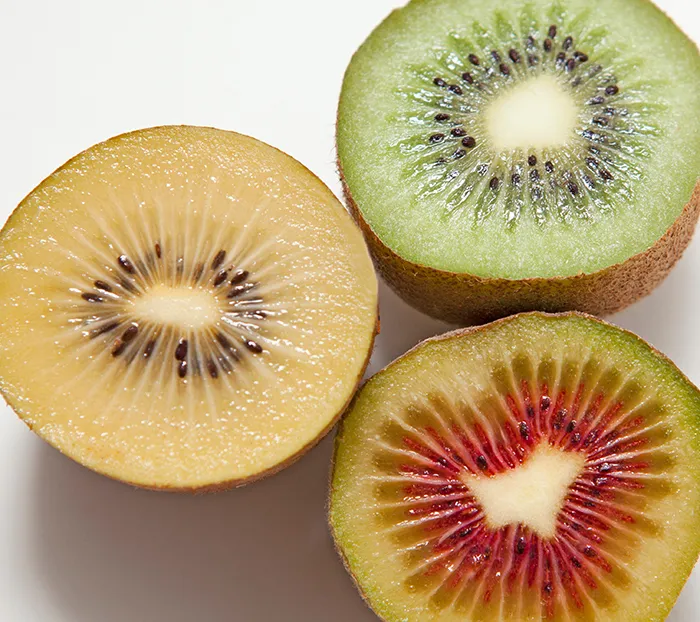
Clockwise from left: Gold kiwi, green kiwi, red kiwi.
Ewelina Thepphaboot - stock.adobe.com.
Pick a color, any color. Not quite, but kiwis now come in green, gold, or red...and each has its own perks.
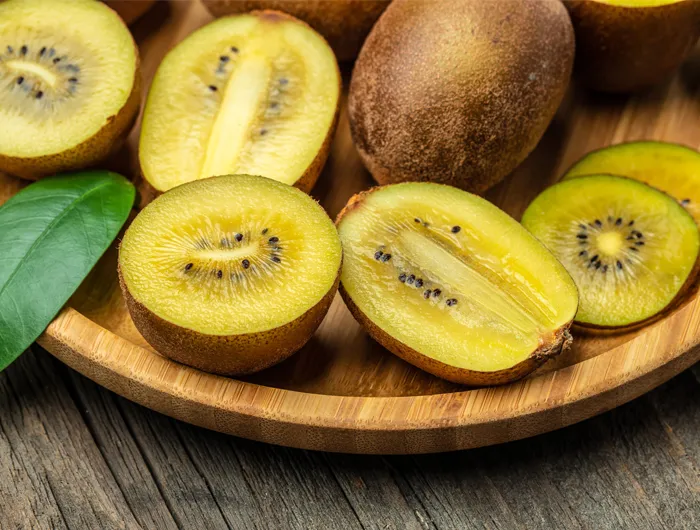
For one that’s easy to eat unpeeled, go with the gold and its smooth, edible skin. Compared to its fuzzy green cousin, a gold kiwi has less-tangy flesh, fewer seeds, and a smaller core. New Zealand kiwi giant Zespri spent a decade cross-breeding kiwis to develop SunGold, the most popular gold variety.
And last year, the company introduced smooth-skinned RubyRed Kiwi to the US market. It sports delicate, pink-tinged flesh (thanks to natural plant pigments called anthocyanins), ripens quickly, and tastes “naturally berry sweet,” says Zespri.
Although green, gold, and red kiwis all have distinct growing seasons in different parts of the world, many suppliers grow their fruit in more than one region (like California, Italy, and New Zealand). So you’re likely to find at least one variety in your supermarket at any given time.
2. All kiwis are healthy
At roughly 50 calories apiece, kiwis are perfectly sized for snacking. And the little fruits boast a mighty store of nutrients. All kiwis offer folate, fiber, potassium, and vitamin C. The flesh of green kiwis packs more fiber, but gold-fleshed and red-fleshed kiwis have more vitamin C. So mix it up!
3. Green kiwis are a great way to ‘fibermaxx’
Ibnu Fatah - stock.adobe.com.
“Fibermaxxers” often mention kiwi for a reason: Two green kiwis have 4 grams of fiber—as much as an apple or a cup of blueberries. Only a few fruits have more. (A pear has 6 grams and a cup of raspberries or blackberries has 8 grams.)
If fiber is your focus, go with green. Peeled green kiwi has roughly twice as much fiber as peeled gold kiwi. (Red kiwi falls roughly in the middle of green and gold.)
4. Do you need to peel kiwi? It’s up to you
Cristbal - stock.adobe.com.
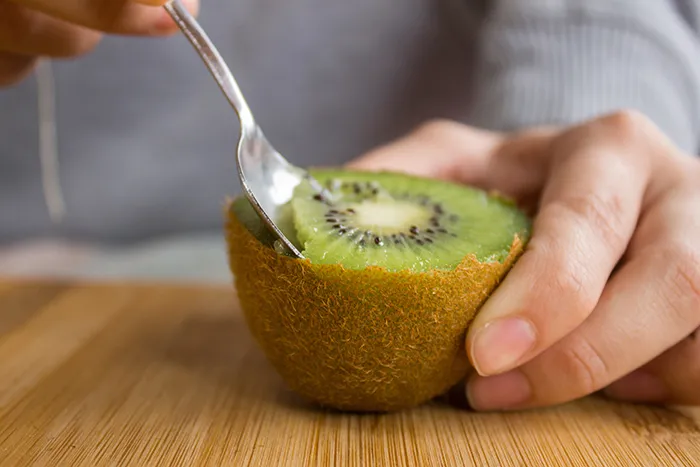
The un-fuzzy skin of gold and red kiwi makes it easy to eat them without peeling. While most people cut green kiwis in half and spoon out the flesh, it’s also fine to eat the skin if you don’t mind the fuzzy texture. It’s not just edible. It comes with extra fiber and vitamins.
Can’t get enough kiwi? Keep your eyes peeled for kiwi berries, which pop up in stores for a short time every fall or winter. The grape-sized fruit has smooth (edible) skin and kiwi-like flesh—think of it as a kiwi you can eat in one bite.
CSPI heavily relies on our grassroots donors to fuel our mission. Every donation—no matter how small—helps CSPI continue improving food access, removing harmful additives, strengthening food safety, conducting and reviewing research, and reforming food labeling. We don't take donations from corporations, and our flagship publication, Nutrition Action, doesn't run any ads. That means that everything we do is fiercely independent and unbiased from any bad actors, no matter how powerful. To help keep this online content 100% free, consider donating today to support CSPI.