Raw Farm declines to recall E. coli-contaminated raw cheddar cheese
dmf87 - stock.adobe.com.
The FDA and CDC are investigating an E.coli O157:H7 outbreak linked to Raw Farm brand raw cheddar cheese, which has sickened seven people in three states. Despite a recommendation to voluntarily recall the contaminated product, Raw Farm has declined. Here’s what to look for in your fridge or on shelves, and what to do if you’ve been exposed to E. coli-contaminated foods.
Multistate outbreak: Where people are getting sick
The FDA has traced an outbreak of E. coli O157:H7 to raw cheddar cheese produced by Raw Farm, based in Fresno, California. As of Mar. 15, 2026, when the FDA last reported data for the outbreak, there were seven reported illnesses between Sep. 1, 2025, and Feb. 13, 2026, as well as two possible related illnesses in 2025. Four of the seven illnesses occurred in children under age 3; two patients have been hospitalized, but no deaths or hemolytic uremic syndrome (HUS) cases have been reported.
The illness reports are from California (5), Texas (1), and Florida (1). However, Raw Farm brand cheeses are sold at retailers nationwide.
The FDA and CDC are collecting data about the outbreak as part of an ongoing investigation. This article will be updated as new data are released. The agencies are investigating the outbreak's origin and collecting samples for further analysis, but no results are available yet.
Which Raw Farm raw cheese products are recalled?
Because Raw Farm has declined to voluntarily recall the products associated with this ongoing E. coli outbreak, no Raw Farm raw milk cheeses are being recalled.
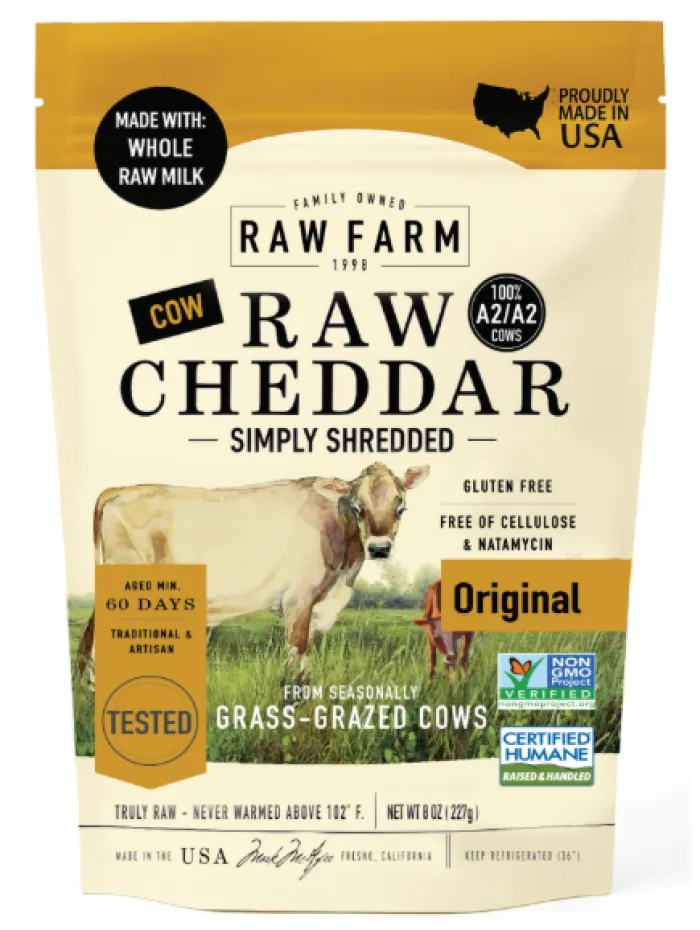
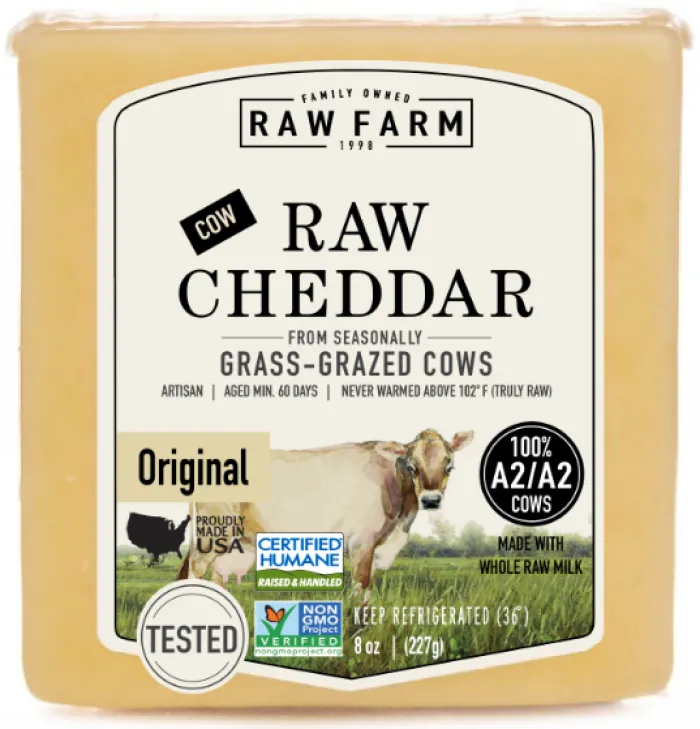
Illnesses are linked specifically to Raw Farm raw cheddar sold in 8 oz. bags of shredded cheese and 8 oz. blocks.
FDA.
FDA.
What is raw milk?
Raw milk is unpasteurized, or milk that has not been heated to temperatures that kill pathogens like Salmonella, E. coli, Listeria, or other harmful bacteria and viruses. Consuming raw milk can cause vomiting, diarrhea, fever, body and abdominal pains, and headache—but it may also cause chronic, severe, and life-threatening symptoms. Infants, children, and pregnant people experience higher risks from foodborne illnesses; E. coli O157, for example, is more likely to cause kidney failure in infants and children than in adults, but immunocompromised and elderly adults are also at greater risk than healthy younger adults.
A fever higher than 102°F, especially if you also have:
Diarrhea for more than three days that is not improving
Bloody diarrhea
Vomiting that prevents you from drinking adequate fluids
Signs of dehydration, including:
Not peeing much
Dry mouth and throat
Feeling dizzy when standing up
Symptoms of E. coli infection
Anyone can get infected with E. coli, but some groups are more likely to experience severe symptoms: those older than 65 or younger than five, people with weakened immune systems, and people who travel internationally.
Symptoms range from none to severe and begin to appear two to four days after eating or drinking contaminated foods or water. Most people with E. coliinfection have diarrhea (which may be bloody or watery), stomach cramps, vomiting, and low-grade fever, and usually recover within five to seven days without medical care.
When to seek treatment for suspected E. coliinfection
If you have symptoms of E. coli infection, the CDC recommends drinking plenty of fluids, resting as much as possible, and washing your hands thoroughly and often. Many people recover at home and without any medical attention.
There are some rules to treatment for E. coli, though: Treating E. coli with antibiotics—or with antidiarrheal drugs like Imodium or Pepto-Bismol—can make you sicker. Call your healthcare provider before taking any over-the-counter drugs to treat suspected E. coli infection, especially if you have a high fever or bloody diarrhea.
If you have any of the following symptoms, seek medical attention immediately:
Diarrhea or vomiting that lasts more than two days
Bloody diarrhea or urine
A fever higher than 102°F
Dehydration (little to no urination, very dark urine, extreme thirst, dry mouth, dizziness, or extreme fatigue)
Children have an increased risk of serious illness
Children, particularly those under age five, can experience more severe symptoms from Shiga toxin-producing E. coli (STEC) infection, a particularly virulent subset of E. coli O157:H7 infections. Dehydration is especially dangerous for young children. Give children extra fluids and oral electrolyte solutions, like Pedialyte, at the first sign of illness; do not wait for signs of dehydration.
Do not give children under age 12 Pepto-Bismol, Kaopectate, or similar antidiarrheal products. Seek medical attention immediately if your child has the following symptoms:
Diarrhea or vomiting that lasts more than two days
Symptoms of STEC infection, especially bloody diarrhea or urine
A fever higher than 102°F
Dehydration (little to no urination, very dark urine, extreme thirst, dry mouth, dizziness, or extreme fatigue)
Hemolytic uremic syndrome: What to watch out for
STEC causes bleeding in the digestive tract and increases risk of hemolytic uremic syndrome; severe cases may cause HUS, which can lead to kidney failure and even death. Symptoms of HUS include:
Urinating less often or not at all
Loss of color in cheeks and lower eyelids
Unexplained bruising or petechiae (tiny red spots on the skin)
Extreme irritability or fatigue
Loss of alertness or awareness
HUS is a medical emergency. People with symptoms of HUS should be hospitalized immediately to prevent kidney failure and other serious complications. If you have any symptoms of HUS, go to the nearest emergency room immediately.
Prevention is key to reducing the spread of foodborne illness
Anyone can be infected with E. coli, which typically contaminates food through contaminated water, animal waste, or through people who have E. coli.
The first and best barrier to spreading E. coli is handwashing. Even if you contract E. coli infection through food, you can spread your infection to others through unwashed hands, especially if you touch others directly, prepare food, and touch household surfaces.
Use warm or cold water
Lather your hands thoroughly with soap
Scrub for at least 20 seconds, including the backs of your hands, under your nails, and between fingers. (No timer? It takes about 20 seconds to hum the “Happy Birthday” song twice.)
Rinse well with cold or warm water
Dry your hands
No soap and water available? Hand sanitizer is the second-best option. Use a product with no less than 60 percent alcohol.
Clean your hands and surfaces often, especially before and after handling uncooked meat, poultry, flour, and eggs. Wash your utensils and kitchen surfaces after preparing a food item. Wash produce under cold running water before preparation.
Separate food products to prevent cross-contamination. Use separate surfaces and utensils for raw and cooked ingredients.
CSPI pushes for policies to keep our food supply free of dangerous pathogens, fight antibiotic resistance in the food chain, control and label allergens, and curb the use of synthetic dyes and poorly tested additives. We led the fight for national legislation that promises safer produce, and whole and processed foods that are regulated by the FDA. You can support our efforts to foster a safer food system today.
CSPI heavily relies on our grassroots donors to fuel our mission. Every donation—no matter how small—helps CSPI continue improving food access, removing harmful additives, strengthening food safety, conducting and reviewing research, and reforming food labeling. We don't take donations from corporations, and our flagship publication, Nutrition Action, doesn't run any ads. That means that everything we do is fiercely independent and unbiased from any bad actors, no matter how powerful. To help keep this online content 100% free, consider donating today to support CSPI.