No matter whose perspective you take, it’s time for HHS Secretary Robert F. Kennedy, Jr. to go.
A political liability for the Republican Party
Let’s first consider his usefulness to the Republican Party. It’s likely true that RFK brought some new voters over to the Republican side of the ledger in the 2024 election, notably erstwhile Democrats concerned about additives in the food supply and the purported dangers lurking in vaccines.
This election was not lost primarily due to RFK or his Make America Healthy Again (MAHA) movement, but they certainly didn’t help Republicans. The movement’s standard-bearer in Congress, Kansas Senator Roger Marshall, was unceremoniously shown the door. He was not alone. According to Politico, of 21 MAHA-endorsed federal candidates, 12 lost and eight won (one race was undeclared), with almost all of the winners in uncompetitive races.
The political dangers of RFK’s anti-vaccine stance were understood even by strategists in the Trump administration who tried to steer him away from vaccines on the campaign trail. Stick to food, they said. It is not surprising that some Democrats such as newly minted Michigan Senator-elect Abdul El-Sayed actively courted MAHA supporters, with apparent success. He, along with other recently elected physicians such as incoming Ohio Governor Amy Acton and South Carolina Senator Annie Andrews showcased their pro-public health and -vaccine stances in their campaigns.
Broken promises to MAHA
From the MAHA adherents’ perspective, RFK hasn’t done much to make food safer or healthier. He struck deals with some companies to voluntarily remove synthetic food dyes from their products and published a (weak) proposal to reform food additive regulation, but was stumped by corporate interests influencing the administration’s decisions.
Just weeks before the election, RFK’s lead nutrition advisor Calley Means quit, decrying the success in waylaying a definition of ultra-processed foods by the very large corporations the Secretary had suggested were “poisoning our kids.” Means even asserted that the White House was motivated by attempts to secure contributions from the sugar industry.
RFK has been a long-time supporter of litigation on glyphosate, even securing a $289 million award for an individual allegedly injured by the herbicide, but the Trump administration took the oppositive tack. It supported food companies trying to restrict plaintiffs’ access to the courts and even went so far as to declare glyphosate critical to national security and signing an executive order to boost its production.
On PFAS, the so-called “forever chemicals,” Trump’s EPA reversed Biden-era restrictions on their presence in drinking water and cut research. And the administration also repealed standards on mercury emissions from coal- and oil-fired power plants. The EPA is not part of HHS, but these events underscored RFK’s impotence in the face of garden-variety Republican anti-regulatory policies.
This has left MAHA proponents shouting betrayal and reminding the Republican party that it should not take MAHA votes for granted. As MAHA influencer Tiffany Cianci put it, “They didn’t buy these voters, they rented them.” At the least, RFK did little to deflect voters’ animus toward the Trump administration during the recent elections. More likely, he magnified voter concerns about corruption by appointing a series of grifters to senior government positions.
Undermining the public health mission of HHS
Viewed from a public health perspective, RFK seems more likely to obstruct the mission of the Department than to further it. As a reminder, here's that mission: “to enhance the health and well-being of all Americans, by providing for effective health and human services and by fostering sound, sustained advances in the sciences underlying medicine, public health, and social services.”
Vaccine hesitancy, spurred on by debunked theories popularized by the Secretary before and during his time at HHS, is now producing record, multi-state outbreaks of measles. The US is on the brink of losing its status as a country that that has eliminated measles, a designation it has enjoyed for a quarter of a century. His Dietary Guidelines literally turned accepted nutrition wisdom on its head, using a hand-picked, conflict-ridden panel to promote red meat and saturated fat consumption in defiance of mainstream nutritional advice.
Elsewhere, FDA career scientists painstakingly showed that the Secretary’s pet peptides were unsuitable for compounding. No mind. He stacked an advisory committee with ill-qualified members with significant investments in the peptide industry, securing favorable votes, and then, in a forlorn attempt to sway some MAHA voters, announced a week before the election that his longstanding look-the-other-way policy was now official. Elsewhere, he supported legalizing flavored vapes.
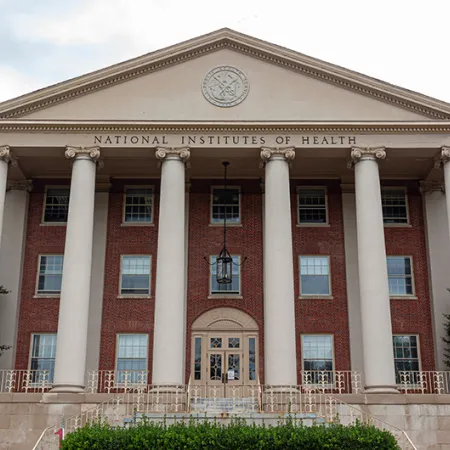
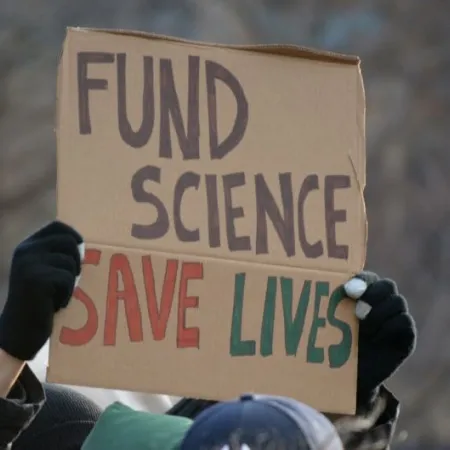
On research, his HHS budget, thankfully rejected by even an otherwise pliant Congress, included a proposal to cut NIH funding by 40%. And he targeted millions of research dollars on topics from cancer to Alzheimer’s Disease simply for referring to off-limit topics like vaccine hesitancy or Diversity, Equity, and Inclusion. Meanwhile, HHS is working feverishly with taxpayer funds to prove the still-elusive theory that vaccines cause autism.
And what of HHS’s vaunted commitment to medical and social services? Measure that up against the $911 billion in Medicaid cuts and the $187 billion in SNAP cuts at USDA, each over ten years, in 2025’s One Big Beautiful Bill Act. Or against the administration’s ongoing commitment to undermine Obamacare, predictably leading to higher uninsurance rates.
RFK is guilty of exactly what HHS and the public health community have long stood against: the elevation of anecdote, the Secretary’s personal experiences, and hearsay over science and evidence. For the harm this has caused to communities across the country, he should step aside.
For RFK, the easiest way out is to go voluntarily
Finally, let’s consider the Secretary’s own perspective, if we may be so bold as to speculate on that. It may be easier to resign than endure two years of subpoenas, oversight hearings, and even impeachment efforts that will expose the administration’s self-dealing and decision-making unmoored from science.
RFK and his MAHA supporters may believe that the ascent of Stephen Miller to be Trump’s Chief of Staff foretell a MAHA comeback. But perhaps this is an opportunity for RFK to put his ignominious HHS reign behind him and to go back to the relative peace and quiet of eating roadkill.