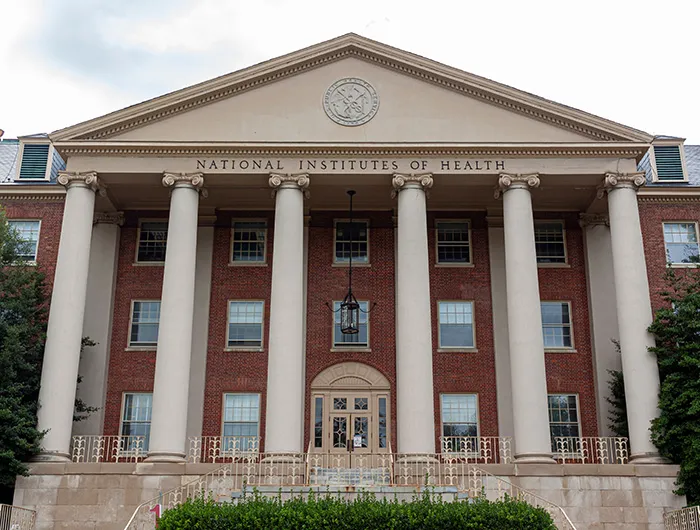
CSPI’s Litigation Department and co-counsel are suing NIH, HHS, and DOGE, challenging NIH’s ideologically driven censorship and termination of biomedical research grants. If NIH's research censorship is not reversed or stopped, research that could have answered important questions about kidney disease, Alzheimer's, reproductive health, and more will go unfunded. Learn more about our lawsuit and how you can help us defend public health.
New class action lawsuit seeks to stop censorship of federally funded research
On Sep. 16, 2026, CSPI’s Litigation Department and its co-counsel at the American Civil Liberties Union, Protect Democracy, and Jacobson Lawyers Group PLLC sued NIH, HHS, and DOGE, challenging NIH’s ideologically driven censorship and termination of biomedical research grants. The lawsuit alleges that NIH, the world’s largest public funder of biomedical research, is unconstitutionally censoring research and allowing political ideology to override scientific expertise in determining which projects receive federal funding, contrary to congressional mandates.
Over the last century, NIH has developed into the global leader in biomedical research, providing thousands of grant awards on myriad topics to researchers in all 50 states and abroad. NIH’s funding is highly sought-after and competitive, requiring researchers to submit detailed applications that go through rigorous layers of expert scientific review over many months. For decades, terminations of ongoing NIH grants have been exceedingly rare.
That all changed in Feb. 2025, when NIH and HHS issued a series of policies, based on executive orders issued by President Trump, aimed at cutting research that expresses views the administration disfavors. This has impacted viewpoints on topics including "diversity, equity, and inclusion," gender identity, climate change, misinformation, and more. Thousands of research grants have been terminated, while many more researchers have seen their applications denied or funding delayed as a result of the administration’s ideological purge.
The lawsuit argues that NIH's research censorship is both illegal and unconstitutional
To address these ongoing harms, CSPI’s Litigation Department filed suit against NIH, HHS, and DOGE in federal district court in the Northern District of California. The suit, Salles v. National Institutes of Health, was filed on behalf of 17 plaintiffs, accomplished in their fields and with a proven track-record of receiving NIH grants, seeking to represent two nationwide classes of researchers who have been affected by NIH’s ongoing censorship efforts. Plaintiffs are seeking class-wide relief for all researchers whose work was unjustifiably terminated but whose grants have not yet been reinstated, as well as all researchers currently being impacted by these unlawful, viewpoint-based policies that are likely to lead to additional terminations, forced renegotiations (explained below), or application denials.
The lawsuit contends that NIH’s current viewpoint-based policies violate the First Amendment, which prohibits NIH from screening out projects or applicants because it thinks they’ll express views the government does not like. In addition, NIH is violating statutes designed to ensure federal public health grants are awarded based on scientific merit, not politics, and regulations limiting when the government can terminate grants.
NIH is using a troubling list of 235 keywords as proxies to identify those grants in connection with the agency thinks researchers are likely to express or support viewpoints this administration does not like. The forbidden terms include "equity," "advancing diversity," "racist," "gender," "Latinx," "climate change," and "pregnant individual," among others. This list is being used to review grant applications as well. Some grants and applications are summarily terminated or denied, while NIH has sought to renegotiate others, requiring researchers to scrub their grant materials of flagged words. If the researcher refuses, NIH terminates the grant or stops the application from advancing.
The screening is being applied to already-funded awards and new funding applications, which have already passed through rounds of rigorous peer scientific review and been approved by the NIH officials that Congress has identified as the proper decisionmakers. This additional layer of ideological review is a departure from NIH’s longstanding approach and contrary to congressional mandates designed to prevent the politicization of the NIH award process.
Terminating or threatening to terminate grants injects an enormous amount of uncertainty into the scientific research process, which relies on stable and predictable multi-year grants allowing the planning, relationship building, phased work, and implementation that scientific research requires.
If this grant review process is not reversed or stopped, research that could have answered important questions about kidney disease, Alzheimer's, reproductive health, and more will go unfunded and will not be conducted. If so, treatments will go undiscovered, public health will be negatively impacted, and lives could be lost.
This isn't the first time we are taking on the federal government for terminating research
CSPI is no stranger to litigation fighting against NIH’s assault on scientific research integrity. In April 2025, CSPI’s Litigation Department, alongside ACLU, Protect Democracy and the Emery Celli law firm, sued NIH and HHS, challenging NIH’s then-current policies and the resulting grant terminations. That case—American Public Health Association v. National Institutes of Health—primarily challenged NIH and HHS’s actions under the Administrative Procedure Act.
A judge ruled that the NIH policies that led to grant terminations were "arbitrary and capricious," making them illegal under federal law. When speaking in court, he used passionate language, asking, "Have we no shame?" and also commented that this was the worst case of discrimination by the government that he had seen in his 40 years on the bench.
As a result of this ruling, many NIH research grants were reinstated. But, the Trump administration also appealed the ruling and asked the Supreme Court to "stay" (that is, pause enforcement) of the ruling. Addressing on the Court’s emergency docket the limited question whether the ruling would be stayed, the Supreme Court issued a mixed decision, which, importantly, left intact the portion of the judgment that found those policies unlawful. We are now defending the entire ruling on appeal at the US Court of Appeals for the First Circuit and may end up back at the Supreme Court again, this time for a full appeal on the merits of the case.
How is this case different from the last one?
Unfortunately, the Trump administration's NIH is continuing to make viewpoint-based terminations of critical biomedical research. The new class action lawsuit aims to put an end to the administration’s current policies that inject an ideological litmus test into the grant review process.
This new case claims that NIH's current grant review process violates the First Amendment, which forbids the government from choosing which viewpoints to fund based on whether the administration agrees with them.
Unlike our last case, this is a class action lawsuit. If successful, the unlawfully terminated grants for a nationwide class of researchers could be reinstated, and the court could order NIH to stop trying to censor researchers’ speech.
How you can help us defend public health
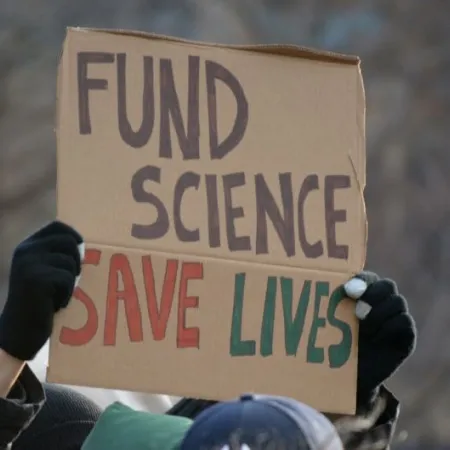
This case is of the upmost importance: To silence research-related speech is to tell researchers what questions not to ask, what answers not to find, and which patients not to help.
As your food and health watchdog, CSPI is fighting back against the Trump administration's efforts to dismantle and weaponize public health agencies to push their own ideological agenda. Beyond NIH research grants, CSPI is calling out RFK Jr.'s misinformation and broken promises on nutrition policy, sounding the alarm on vaccine policy changes, demanding more food safety funding at the CDC, and so much more.
Because all of this takes a lot of work, we need your support more than ever to defend public health.