Roughly 42 percent of U.S. adults have the metabolic syndrome (MetS). That means they have at least three of these five risk factors: abdominal obesity, high blood pressure, high fasting blood sugar, high triglycerides, and low HDL (“good”) cholesterol.
Researchers randomly assigned 618 people with MetS to one of two groups. For six months, one of the groups had two individual and 19 group sessions that focused on building four habits: including vegetables at meals, taking daily brisk walks, pausing before responding to stress or opportunistic eating, and boosting awareness of foods’ smells, colors, and tastes. The second group got monthly tip sheets on diet, exercise, and stress management for two years and check-in calls every three months.
Two years after the study started, 28 percent of the first group—versus 21 percent of the second group—were in remission from MetS.
Does caffeine promote atrial fibrillation or atrial flutter, two types of irregular heartbeat?
Researchers enrolled 200 people who typically drank at least one cup of coffee a day at some point in the previous five years and had atrial fibrillation (AF) or atrial flutter and a history of AF. Before starting the trial, all had electrical cardioversion to treat their AF or flutter.
Each participant was randomly assigned to drink at least one cup of caffeinated coffee (or one espresso shot) a day or to abstain from all coffee, caffeinated drinks, and decaf.
After six months, AF or atrial flutter occurred in 64 percent of the abstainers but only 47 percent of the coffee drinkers.
What to do
In modest quantities (the participants averaged only seven cups of coffee a week), caffeine doesn’t promote—and might curb—AF or flutter.
Got knee pain caused by osteoarthritis? Tai chi may help.
Scientists randomly assigned 170 people with knee osteoarthritis to either (a) an unsupervised video-based Yang-style tai chi program—for 45 minutes three times a week—plus a mobile app (My Exercise Messages) that gives nudges to do tai chi, along with access to a website about exercise and arthritis, or (b) access to the same website.
After 12 weeks, the tai chi group reported greater improvements in pain and function than the website-only group.
What to do
Go to myjoint-taichi.org to try the free video program and download the My Exercise Messages app. Both were designed by researchers at the University of Melbourne in Australia. For more on arthritis, click here.
Cardiovascular disease (CVD) is the leading cause of death in people on dialysis. Does fish oil help?
Researchers randomly assigned 1,228 people on dialysis for end-stage kidney disease to take either four grams of fish oil (including 1.6 grams of EPA and 0.8 grams of DHA) or a placebo every day.
After 3½ years, the risk of serious cardiovascular events (heart attacks, strokes, peripheral vascular disease leading to amputation, etc.) was 43 percent lower in the fish oil takers than in the placebo takers.
What to do
If you’re on dialysis, ask your doctor about taking fish oil. Otherwise, don’t assume fish oil will lower your risk of cardiovascular disease. In a trial of healthy people, fish oil didn’t lower CVD risk. People on dialysis are more prone to inflammation, irregular heart rhythms, and other problems, so these results may not apply to everyone.
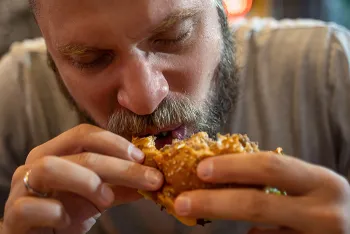
Do people eat more of many ultra-processed foods because they’re soft?
Chiralli - stock.adobe.com.
Scientists had 41 adults eat unlimited diets of ultra-processed foods with either a softer or harder texture for two weeks each in random order.
People ate more quickly and swallowed roughly 370 more calories a day on the softer versus the harder diet. (The study was funded by the Dutch government and food companies.)
What to do
Limit softer ultra-processed foods that go down quickly.
Exercise may slow Alzheimer’s, which occurs when beta-amyloid and tau proteins accumulate in the brain.
Researchers tracked 296 cognitively healthy older adults for nine years. Among people who started with elevated beta-amyloid levels, those who did low levels of activity (3,001 to 5,000 steps a day) accumulated less tau and had less decline on cognitive tests than those who were inactive. People who were more active (over 5,000 steps a day) did even better.
What to do
Get moving. This type of study can’t prove that you’ll dodge Alzheimer’s, but the benefits of exercise just keep piling up.
For people with irritable bowel syndrome (IBS), some clinical guidelines recommend a “traditional” healthy diet that limits fatty, spicy, and processed foods, caffeine, fizzy drinks, and alcohol as an alternative to a more-restrictive low-FODMAP diet.
Can a Mediterranean diet (rich in fruits, vegetables, beans, whole grains, nuts, fish, and olive oil) curb IBS symptoms as well as a traditional healthy diet?
Scientists randomly assigned 139 people with IBS to eat either a Mediterranean or a traditional healthy diet. After six weeks, 62 percent of the Mediterranean eaters—versus 42 percent of the traditional eaters—had a substantial drop in IBS symptoms.
What to do
Got IBS? Consider a Mediterranean diet. If it works, you might not need a low-FODMAP diet, which can restrict beans, onions, milk, yogurt, apples, watermelon, peaches, wheat, and many other healthy foods.
Can hair straighteners and relaxers lead to cancer?
deagreez - stock.adobe.com.
Chemical hair straighteners and relaxers have been linked to a higher risk of breast, ovarian, and uterine cancer. What about other cancers?
For 13 years, scientists tracked 46,287 women aged 35 to 74 who had a family history of breast cancer. Those who had used straighteners or relaxers in the year before the study began had 2.7 times the risk of pancreatic cancer, a 71 percent higher risk of thyroid cancer, and a possible higher risk of non-Hodgkin lymphoma than non-users.
What to do
This study can’t prove that straighteners cause cancer, but the evidence is mounting, especially in women who use those products frequently. Stay tuned.
CSPI heavily relies on our grassroots donors to fuel our mission. Every donation—no matter how small—helps CSPI continue improving food access, removing harmful additives, strengthening food safety, conducting and reviewing research, and reforming food labeling. We don't take donations from corporations, and our flagship publication, Nutrition Action, doesn't run any ads. That means that everything we do is fiercely independent and unbiased from any bad actors, no matter how powerful. To help keep this online content 100% free, consider donating today to support CSPI.