
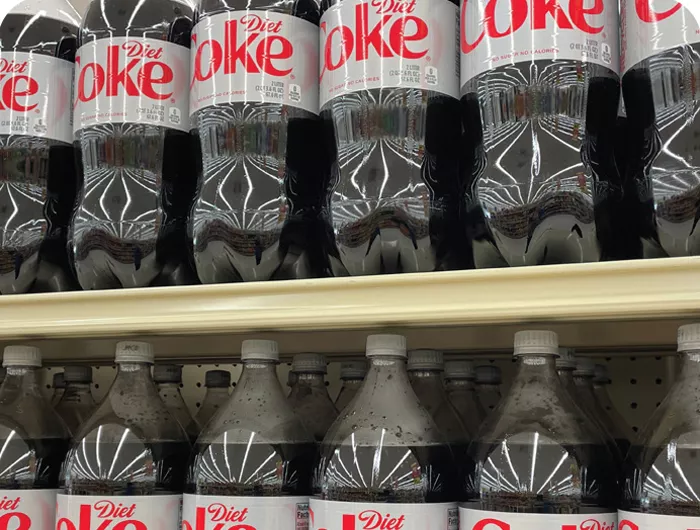
Is it safe to consume aspartame, the artificial sweetener in Diet Coke, Diet Pepsi, and dozens of other foods?
Since 2005, the Center for Science in the Public Interest (Nutrition Action’s publisher) has said no.
Our concern: Studies have found a higher risk of lymphomas, leukemias, and liver and lung cancer in mice or rats given aspartame. And researchers have seen a slightly higher risk of multiple myeloma and non-Hodgkin lymphoma in men who drink at least one diet soda a day.
For years, we’ve urged the International Agency for Research on Cancer (part of the World Health Organization) to review that evidence. Now, it has.
In July, IARC said that aspartame is “possibly carcinogenic to humans” based on “limited” evidence that it may raise the risk of liver cancer.
IARC relied largely on a few studies that reported a slightly higher risk of liver cancer in people who frequently consume diet sodas. But it noted that “chance, bias, or confounding” could also explain those results.
That’s why the agency stopped short of calling aspartame “carcinogenic to humans” (like tobacco, alcohol, and processed meats) or “probably carcinogenic to humans” (like DDT, red meats, and high-temperature frying emissions).
At the same time, the WHO’s Joint Expert Committee on Food Additives (JECFA) announced that it would not change its “acceptable daily intake” for aspartame: up to 18 milligrams per pound of body weight, which is equal to 9 to 14 cans a day of diet soda.
Confused?
IARC looks at hazard (whether something can cause cancer), while JECFA looks at risk (how likely it is that cancer might occur), so there’s not necessarily a contradiction. One thing both agencies agree on: We need more research on aspartame.
Where does that leave you? To play it safe, avoid aspartame. Your best bet: water—flat or fizzy.
From LaCroix to Spindrift to a host of smaller brands like Waterloo and Sanzo, refreshing unsweetened flavored sparkling waters are easy to find. Or try low-calorie drinks made with safe sweeteners like stevia extract. To use fewer bottles and cans, consider a homemade seltzer-maker like SodaStream.
Just don’t switch to sugary drinks, which can raise the risk of type 2 diabetes and other health problems, in part by causing weight gain.
Meanwhile, we’ll keep pressing the FDA to re-examine all the evidence on aspartame. And we’ll continue urging the food and beverage industries to use safer alternatives and to increase the availability of unsweetened beverages in stores and restaurants.