How to decode your lipid panel: HDL, LDL, and more
kitsawet - stock.adobe.com.
If you’ve ever had your cholesterol tested, you’ve had a lipid panel. Still trying to make sense of the results? We asked a cardiologist to walk us through a panel. If you’re chasing high HDL, confused about ApoB, worried about LDL particle size, or wondering how much diet helps, this one’s for you.
James Stein.
James H. Stein is a cardiologist and the director of the University of Wisconsin’s Atherosclerosis Imaging Research Program. His practice focuses on preventive cardiology and managing blood lipids and cardiovascular disease risk. He spoke to Nutrition Action’s Caitlin Dow.
Lipids and lipoproteins
What are blood lipids?
JS: When it comes to what gets measured in a lipid panel, we’re talking about cholesterol and triglycerides.
Every cell in the body needs some cholesterol for its membranes. It’s also needed for making vitamin D, bile acids, and sex hormones like testosterone and estrogen.
Triglycerides are fatty acids that are either stored or burned for energy.
What are lipoproteins?
JS: They’re balls of protein that surround cholesterol and triglycerides.
Because blood is mostly water, and because cholesterol and triglycerides are oily and don’t dissolve in water, the body needs some way to shuttle the fats around the body. The lipoproteins achieve that by acting like submarines that carry the fats through the blood.
Do some lipoproteins pose more risk than others?
JS: Yes. People often get confused by this and think that there’s good and bad cholesterol. But cholesterol is neither good nor bad. Rather, it’s the lipoproteins that carry cholesterol that do or don’t cause harm to your blood vessel wall.
Lipoproteins can injure the wall of the blood vessel and then get stuck there. When they do, they offload some of their cholesterol into the wall.
That process ignites a cascade of inflammatory events that ultimately leads to the development and growth of atherosclerotic plaques. Over time, those plaques put you at risk for a heart attack or stroke.
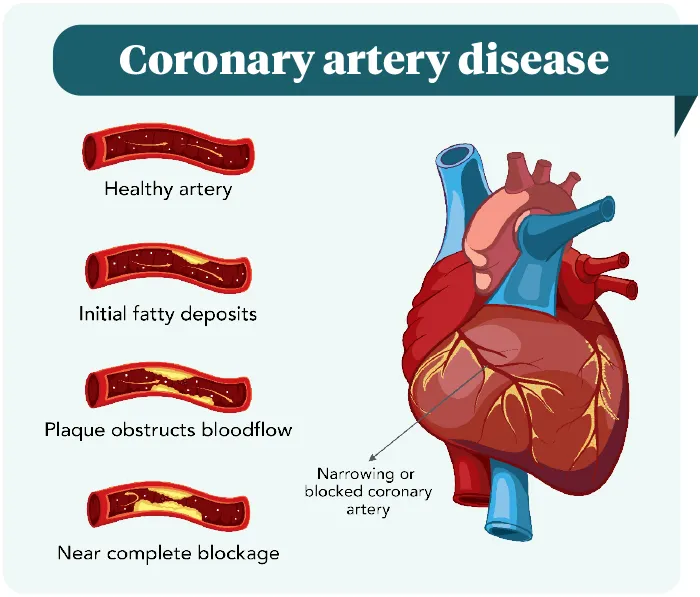
Lipoproteins like LDL cause injury to the blood vessel wall and contribute to the development and growth of atherosclerotic plaques in the coronary arteries (left) that put you at risk for a heart attack.
Nandalal - stock.adobe.com.
Do lipid panels measure lipoproteins?
JS: For a standard lipid panel, you get a measurement of how much cholesterol or triglyceride is carried in the lipoproteins, not the number of lipoproteins themselves.
For example, your LDL cholesterol, or LDL-C, number is the amount of cholesterol carried in the LDL—or low-density lipoprotein—particles in your blood.
Your doctor may say, “Your LDL looks good,” but what they really mean is that your LDL-C looks good. That’s different.
What values get reported on a standard lipid panel?
JS: You get four numbers: total cholesterol, triglycerides, HDL cholesterol, and LDL cholesterol. The reason you get those four numbers is historical. It’s based on what we could measure in the 1950s to 1970s. But we’ve learned over time that some of those measurements don’t matter as much as we once thought.
What’s an example of that?
JS: Total cholesterol is not very useful for patients. It’s just the sum total of cholesterol carried by all the lipoproteins in the blood, and it doesn’t tell you much about your overall risk for heart disease.
High-density lipoprotein
What does the HDL cholesterol number measure?
JS: It tells you how much cholesterol the HDL, or high-density lipoproteins in your blood, carry. We used to think high HDL-C was good and low HDL-C was bad, but we’ve learned that it’s not that simple.
Why not?
JS: We used to think of HDL—the lipoprotein itself—solely as a garbage truck that went out to your atherosclerotic plaque, picked up cholesterol, and dumped it off at your liver for processing.
So the idea was that the more HDL particles, or garbage trucks, you have, the healthier you are.
But that was overly simplistic because only a small amount of cholesterol that comes back from the blood vessels to the liver is carried by those garbage trucks. The vast majority is actually brought back by LDL.
So what does HDL do?
JS: We’ve come to realize that while HDL happens to carry cholesterol around, that’s not its only function. Among other things, it’s also an anti-inflammatory and an antioxidant particle that’s involved in our immune response.
For example, in people who are sick with a septic bacterial infection, HDL can be very low, likely because it’s being used up to assist the immune system in fighting the infection.
Is low HDL-C bad?
JS: Low HDL-C is associated with a higher risk of heart disease, but it rarely causes heart disease. Low HDL-C tells you more about the company it tends to keep—like high triglycerides, insulin resistance, poor diet, and weight around the midsection—than anything else. Low HDL-C may just be a signal that some other metabolic problems are present.
So people shouldn’t chase a high HDL number?
JS: That’s right. Fifteen years ago, I used to wear a little heart-shaped button that said “Up your HDL.” But I rarely even look at HDL-C anymore.
That’s because a number of disappointing trials have shown that raising HDL via medication doesn’t lower the risk of cardiovascular disease and may even cause harm. So we don’t have any reason to believe that you should aim for higher numbers.
Triglycerides
What does the triglyceride number tell you?
JS: It’s the total amount of triglycerides carried by all the lipoproteins in your blood.
In general, the higher the triglycerides, the less metabolically healthy the patient is. The main determinants of triglycerides are diet, metabolic health, and how much weight someone carries in their midsection.
Do high triglycerides increase the risk for heart disease?
JS: When they’re high, let’s say between 150 and 500—and these are not hard thresholds—they signal that you are at an increased risk for heart disease. But the triglycerides themselves are not the problem. For the vast majority of Americans, they’re simply a barometer of metabolic health.
But if triglycerides are very high—like 500 to 1,000—they are a problem because they raise your risk of pancreatitis, a serious inflammation of the pancreas.
Low-density lipoprotein
Why does LDL matter?
JS: LDL is the most atherogenic lipoprotein, meaning it promotes the formation and growth of fatty plaques in the arteries. LDL carries most of the cholesterol in the blood. The lipid panel results tell you how much.
But the lab doesn’t usually measure LDL cholesterol directly, right?
JS: That’s right. The lab estimates it using a formula where they take your total cholesterol, subtract the HDL-C, then subtract a portion of the triglycerides. It’s not perfect, but it gives you a good idea of your LDL-C.
What does your LDL-C tell you about your heart disease risk?
JS: The higher the number, the worse it is for your health.
How do you interpret an LDL-C number?
JS: First, you should never look at your LDL-C alone. It has to be considered in the context of triglycerides, because it’s calculated from them, and in the context of other health risks.
There’s not one LDL-C number that’s right for everyone, and it’s a myth to say that everyone’s number needs to be below a particular target.
But as your heart disease risk goes up, your LDL-C target goes down.
For example, let’s say someone has heart disease or multiple risk factors like type 2 diabetes, high blood pressure, smoking, etc. Or they had a bad coronary artery calcium score, which uses a CT scan to measure the amount of plaque in the arteries that feed the heart. We’d want their LDL-C below 70 as long as their triglycerides are also low.
For someone who’s had a heart attack, a stroke, or bypass surgery, their LDL-C goal is below 55.
Why should triglycerides be below 100 when “normal” on lab results is less than 150?
JS: There are a couple of reasons. One is that there’s a lot of variability, both in the lab measurement and in biology. So, whether the reading is 100, 150, or 200 doesn’t matter all that much. You have to watch the numbers over time.
But the reason I say below 100 is that I want to be safe when I reassure someone that their numbers are really good. It’s just an added layer of precaution because when triglycerides are 100 to 150 mg/dL or higher, the formula labs use can underestimate LDL-C.
Would you treat someone if their LDL-C was just a little high?
JS: Not necessarily. Take, for example, a 65-year-old woman who’s lean, exercises every day, eats well, doesn’t have high blood pressure, never smoked, and has an LDL-C of 140 and triglycerides of 60.
She doesn’t need meds unless she wants them, and might even need two to get to her LDL “goal,” though the benefit would probably be marginal.
Lipoprotein(a)
Doctors can request tests that aren’t on a standard lipid panel, like lipoprotein(a). What is that?
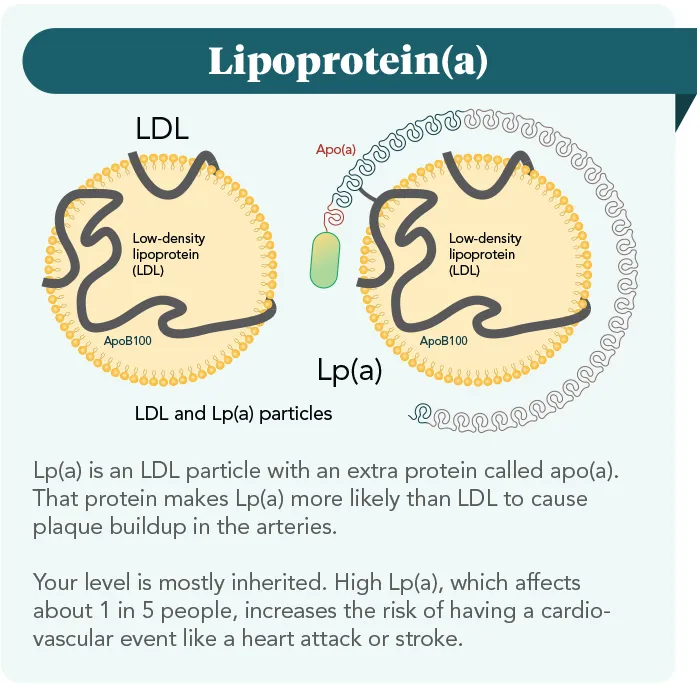
JS: Lipoprotein(a) is a modified form of LDL that is pro-inflammatory and more atherogenic than LDL. It’s almost entirely genetically determined, so it’s not highly modifiable by diet, weight, exercise, or most medications.
Do you recommend that everyone get their Lp(a) measured?
JS: The new guidelines from the American Heart Association and others recommend having it measured once in your lifetime. Because it’s mostly inherited, you don’t need to measure it more than once.
I agree with that intellectually. But I can tell you that what’s happening in the clinic is a lot of people are getting it tested because a friend or podcaster said so, and then their primary care doctor doesn’t always know what to do with the result.
What should be done?
JS: Like all the other lipid measures, you can’t look at Lp(a) in a vacuum. So, someone comes in, all their numbers look pretty good, but their Lp(a) is high, and they have a family history of heart disease. That’s someone to pay attention to because the standard lab results are not telling the full story.
Do you try to lower Lp(a) if it’s high?
JS: No. We haven’t proven that lowering Lp(a) helps people avoid a heart attack or a stroke. But there are some big Lp(a)-lowering studies coming out, so we’ll know more soon.
Right now, we don’t think of Lp(a) as a treatment target. But high Lp(a) tells us that we might want to treat other risk factors, like LDL-C, more aggressively.
Adapted from the American Heart Association.
Apolipoprotein B
ApoB is another one of these novel risk factors. What is it?
JS: ApoB, or ApoB100 to be precise, is a protein on the surface of all the lipoproteins made by the liver that carry cholesterol and are atherogenic.
There’s more than just LDL?
JS: Yes. There’s VLDL, or very-low-density lipoprotein, and it carries mostly triglycerides. There’s IDL, which is intermediate-density lipoprotein. It’s a breakdown product of VLDL and it gets turned into LDL. All of them have ApoB on their surface. But we don’t measure VLDL, IDL, or ApoB in a standard lipid panel.
Is ApoB a useful marker?
JS: If I had to pick one number that I would get rather than the entire lipid profile, I would just get ApoB. The ApoB measurement tells you the number of ApoB-containing particles that are circulating, as opposed to the amount of cholesterol being carried by the particles. And it’s the number of atherogenic particles that cause problems.
If ApoB is so useful, why isn’t it a standard part of the lipid panel?
JS: Up until the past few years, the lab assay for ApoB hadn’t been standardized very well, so you would get different measurements from different labs. But now, many clinics have it in house, and it’s inexpensive.
The other reason is that we have so much more historical data linking LDL-C to heart disease than ApoB. And all the major drug trials were designed around lowering LDL-C, not ApoB. ApoB doesn’t yet have equivalent trial-based treatment thresholds.
Should everyone have their ApoB measured?
JS: I think it’s useful to measure ApoB when LDL-C is normal or just modestly elevated but something else—like high triglycerides, central adiposity, or type 2 diabetes—suggests a higher risk.
For example, ApoB would pick up high risk in a patient whose LDL-C is 40 but his triglycerides are 380. The reason his LDL-C looks so good is because his cholesterol isn’t being carried by LDL. It’s over in VLDL, which we don’t measure in the lipid panel. Remember, ApoB picks up the VLDL particles. It can reveal high risk when LDL looks fine.
Small, dense LDL
Does LDL particle size matter?
JS: The idea is that small, dense LDL particles—which are small because they carry less cholesterol per particle—get into the arterial wall more easily than big, less-dense LDL particles that carry more cholesterol per particle. There’s some truth to that, but it doesn’t tell the whole story.
Once you know the particle number, which you can get from an ApoB measurement, the size doesn’t really matter all that much because arterial damage is caused by the number of atherogenic particles you have, not how much cholesterol they carry.
Think of it like a traffic jam, which depends on how many cars are on the road, not how many people are in each car.
If you have more LDL particles, you have more opportunities for them to bump into the blood vessel wall and cause atherosclerosis.
So you don’t think people need to get their LDL particle size tested?
JS: No. A test will tell you your average LDL particle size, but we don’t really have an average particle. We have a mix of large and small ones.
People get distracted by particle size, like a lot of the keto crowd. They think that if they just eat a lot of butter and meat and their LDL cholesterol goes up, they don’t have to worry because their LDL particles will be big. That’s just wrong.
What to do
When do you recommend treatment to lower LDL cholesterol?
JS: For people who have heart disease, diabetes, genetically very high LDL-C, or LDL-C running over 160 to 190, I recommend treatment. That’s typically lifestyle modifications like diet, exercise, and maybe weight loss, plus a statin.
What about people who just have mildly elevated LDL?
JS: For people who are otherwise healthy and don’t have those high-risk markers, then it’s a discussion. It depends on how much people are worried about heart disease, how they feel about taking a pill, how much they’re willing to change their diet, and a lot of other things going on in their life.
Can people lower their LDL-C enough with diet alone?
JS: Some people can. But most people have to do a combination of lifestyle changes and medications.
Why?
JS: If their diet needs a lot of work, cutting back on saturated fat and some other changes can really move the needle. And if they only need to lower their LDL-C a little, dietary changes can do it.
But let’s say someone walks in with LDL-C of 150, and their diet’s not terrible, but not perfect. They eat some cheese, ice cream, and pizza, but they mostly eat fruits, vegetables, chicken, and fish. Given other risk factors, let’s say they need to get their LDL-C below 70. They’re not going to drop 50% by diet alone.
I tell patients that diet is something that’s going to keep them from needing higher doses and more drugs.
What diet can have the greatest impact?
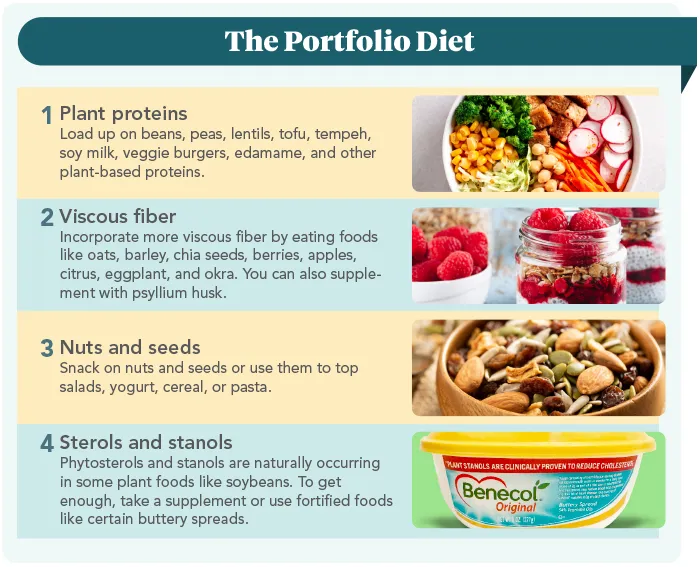
Maria Shchipakina (plant proteins), NBLX (chia pudding with raspberries), fahrwasser (trail mix) - stock.adobe.com. Marlena Koch - CSPI (Benecol).
JS: The Portfolio Diet makes several dietary changes at once. It limits saturated fat and dietary cholesterol if it’s excessive. It emphasizes plant proteins as well as viscous fiber from foods like oats, berries, apples, and citrus and maybe a psyllium supplement. Then you add in sterols and stanols, which you can find in buttery spreads like Benecol.
Less-extreme approaches include following a DASH-like, Mediterranean, or healthy plant-forward diet where the focus is on lots of fruits and vegetables, whole grains, legumes, nuts and seeds, lean protein, healthy oils, and low-fat dairy.
What drugs do you typically prescribe?
JS: For most patients, it’s going to be a statin first, like rosuvastatin, which can lower LDL-C by 40% to 50%. The next step is ezetimibe, and the next step is a PCSK9 inhibitor like evolocumab.
That’s a standard stepwise approach, and how we move through that is determined by how high their LDL is and how aggressive we want to be, based on their risk.
We take side turns when people have other medical problems, side effects, or their preferences change. It should always be a conversation.
CSPI heavily relies on our grassroots donors to fuel our mission. Every donation—no matter how small—helps CSPI continue improving food access, removing harmful additives, strengthening food safety, conducting and reviewing research, and reforming food labeling. We don't take donations from corporations, and our flagship publication, Nutrition Action, doesn't run any ads. That means that everything we do is fiercely independent and unbiased from any bad actors, no matter how powerful. To help keep this online content 100% free, consider donating today to support CSPI.