9 health buzzwords that help sell foods and supplements
Mark Poprocki - stock.adobe.com (money), Marlena Koch - CSPI (products).
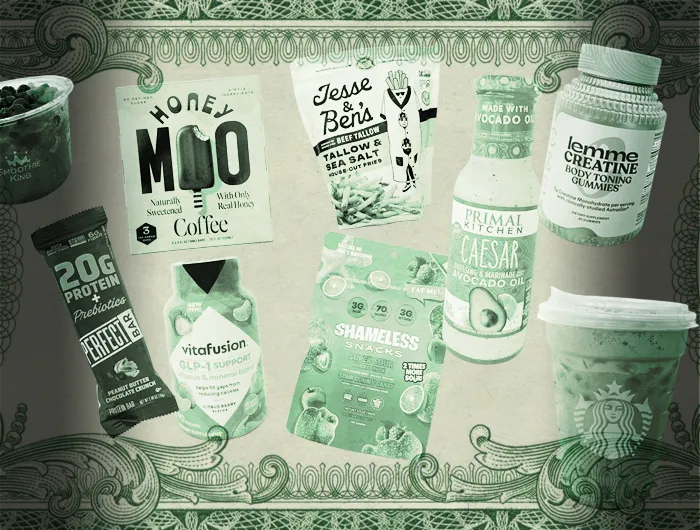
It’s no secret that wellness trends and their associated words, hashtags, and marketing ploys help food and supplement marketers dream up new ways to promote whatever they’re trying to get you to buy. We’re talking about cashing in on health food buzzwords like matcha, pitaya, honey, tallow, prebiotics, “GLP-1 support,” and more. Before you empty your wallet for a wellness-coded ploy, here are nine examples of products that sound better than they are.
This article comes from Nutrition Action. We don’t accept any paid advertising or corporate or government donations. Any products we recommend have been vetted by our staff and are not advertisements by the manufacturers. They’re just healthy foods we think you’d like to know about!
1. Superfood buzzword: Pitaya (aka dragon fruit)
Marlena Koch – CSPI.
First came deep purple açaí bowls piled high with toppings. Next up: bright magenta pitaya.
Both fruits “are nutrient-dense superfoods, rich in antioxidants and vitamins,” gushed Smoothie King when the bowls launched in 2023. True enough. Like pretty much all real fruit and vegetables, pitaya (like açaí) supplies vitamins, minerals, fiber, and antioxidants. But that’s not all you’re getting in the bowls.
Smoothie shops typically sweeten their slushy tropical smoothie-bowl bases with honey, agave, cane sugar, or fruit juice.
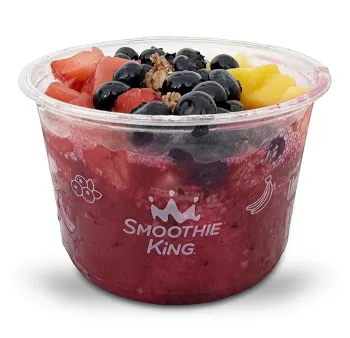
Take Smoothie King’s Bee Berry Sting pitaya bowl. The “dragon fruit sorbet” base has just 7 grams of naturally occurring sugars...but a whopping 44 grams of added sugars. Add honey (7 grams) and granola (4 grams), and the added sugars grand total comes to 55 grams—more than a full day’s daily recommended max for adults!
And it’s not just about sugar. Like many chains’ pitaya bowls, the Bee Berry Sting has a meal’s worth of calories (510) but nowhere near a meal’s worth of protein (just 5 grams). On the upside, its pitaya, blueberries, strawberries, mango, and granola supply a decent 6 grams of fiber.
At least Smoothie King’s website voluntarily discloses the added sugars in its menu items. We had to email Playa Bowls’ customer service to get their numbers. (The FDA’s menu labeling rules only require companies to disclose total sugars, not how much of that total is naturally occurring and how much is added.) Turns out the slushy “Playa Pitaya” base contains a hefty 54 grams of added sugars—roughly 13 teaspoons—and that’s before Playa adds sugary toppings like honey, granola, etc. Sheesh!
Bottom line: Think of that pitaya (or açaí) bowl as a healthyish—and a hefty—treat, not a complete meal.
Tips for building a better smoothie bowl:
Just want a snack or treat? Downsize. Order the smaller sizes that some shops offer.
Turn your full-size bowl into a balanced meal. Cut added sugars (skip toppings like honey, Nutella, chocolate chips, etc.) and add protein (from yogurt or protein powder).
Do it yourself. Many supermarkets now sell frozen açaí or pitaya purée packs, so you can control how much of what you add to your blender. That makes it easy to stop after just a little bit of sweetness. A teaspoon of honey adds about 6 grams of sugar.
Products marketed for people who take GLP-1 weight loss drugs can be helpful or not. And it’s not always easy to tell the difference between foods that support your health while taking a GLP-1 and those that rely on health food buzzwords to capture more sales.
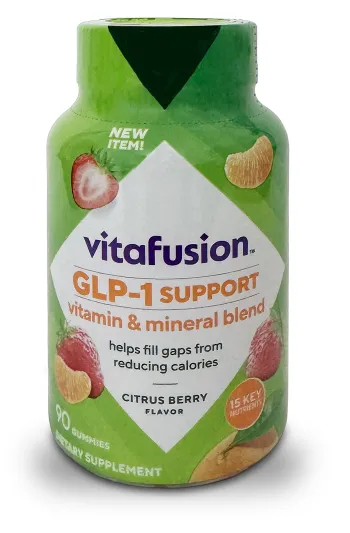
For example, Vitafusion Vitamin & Mineral Blend gummies (“GLP-1 support.” “Helps fill gaps from reducing calories”) and Centrum Nutrient Replenish Complete Multivitamin tablets (“Nutrition support for GLP-1 users”) sound pretty much the same. They’re not.
People taking GLP-1 drugs eat roughly 15 to 40 percent fewer calories, and some have nausea or other side effects that make it tricky to eat a balanced, varied diet. It makes sense for many GLP-1 takers to consider a multivitamin-mineral supplement that “helps fill gaps” from eating less food.
But not all multis are created equal. Gummies are almost always less complete than tablets. That leaves some, um, gaps. For example, even though Vitafusion gummies have “15 key nutrients,” they supply less than 100% of the Daily Value for 13 of them.
Notably, they fall short on zinc, iodine, folate, and vitamins A, C, B-3, and B-6. And they have no selenium or vitamins B-1, B-2, or K. In contrast, Centrum Nutrient Replenish tablets supply at least 100% of the DV for all those vitamins and minerals. Much better. (Both brands do pretty well on vitamins D, E, and B-12.)
Just don’t rely on any multi—gummy or tablet—to fill a calcium gap. Most multis have no more than 15% of the DV. (Calcium is bulky, so a day’s worth wouldn’t fit in a one- or two-tablet daily multi.) If you’re not meeting your targets from food, you may need a calcium supplement to help protect your bones. Not sure? Track the calcium in what you eat for a week or so with a reliable app like Cronometer.
Bottom line: Ignore GLP-1 claims on multis. Instead, check their nutrient levels.
3. Healthy-sounding words and phrases like ‘No seed oils’
Marlena Koch – CSPI.
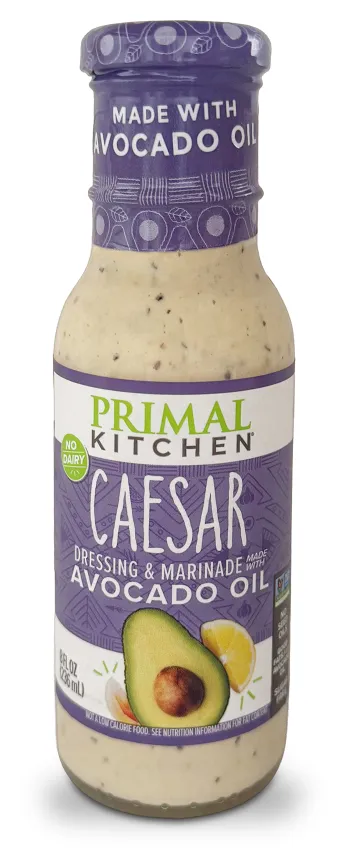
“No seed oils,” says the bottle of Primal Kitchen Caesar Dressing & Marinade. “Good fats from avocado oil.”
True and true. All of Primal Kitchen’s dressings are made without the soybean, canola, grapeseed, or sunflower oil that you’ll find in most bottled dressings from other brands.
But despite what you may have heard, decades of research show those “seed oils” are all sources of unsaturated (good) fats. And claims that the oils are inflammatory don’t stand up to scrutiny.
Don’t get us wrong. Avocado oil also has heart-friendly fats. But you’re going to pay for them. At our local Whole Foods, an 8 oz. bottle of Primal Kitchen Caesar cost $8, while a 16 oz. bottle of store-brand 365 Organic Caesar (made with soybean oil) was $4. The two dressings’ sodium, added sugars, and saturated fat were virtually identical, but Primal’s price per ounce was four times higher than 365 Organic’s.
Bottom line: Don’t let food buzzwords and fears about seed oils stop you from buying healthy foods. When companies replace seed oils with avocado or olive oil, you’re still getting healthy fats, just paying more for them. But when seed oils are replaced with coconut oil, tallow, lard, or butter, it’s your arteries that will eventually pay the price.
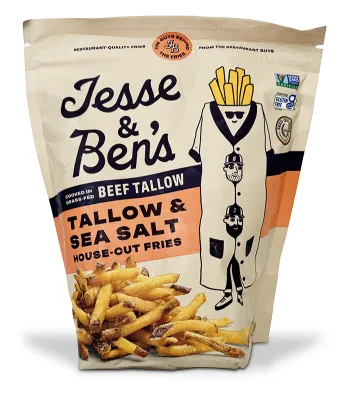
“In beef tallow, we trust,” says the frozen bag of Jesse & Ben’s Tallow & Sea Salt House-Cut Fries.
Tallow is beef fat that’s been rendered—that is, melted and then filtered to remove solids like meat and other tissue. And in case you missed it, tallow has been having a moment. Some social media influencers, alternative health gurus, and HHS Secretary Robert F. Kennedy Jr. are vocal fans.
But the best scientific evidence doesn’t support any of the hype about tallow’s benefits for your cholesterol, inflammation, or vitamin intakes. One thing that is clear: Tallow has more of the kind of saturated fat that can raise your LDL (“bad”) cholesterol than liquid vegetable oils.
A modest-size serving of Jesse & Ben’s (about 24 fries) has 3.5 grams of sat fat. Fries made with a vegetable oil like soy or canola typically have 1 gram or less.
That means the tallow fries come in just under 20% of a day’s recommended max for saturated fat. We’re not saying that frying in beef fat will turn your potatoes into double cheeseburgers. But why add any extra sat fat? Give your heart a break. And keep in mind that the sat fat from tallow in larger servings of fries that match restaurant portions can add up.
Bottom line: Liquid vegetable oils are healthier than tallow, but no fried foods are health foods.
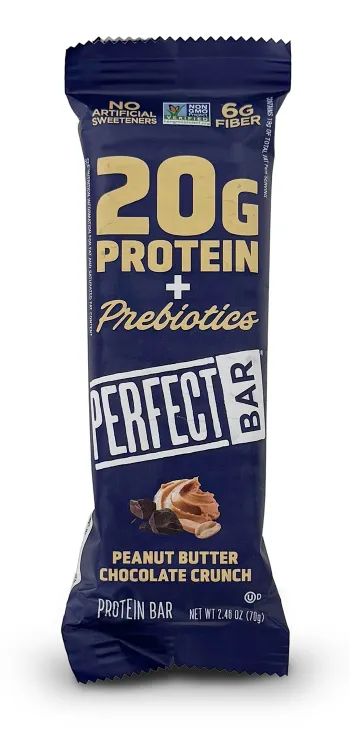
A “Protein + Prebiotics” Peanut Butter Chocolate Crunch Perfect Bar has “3g of prebiotic fiber” to go along with its 20 grams of protein.
Unlike a classic Perfect Bar, Protein + Prebiotics adds fiber from chicory root. Is that worth a health halo? Not likely.
Whether we’re talking about a protein bar or a low-sugar soda, it’s easy to spike a food with a sprinkling of a processed prebiotic fiber like chicory root. (“Prebiotic” simply means that the fiber “feeds” your gut bacteria when they ferment it. Prebiotics are often confused with “probiotic” foods, which contain live yeast or bacteria.) Does eating a couple of grams of an added prebiotic lead to substantial benefits? The jury’s still out.
A chicory caution: When your gut bacteria ferment the fiber, that releases gas, which can cause flatulence if you overdo it. Because chicory root fiber—which is also called inulin—is sweet, it’s added to many lower-sugar bars, treats, and cereals, so you may already be eating more than you think.
Bottom line: A variety of prebiotic fibers occur naturally in apples, onions, garlic, beans, and many other plants. If you’re eating a mix of fiber-rich fruits, vegetables, legumes, and whole grains, you’re already feeding your microbiome well. “Prebiotic” claims are good for selling processed foods...or for making your product stand out in a sea of protein bars.
6. Claims like ‘3g sugar’ in foods with artificial sweeteners
Marlena Koch – CSPI.
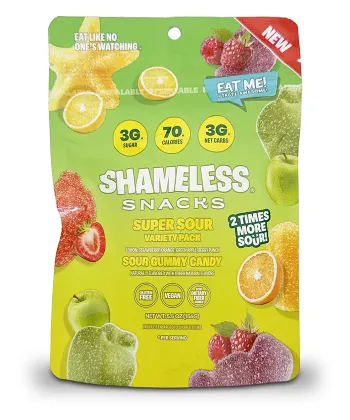
Shameless Snacks Super Sour Gummy Candy has only “3g sugar” per serving. It’s hard to walk through the grocery store without passing an eye-catching display of low-sugar candies. But most of them come with caveats.
Take Shameless. We rate one of its low-calorie sugar replacements (sucralose) as “avoid” because it increased the risk of cancer in animal studies. And Shameless partly replaces sugar’s bulk with processed fibers like polydextrose, which can lead to GI discomfort if you eat more than you can tolerate. (Why would you do that? Hey, it’s low in sugar!)
What about calories? A 50-gram serving of Super Sour Gummy Candy has 70. That may be less than half the calories of, say, Sour Patch Kids, but it’s not zero. If you’re looking for a sweet-and-tart snack, what about 70 calories’ worth of green grapes or pineapple chunks (about 3/4 cup) or a couple clementines?
Bottom line: Whether candy is high or low in sugar, think of it as an occasional treat, not a healthy snacking staple.
7. Honey as a healthy alternative to refined sugar
Marlena Koch – CSPI.
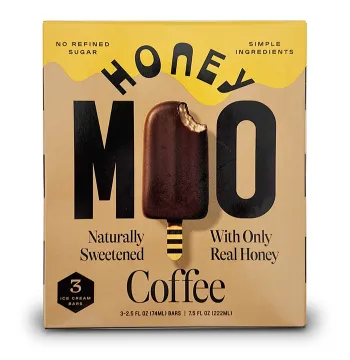
“No refined sugar,” says the box of Honey Moo Coffee Ice Cream Bars. “Naturally sweetened with only real honey.”
Why does that matter? Regular sugar has been “processed until there’s nothing left but sweetness. No nutrients. No complexity. Just impact,” says Honey Moo on its website.
If you prefer the taste of honey-sweetened treats—and you don’t mind paying $9 for a box of just three bars—be our guest. Choose Honey Moo for its “complexity.” But don’t do it for your health.
Whether an ice cream bar has 10 grams of cane sugar or 10 grams of sugar from honey (like Honey Moo), it still supplies 20% of an adult’s daily recommended maximum for added sugars. To your body, those sweeteners are essentially the same thing.
And as for “nutrients,” don’t get carried away with honey’s low levels per serving. A Honey Moo bar has roughly two teaspoons’ worth of honey. That’s not enough to supply a good source of any vitamins or minerals, according to the U.S. Department of Agriculture’s data.
Buzzy honey-sweetened treats don’t end with Honey Moo. Evidently, honey has a health halo that just won’t quit. We also spotted $8 pints of French ice cream “sweetened with raw honey” (Ice Cream for Bears), $6 pints of dairy-free ice cream “sweetened with honey” (Frönen), and $5 fudgy chocolate bars with “no refined sugar” (Honey Mama’s), among others.
Bottom line: Whether foods are sweetened with honey, maple syrup, agave, or white sugar, their sugars count as “added sugars” and they don’t pile up the vitamins or minerals. It’s not worth paying a premium for a slick honey-sweetened treat unless you enjoy it more. If you’re looking for a sweet frozen something that’s healthier than regular ice cream, try one of the picks in our guide to frozen treats.
Matcha is green tea leaves that have been ground into a fine powder and whisked into water. Add milk or plant milk, and you’ve got yourself a matcha latte.
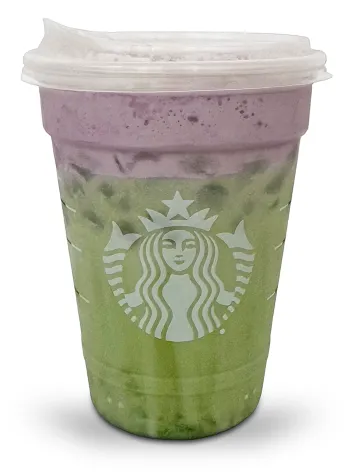
Alas, Starbucks has a dozen or so ways to turn that modest cup of milky green tea into a sugary green milkshake.
We’re talking about “specialty matchas” like the Iced Dubai Chocolate, Blue Coconut, Mango Cream, Banana Bread, or Double Berry Matcha. The totals in a (16 oz.) grande: 31 to 45 grams of total sugars and 270 to 400 calories.
What propels a beverage into trending territory? A photo-worthy color palette can’t hurt. Enter the Iced Lavender Cream Matcha. Its vibrant green base is sweetened with sugary syrup and topped with purple lavender-flavored cold foam (with cream, milk, and more syrup).
All told, those syrups help spike its total sugars (38 grams) almost as high as a McDonald’s hot fudge sundae (44 grams). The latte also has more saturated fat (11 vs. 7 grams) and calories (350 vs. 330).
Bottom line: For less added sugars at Starbucks, order a “classic” matcha latte in the app, where it’s easy to customize with fewer pumps of sugary syrup (or none). Each pump of “classic syrup” adds roughly 5 grams of sugars.
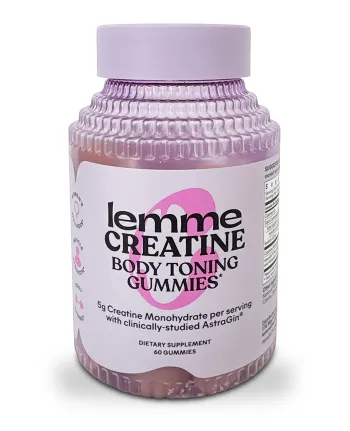
Lemme Creatine Body Toning Gummies support “strength & recovery,” promote “body toning,” and help “build lean muscle, without the bulk,” says the company’s Instagram post.
Crafty supplement marketers have a new spin on creatine: creatine for women. Naturally, it’s sold in pink and purple packages with buzzwords like “lean muscle” (Bloom Creatine Gummies) or “midlife strength & tone” (Midi Creatine+ Gummies).
Creatine isn’t a scam, but it’s often misunderstood...and “body toning” gimmicks don’t help. Sigh.
What can creatine do? Load up your muscles’ reserves for short bursts of energy like lifting weights. That can help you lift a bit more or eke out a few extra reps, which can lead to slightly bigger and stronger muscles over the long term.
But taking creatine without strength training doesn’t lead to “body toning.” Cue Lemme’s fine print on the back of the label: “Supports lean body mass and muscle strength in combination with healthy diet, exercise and resistance training.”
What else can Lemme do? Lighten your wallet. A month’s supply of the gummies costs $20 to $30. (Many other brands make less-expensive creatine powders that you dissolve in water or another liquid.)
Bottom line: “Toning” means losing excess body fat (creatine can’t help) and building muscle (creatine can help, but only when combined with strength training).
CSPI heavily relies on our grassroots donors to fuel our mission. Every donation—no matter how small—helps CSPI continue improving food access, removing harmful additives, strengthening food safety, conducting and reviewing research, and reforming food labeling. We don't take donations from corporations, and our flagship publication, Nutrition Action, doesn't run any ads. That means that everything we do is fiercely independent and unbiased from any bad actors, no matter how powerful. To help keep this online content 100% free, consider donating today to support CSPI.