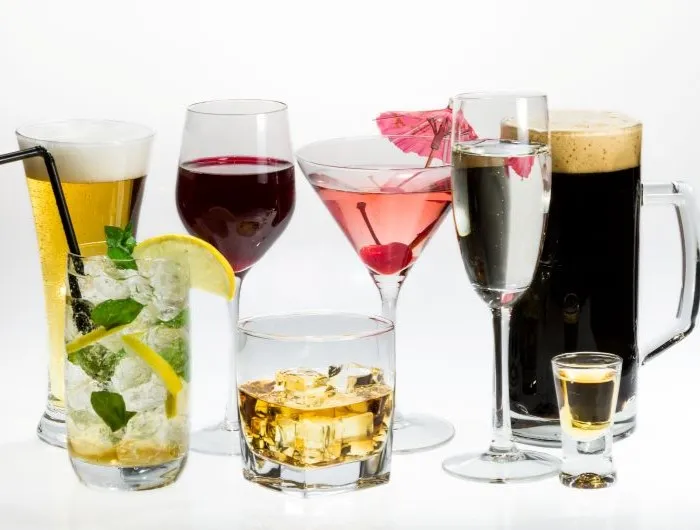
Which alcoholic beverages have the most (or least) calories?
shaiith - stock.adobe.com.
How many calories does a shot of vodka have? A bottle of wine? A can of light beer? You’d never know the calories in alcoholic drinks from looking at many of their labels and non-chain-restaurant menus.
Chain restaurants must disclose calories for drinks on their menus, and some beer brewers and other alcohol companies label containers with Nutrition Facts voluntarily.
These numbers come from company websites and some labels.
A quick overview of calorie counts and alcoholic beverages
A typical 12 oz. beer has as many calories as a can of Coke (140). Some have twice that much. What about wine, liquor, liqueurs, hard seltzer, and cocktails? When it comes to calories from alcohol, mixers, juice, sugar, and other ingredients, here's how alcoholic drinks compare.
Safety reminder
Keep in mind that alcohol is responsible for 178,000 deaths each year in the United States, due to car crashes, suicides, homicides, violence, falls, heart disease, breast cancer, liver disease, and more.
This article comes from Nutrition Action. We don't accept any paid advertising or corporate or government donations. Any products we recommend have been vetted by our staff and are not advertisements by the manufacturers.
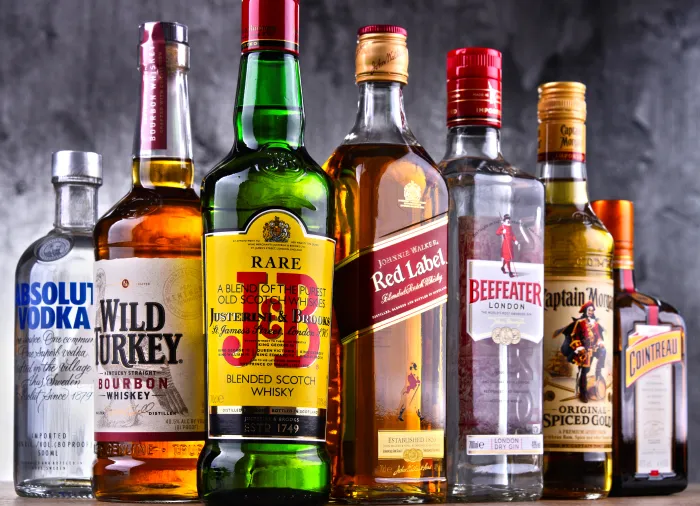
How many calories does a shot of vodka have? What about other liquors or liqueurs?
Monticello - stock.adobe.com.
Typically, a 1.5 oz shot of vodka contains about 100 to 120 calories, with all of those calories coming from the alcohol content rather than sugar. This makes vodka a popular choice for those looking to keep their calorie and carb intake in check while still enjoying a drink. It's important to remember that once mixers are added, the calorie count can increase significantly. The same calorie range applies to standard 1.5 oz shots of other hard liquors like whiskey, rum, gin, tequila, and brandy. That’s because all of hard liquor’s calories come from its alcohol (40% to 50%). It has no sugar.
Exception: Liqueurs (like Baileys or St-Germain) vary, depending on their alcohol, sugar, or other extras.
How many calories are in beer? Do carbs matter?
Sierra Nevada Brewing Co.
A beer’s calories depend mostly on alcohol and, to a lesser extent, on carbohydrates.
Light. Very-low-alcohol beers (2% to 3% alcohol content) like Miller 64 Extra Light, are also usually pretty lowcalorie, starting at around 60 calories in 12 oz. Most light beers (4% alcohol) have about 100 calories. Bud Light Next (80 calories) sheds calories not only by trimming alcohol, but dropping the carbs to zero.
Regular. An average 5% alcohol brew like Budweiser hovers around 150 calories.
IPAs. Heavy hitters (7% to 11% alcohol) like regular IPAs, double or imperial IPAs, and Belgian-style Trippels pack 200 to 300 calories. Gulp! The good news: A lower-alcohol “session” or "lo-cal" IPA can cut that in half (100 to 150 calories).
Draft pours. Do the math. Even an average beer hits 200 or 250 calories when you’re served a 16 or 20 oz. glass.
How many calories are in wine?
New Africa - stock.adobe.com.
Red or white, a standard 5 oz. serving of wine is around 120 calories. But expect slightly more (140 calories) for 6 oz., the amount in a common restaurant pour. A 9 oz. pour reaches 220 calories.
Even many higher-sugar whites (like Moscato) are in the same ballpark. (Moscato is typically higher in sugar but lower in alcohol than other varietals.)
Lighter wines like Barefoot Bright & Breezy, Cupcake Lighthearted, Yellow Tail Pure Bright, and Francis Coppola Vibrance slash their alcohol (to around 6% to 9%) to cut calories (70 to 90 per 5-oz. glass).
A glass of sangria typically has at least 200 calories, thanks to fruit, juice, sugar, etc.
What are the Nutrition Facts for hard seltzer, cider, etc.?
White Claw Seltzer Works.
Hard seltzers. Most have half a teaspoon of sugar, max, and no more calories than light beer. But high-alcohol hard seltzers (like Truly Unruly or White Claw Surge) can have 50 percent more calories than regular ones.
Hard cider. Expect up to 200 calories and up to 4 teaspoons of sugar—some from juice—in 12 oz. Dry ciders are lower (up to 150 calories and 2 teaspoons of sugar). The more "dry" (less sweet) the cider, the lower the calories.
Hard kombucha. Hard kombucha has a health halo, but most have as many calories as beer.
Canned cocktails. Check the percent alcohol (ABV) of canned cocktails like June Shine, Cutwater, etc. Some cocktails hit double-digit ABVs, pushing the calories per can past 300 to 500. On the low end: Like a vodka soda, a "ranch water" (tequila, seltzer, and lime) is lower in sugar and calories. Cutwater Lime Ranch Water, for example, has 120 calories and half a teaspoon of sugar.
How many calories are in bars' and restaurants' mixed drinks?
Wollertz - stock.adobe.com.
Drinks vary from one bartender to another; the amount of alcohol, sugary mixers, the differences in calorie content between brands of alcohol, or if, for example, a regular vodka is used or a flavored vodka, and other factors can dramatically change a drink's nutritional value. The usual ranges at chain restaurants that list calories on the menu:
Martini or Manhattan. Classic cocktails with little or no added sugar (Manhattan, old fashioned, or martini) typically fall in the 150-to-250-calorie range.
Moscow mule or mojito. Expect around 250 calories.
Margarita. A classic margarita—tequila, lime, triple sec—in a small glass limits the calories to 200 or so. But sugary, oversized (often frozen) margs jump to 300-plus calories.
How many calories and how much sugar are in alcoholic drinks
Within each category of the charts below, alcoholic drinks are ranked from least to most calories , then (if shown) teaspoons of total sugar. The % column lists percent alcohol by volume (ABV), when applicable.
How many calories and how much sugar are in alcoholic drinks
Within each category of the charts below, alcoholic drinks are ranked from least to most calories, then (if shown) teaspoons of total sugar. The % column lists percent alcohol by volume (ABV), when applicable.
Donate to CSPI today
CSPI heavily relies on our grassroots donors to fuel our mission. Every donation—no matter how small—helps CSPI continue improving food access, removing harmful additives, strengthening food safety, conducting and reviewing research, and reforming food labeling. We don't take donations from corporations, and our flagship publication, Nutrition Action, doesn't run any ads. That means that everything we do is fiercely independent and unbiased from any bad actors, no matter how powerful. To help keep this online content 100% free, consider donating today to support CSPI.
Our free Healthy Tips newsletter offers a peek at what Nutrition Action subscribers get—scrupulously researched advice about food of all kinds, staying healthy with diet and exercise, and more.