The nutritious and delicious meals and exciting student engagement opportunities offered at West Genesee Central School District provide a snapshot of everything it takes to operate a successful school meal program that promotes local produce and new-to-students fruits and vegetables. This article was developed based on an interview and email correspondence with the district from Nov. 2025 through Feb. 2026.
What does it take to run a successful school meals program?
The West Genessee Central School District in Onondaga County, New York, includes 11 buildings total, serving 5,779 students in pre-K through 12th grade.
Across the district, 27 percent of students are eligible for free or reduced-price meals. 10 out of 11 schools in the district are eligible for the Community Eligibility Provision (CEP). This federal program allows schools, groups of schools, or districts to serve meals at no cost to all students if at least 25 percent of students are eligible for free or reduced-priced meals.
The district serves local New York produce daily. Fresh fruits and vegetables are at the center of each plate, including through a “harvest of the month” program. And baked-from-scratch breakfasts include high protein and low added sugar menu items. New menu items appear in classroom nutrition and agriculture lessons, with student input on the menu via taste tests during menu development.
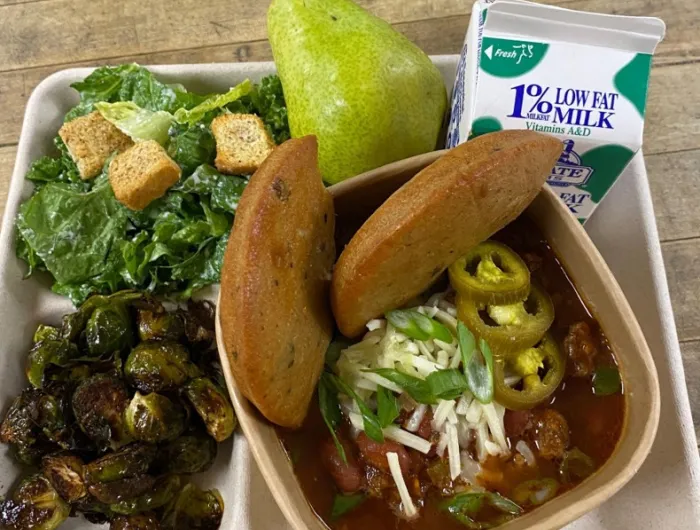
The school serves local dishes such as kale Caesar salad with homemade Greek yogurt dressing, New York grassfed beef and bean chili, and homemade breakfast pizza. A favorite dish among the students is the locally grown Brussels sprouts, in which New York maple syrup is used to glaze Brussels sprouts and carrots.
But a lot of puzzle pieces are needed to run such a successful program—including funding, staff, enthusiasm, equipment, and partnerships.
West Genesee Central School District.
Keys to success
In the words of Emily Cullen, the school lunch director for the district, “It’s not well-known that school cafeteria budges are separate from the rest of a school district’s budget. For only $4.75 a lunch, I have to prepare the whole meal and pay my staff.”
A major key to success is the district’s partnership with Cornell Cooperative Extension’s Farm to School coordinators, located across the state. Benefits of this collaboration include training for West Genesee’s staff and a useful recipe database that helps the team feature fresh produce.
A combination of federal, state, and local funding support purchasing a variety of fresh and local produce:
Local Food for Schools (a USDA program cancelled in 2025) facilitated the purchase of over 25,000 pounds of New York State produce in school year 2024-2025.
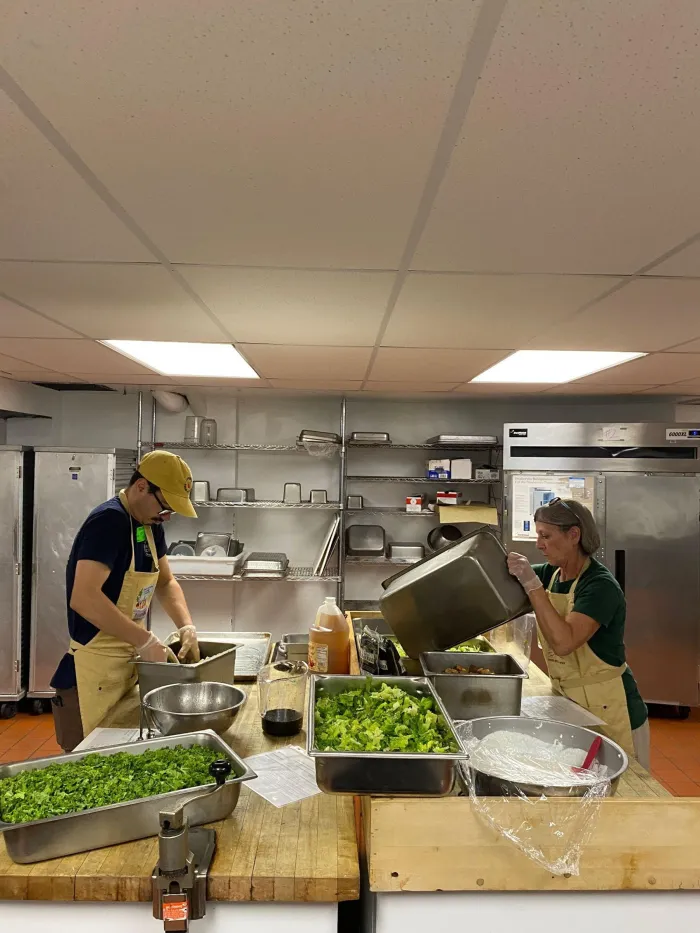
New York State’s $5 million Regional School Food Infrastructure grant awarded to Onondaga County allowed the district to build a new food processing hub, where fresh produce is broken down and prepared, which makes it even easier to continue sourcing local food while saving staff time.
The Harvest of the Month County School District partnership enables the district to feature one local menu item per month as part of a cooperative bid.
Training for foodservice staff to follow new recipes and prepare fresh ingredients has been provided by Brigaid, Chef Ann Foundation, Cornell Cooperative Extension’s Farm to School, and the New York State Education Department’s Farm to School Team.
The district has invested in kitchen equipment and smallware (like food choppers), thanks to budgeting flexibility via the CEP and federal kitchen equipment grants (part of annual appropriations), ensuring whole, fresh products can be stored, peeled, cut, and served.
The district partners with food processing hubs who prep, peel, and cut fresh produce.
The district has established buy-in with the foodservice team through clear and frequent communication and a shared interest in supporting local farmers and producers.
What do West Genesee schools need for future success?
Looking forward, schools would benefit from more consistent, direct pathways to buy local foods using government funding. Programs like Local Food for Schools, which allowed the district to purchase many thousands of pounds of local New York ingredients, must be reinstated.
Moreover, the federal government should preserve the CEP program and its funding formula. CEP allows schools to spend less time on administrative work, utilize economies of scale, and stretch their dollars to put money back into the program to make improvements. After West Genesee implemented CEP, participation in school breakfast increased by 87 percent!
As Cullen puts it, “Healthy school meals for all is a game changer. This policy has taken the stigma away from enjoying free school meals and is so helpful for parents and guardians.”
Erin Ogden (she/her/hers) supports CSPI's federal child nutrition policy efforts through cultivating a strong, nationwide network of grassroots advocates and contributing to CSPI's array of advocacy resources.
CSPI heavily relies on our grassroots donors to fuel our mission. Every donation—no matter how small—helps CSPI continue improving food access, removing harmful additives, strengthening food safety, conducting and reviewing research, and reforming food labeling. We don't take donations from corporations, and our flagship publication, Nutrition Action, doesn't run any ads. That means that everything we do is fiercely independent and unbiased from any bad actors, no matter how powerful. To help keep this online content 100% free, consider donating today to support CSPI.