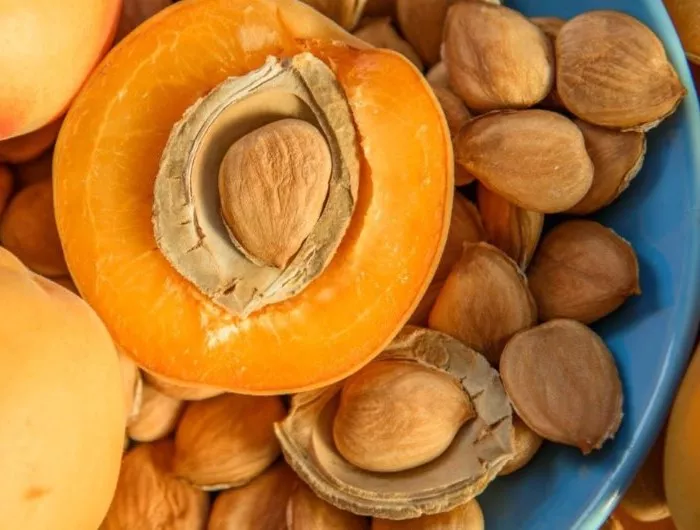
The FDA recently issued a warning about apricot seeds containing dangerous levels of amygdalin, a naturally occurring substance in stone fruit seeds that can lead to lethal cyanide poisoning.
Specifically, the agency warns consumers to avoid Apricot Power brand products sold as "Bitter Apricot Seeds – NGR FY24-015 (California Select)," "Seeds Bitter Apricot Seeds – NGR FY24-016 (Organic Turkish Select)," and "Seeds Bitter Apricot Seeds – NGR FY24-017 (South African Select)."
These products were tested by Virginia and Texas state agencies and reviewed by the FDA. All three contain toxic amygdalin.
What is amygdalin or 'vitamin B17'?
Amygdalin occurs naturally in the pits of stone fruits, nuts, and some legumes, like lima beans. The fact that stone fruit pits contain cyanide or cyanide-generating substances is widely known. In the body, amygdalin's hydrogen cyanide converts to cyanide, potentially causing fatal cyanide toxicity. Apricot seed powder, whole apricot seeds, and amygdalin are sold as dietary supplements, sometimes labeled “vitamin B17.” Though it is often marketed as such, amygdalin is not a vitamin, and no research indicates a health need for consuming amygdalin.
Amygdalin and cancer research
In the 1950s, a synthetic form of amygdalin called laetrile was studied as a potential cancer treatment. Though it may be available in other countries, laetrile was never approved as a cancer treatment by the FDA and is not an approved drug for any disease; no clinical research has indicated that it is an effective cancer treatment. However, some alternative health influencers have touted amygdalin as a natural treatment for cancer, often citing early laetrile research as evidence of its effectiveness. Dietary supplements cannot be legally marketed for treating cancer and should only be part of a treatment plan if recommended by a qualified health professional.
Supplements are not proven to safely and effectively treat disease
Unless prescribed by a qualified health professional, dietary supplements are generally not effective or safe ways to treat diseases like cancer. In fact, companies are expressly prohibited from marketing dietary supplements as ways to cure or treat diseases. Yet, frequently bad actors skirt or simply ignore this law. Due to the FDA’s limited authority and resources to oversee the supplements industry, these illegal products and claims stay on the market for a long time. As your food and heath watchdog, CSPI keeps an eye out for supplements that make illegal disease claims and calls for FDA action against them, but ultimately, it’s up to the agency to act.
Amygdalin side effects: Cyanide toxicity
Consuming too much amygdalin causes cyanide toxicity. The symptoms of cyanide toxicity include nausea, vomiting, headache, dizziness, fever, confusion, blue coloration of the lips and skin due to low blood oxygen, liver damage, very low blood pressure, nerve damage, coma, and death.
The European Food Safety Authority indicates that an adult consuming just three small apricot seeds or a toddler eating only one apricot seed would exceed the safe dose of amygdalin.
FDA allows companies to sell products with high levels of toxic amygdalin
The FDA is allowing Apricot Power to sell foods with “high levels” of toxic amygdalin after warning consumers to “stop using and dispose of these products.” Per the FDA’s alert, Apricot Power “continued to decline a voluntary recall” even when the agency informed the company of its initial concerns and then followed up with a phone call to present the agency’s “additional assessment of the findings.” Despite its findings and the company’s refusal to put consumers’ safety first, the agency has yet to declare these products as adulterated or illegal.
Worse yet, until the FDA declares amygdalin as not generally recognized as safe (GRAS), companies could use a loophole to secretly declare amygdalin as GRAS and intentionally add this toxic chemical to foods and dietary supplements without ever telling the FDA. Amygdalin does not appear in the FDA’s food ingredient and packaging inventories (although apricot kernel oil does), meaning whole apricot seeds are neither explicitly approved for use in food by the FDA nor covered by a GRAS notice. Amygdalin, whether as a food ingredient or dietary supplement, is not required to be approved by the FDA before coming to market. Weak federal laws provide these industries with a wide latitude in introducing new substances to the market without even notifying the FDA.
Learn more about the ways food companies can sneak ingredients past the FDA.