In 2019, the EAT-Lancet Commission released its “planetary health diet,” which aims to feed nearly 10 billion people by 2050 without causing undue harm to the environment. In October, the commission published an update. Its bottom line: We need a food system transformation. Here’s what it will take to get there.
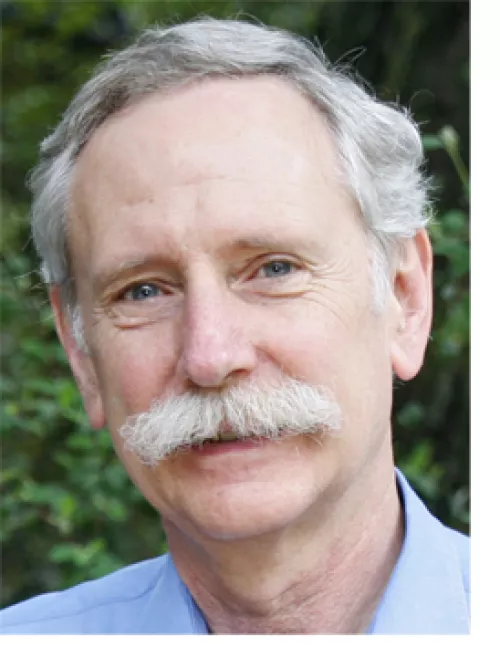
Walter C. Willett is professor of epidemiology and nutrition at the Harvard T.H. Chan School of Public Health. Dr. Willett, who co-chairs the EAT-Lancet Commission, has co-authored more than 2,000 research papers, focusing primarily on lifestyle risk factors for heart disease and cancer. He spoke to Nutrition Action’s Caitlin Dow.
The environmental cost of our food systems
There are many drivers of climate change. Why focus on food?
WW: The food system contributes about 30 percent of worldwide greenhouse gas emissions. So it plays a huge role in fueling climate change.
And even if the world switched from fossil fuels to all renewable energy, we would still breach the Paris Climate Agreement’s goal of limiting the global average temperature rise to 1.5° Celsius above pre-industrial levels.
Replacing fossil fuels and changing the food system are both necessary, but neither is sufficient on its own.
If the food system doesn’t change, what will happen?
WW: We’re seeing it right before our eyes. When I started looking at this several decades ago, we knew climate change was happening. But we thought that we wouldn’t notice anything for hundreds, maybe thousands, of years.
In fact, we’re already seeing more intense and frequent storms, droughts, wildfires, and heat waves.
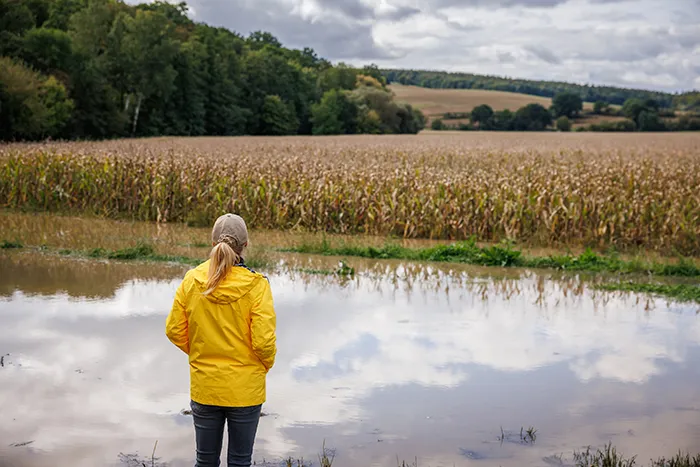
More frequent and intense storms can cause flooding that ruins crops and puts more strain on the food supply.
encierro - stock.adobe.com.
And those changes also affect the food system.
WW: Yes. For example, as drought increases, it impinges on food production. Or, in the other direction, as stronger and more frequent storms lead to flooding, farmers could lose whole harvests.
And extreme heat can harm crops and livestock and cause heat-related illnesses like heatstroke in farmworkers.
The food system doesn’t just affect the climate, right?
WW: That’s right. It also drives the conversion of wild habitats into land used to grow food, which leads to species going extinct. It leads to freshwater scarcity. And it leads us to overuse pesticides, fertilizers, and antibiotics, which causes other problems.
What needs to change?
WW: The commission did extensive modeling to figure out how to stay within planetary boundaries. We looked at metrics like how much greenhouse gas we can emit, how much cropland and water we can use, and how much nitrogen and phosphorus we can put into the environment and still be sustainable.
Based on those boundaries, we were able to determine where to focus our efforts: We need to reduce food loss and waste, improve food production, and change our diets.
Why does reducing food loss and waste matter?
WW: Put simply, it means that we don’t have to produce all the food that eventually gets tossed. Wasted food still requires water, fertilizer, farmland, labor, and energy, even if it’s never eaten. Roughly 10 percent of the food system’s greenhouse gas emissions are due to food that is lost along the supply chain or wasted by restaurants, grocery stores, or consumers.
It’s impossible to get food loss and waste down to zero. So we set the goal of cutting it in half. That’s still a tough goal, but it’s important.
How could food production improve?
WW: There are so many possibilities. We could employ farming practices that improve soil health, improve irrigation so we waste less water, use fewer pesticides, and more.
The improvements will vary by the context. So, for example, the U.S., Europe, China, and India all use too much nitrogen- and phosphorus-based fertilizer, and there’s a lot of pollution due to that. But in Africa, much of the soil is depleted, so they should be using more fertilizer, not less.
Which strategy is most critical?
WW: All of them are important, but shifting our diets will have, by far, the biggest impact on climate change.
The planetary health diet
What does a diet that’s good for people and the planet look like?
WW: First of all, it’s flexible. There’s no single form of a planetary health diet. It could be omnivore, vegan, or some vegetarian version in between.
But it’s very plant-forward. It emphasizes plant sources of protein, such as nuts, beans and lentils, and soy products like tofu and tempeh.
It can also include modest amounts of animal-sourced foods like poultry, dairy, and fish, depending on your personal and cultural preferences. Red and processed meats are limited, but not eliminated.
From Nutrition Action
For more details on how to follow the planetary health diet, see our guide.
What went into defining a diet that’s healthy for people?
WW: We considered the many randomized trials of diet that had disease risk factors as outcomes and the evidence from large studies that followed people for years. The studies looked at how different food groups influence risk of major disease and premature death. Then we put all the pieces together to come up with an optimal intake of grains, fruits and vegetables, red meat, dairy, and so on.
Why is the diet flexitarian instead of vegan? Is that because some people don’t want to give up animal foods?
WW: That wasn’t by design. We really tried to go into this with an open mind about what the healthiest diet is.
Fortunately, it works out that this flexitarian diet is a very healthy eating pattern. And to the extent that was consistent with the evidence, we wanted the diet to be as flexible as possible. That way, we can have the biggest tent that can hold the most people willing and able to eat a healthy diet that’s also good for the planet.
Is it better to eat flexitarian than vegan?
WW: For planetary health, there would be some modest benefits of going more in the vegan direction. That said, having some animals in the food system can play some useful roles, like adding nutrients to soil. But the food system should have far fewer animals than it does now.
From a human health standpoint, we don’t really have good evidence that a healthy vegan diet is better or worse than a plant-forward flexitarian diet. The flexitarian diet is a little safer in the sense that you’re less likely to have a nutritional hole.
What do you mean?
WW: If you want to be a strict vegan, you’ve got to get vitamin B-12 somewhere, for example. In the U.S., you can look for foods fortified with B-12 like nutritional yeast, some plant-based milks, and cereals. Or you can just take an inexpensive multivitamin supplement.
Do any cultures already follow the diet the commission recommended?
WW: Yes. When we put all the pieces together, we ended up with an eating pattern that fits a traditional Mediterranean diet. So the Mediterranean diet is sort of our prototype, which is helpful because it’s been studied extensively for decades.
Are you saying that everyone should eat a Mediterranean diet?
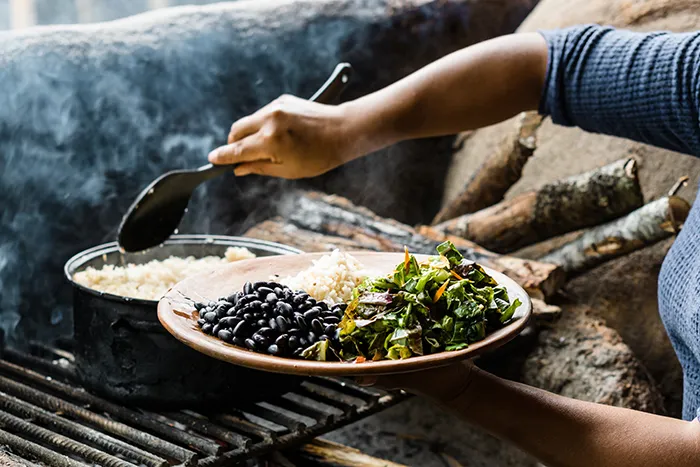
WW: No. It’s the pattern that’s important: high in whole grains, nuts, legumes, fruits, and vegetables, moderate in lean protein like poultry and seafood, and low in added sugar and red meat. You can apply those principles but use foods from, say, Africa, South America, or Asia for similar health benefits.
The pattern is applicable to most traditional food systems of the world, except maybe some really cold climates where fruits and vegetables aren’t available year round.
The planetary health diet can be applied to most traditional diets.
Daniel - stock.adobe.com.
Is a diet that’s good for the planet automatically healthy?
WW: No. If you really wanted to minimize environmental impact, you would feed people mostly grains and potatoes, because you can get a lot of calories per acre of land or per gallon of water. But that would not be a healthy diet because it falls short on nutrients. And that’s what we see around the world as poverty diets.
That said, healthy and sustainable diets have one thing in common: only modest amounts of meat and dairy.
How far off is the American diet from a planetary health diet?
WW: There’s a lot of room for improvement. First, Americans need to increase some foods to be optimally healthy. For example, we need to eat more whole grains in place of refined grains.
We should also favor whole grains over potatoes, though you don’t have to eliminate potatoes. There’s also quite a bit of room to increase nuts, beans, and lentils.
And then there are foods to reduce, red meat, in particular. Americans consume several times more red meat than they should to stay within planetary boundaries.
Dairy consumption wouldn’t need to change too much. Our target is about one serving a day, and in the U.S., people eat between 11/2 and 2 servings a day.
We’d also need to cut added sugar, particularly from sugary drinks, by a lot. That doesn’t matter much for the planet, but it does for our health.
The diet’s health impact
Can you measure the health benefits of the planetary health diet?
WW: Yes. After we developed a method to score how well people adhered to the diet, we scored the diets of people that we had been following in our large studies for decades, and we looked at how their scores predicted death overall and death from cardiovascular disease, dementia, cancer, and so on.
Overall, people who were in the top 10 percent of planetary health diet scores were about 30 percent less likely to die over roughly 34 years of follow-up compared to people in the bottom 10 percent.
We saw reductions for specific causes of death like cardiovascular disease, cancer, neurodegenerative diseases like dementia, and respiratory disease.
That was a U.S. sample. What about globally?
WW: In an analysis that we published last year, we scored the diets of 98 percent of the world’s population. And we estimated that improving people’s adherence to the diet to “pretty good”—not “perfect”—would potentially prevent about 27 percent of premature deaths a year. That works out to about 15 million early deaths averted each year.
Is there anything left out of that estimate?
WW: That’s almost for sure an underestimate. First, we didn’t assume any benefit on BMI, though there’s good evidence that the diet would help reduce weight, which could have indirect benefits on premature deaths.
The estimate also leaves out the benefit from the roughly 40 percent reduction in antibiotic use in farm animals that adopting the planetary health diet would result in. That matters because we’re seeing more infections that are very difficult or impossible to treat with antibiotics. An estimated 1.4 million people die from untreatable infections every year. And one of the top reasons is that most of our antibiotics are used for treating or preventing disease in farm animals, which is leading to antibiotic resistance.
There are even more indirect benefits. Following the diet helps curb climate change, which disrupts so many aspects of human health. In some regions, for example, more heat is killing people. And as climate change affects crop yields, water availability, and sanitation, some places are becoming uninhabitable.
So all these indirect effects would add up. They’re difficult to quantify, but they definitely have an impact.
The diet’s impact on the planet
How would the planet benefit if we made the changes the commission is recommending?
WW: Food system greenhouse gas emissions could be cut by more than half, helping us stay within planetary boundaries for global warming. But we’d also reduce water demands, slow the loss of plant and animal species, improve ocean and river health by slashing fertilizer pollution, and have a major impact on land use.
How would land use shift?
WW: The problem right now is that we’re cutting down forests to produce food, whether it’s for growing soy, corn, or palm trees for palm oil or for grazing livestock.
In our analysis of the United States, shifting to a planetary health diet could cut the amount of land used for agriculture by roughly a third. That’s because a huge share of grains and soy is fed to animals that are being raised for food.
So by cutting the number of animals we eat, we can substantially reduce the amount of food that’s being fed to animals instead of fed to people. And then some of that agricultural land can be converted back to forest or prairie, whatever was the natural habitat.
Does our meat consumption in the U.S. only affect this country?
WW: Eating the amount of red meat that we’re currently consuming in the U.S. is leading to trees being cut down in the Amazon to make way for grazing animals or for growing grains and soy that are fed to animals. Those trees are no longer capable of capturing carbon. And when they’re cut down, a lot of methane is released from the soil. Because methane is a potent greenhouse gas, it’s a lose-lose for climate change.
Since the first EAT-Lancet report in 2019, the Amazon has shifted from being a carbon sink to being a net carbon emitter. That’s quite horrifying.
And if you or I ate more plants, it could really help curb that?
WW: Yes. You could look at this in a positive way. If we shift to regularly having a serving of, say, nuts, legumes, or soy instead of red meat, we’re helping to save a tree on the other side of the world. It’s important to understand that the whole world is connected.
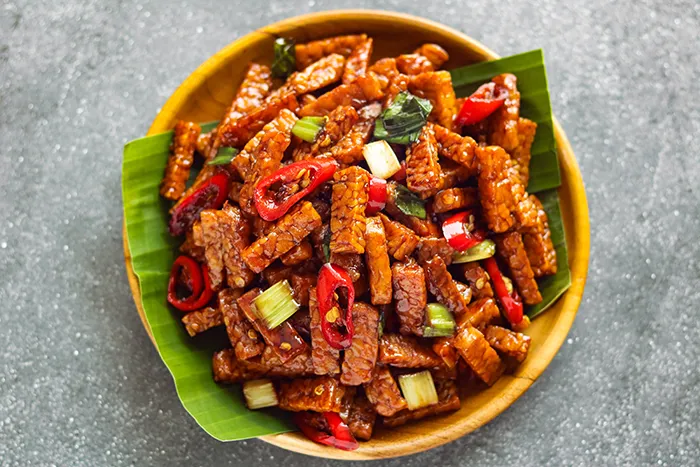
Dishes that feature plant proteins—like this Indonesian tempeh stir-fry—are planetary-health-diet friendly and common in traditional diets around the world.
Ink N Propeller - stock.adobe.com.
A just food system
The commission’s update adds a focus on justice. Why?
WW: As the world’s population expands, we need more labor to produce more food. This is a chance to take a holistic approach that addresses unethical practices in how we produce our food. Right now, there are massive inequalities in the food system, and human rights are not being met. That’s becoming increasingly unacceptable.
What kind of human rights?
WW: Everyone has the right to affordable, healthy, and culturally appropriate food. They also have the right to live in a healthy environment. And everyone has the right to decent work. But food system workers often don’t make a living wage or get benefits like health insurance or paid sick leave.
In what ways does the food system produce inequalities?
WW: The distribution of burdens from the food system is very much like the use of fossil fuels that is driving climate change. In both cases, low-income countries haven’t caused the problems, but they’re experiencing the most extreme consequences.
The diets of the richest 30 percent of the world—particularly their high consumption of meat and dairy—are responsible for 70 percent of the environmental pressures produced by the food system.
Is the planetary health diet affordable?
WW: There is a real cost to eating a healthy diet. Beans, fruits, and vegetables are expensive compared to refined starch and sugar.
But the diet is less expensive than the path that many countries are headed down; one with more red meat and animal-sourced protein.
While cost is a huge issue, we didn’t take income into account when defining the planetary health diet. If we condemn people to a less-healthy diet just because they live in poverty today, that would be an injustice.
Instead, it is the role of governments to help lift people out of poverty and make healthy diets affordable.
So we need more than people just choosing to eat a planetary health diet?
WW: That’s right. Individual choice is important, but we need a culture shift around how people think about food.
We are calling for a great food transformation, which means that the food system has to change from top to bottom. It will require government actions and incentives that make this shift possible. Our future depends on it.
CSPI heavily relies on our grassroots donors to fuel our mission. Every donation—no matter how small—helps CSPI continue improving food access, removing harmful additives, strengthening food safety, conducting and reviewing research, and reforming food labeling. We don't take donations from corporations, and our flagship publication, Nutrition Action, doesn't run any ads. That means that everything we do is fiercely independent and unbiased from any bad actors, no matter how powerful. To help keep this online content 100% free, consider donating today to support CSPI.
Our free Healthy Tips newsletter offers a peek at what Nutrition Action subscribers get—scrupulously researched advice about food of all kinds, staying healthy with diet and exercise, and more.