Farmers markets often have the tastiest, juiciest tomatoes, melons, and other locally grown produce, the most interesting selection of cheeses, and the best-tasting eggs you can find. But what if they’ve been sitting out in the hot summer sun all day? We have answers to questions about what to buy and how to transport and prepare those foods to lower your risk of food poisoning.
Q: Is it risky to buy meat, seafood, or eggs on a hot day?
Not if the vendor keeps the foods cold by packing them in display cases filled with ice or storing them in closed coolers filled with ice. (That’s important on any day.)
And once you buy something, you’re in charge. Try to limit the time it’s left unrefrigerated while you’re walking around the market or on your way home. That’s when foods can linger in the “danger zone”—between 40°F and 140°F—where bacteria like salmonella and E. coli multiply more rapidly and can grow to the levels that cause food poisoning. To play it safe, give yourself a one-hour time limit on hot summer days. For all other days, two hours is the rule of thumb.
Buying your fruits, vegetables, and dry goods first will help. Swing by vendors that sell meat, seafood, eggs, or prepared foods last. That way, you pick up the most perishable items right before heading home to your fridge.
Even better, bring insulated cooler bags for those perishable foods. And keep in mind that the trunk or rear cargo area is likely to be hotter than the rest of the car in the summer. So, if possible, keep food in the air-conditioned cabin for the drive home.
Q: Is it safe to shop with reusable bags?
Mirrorstudio - stock.adobe.com.
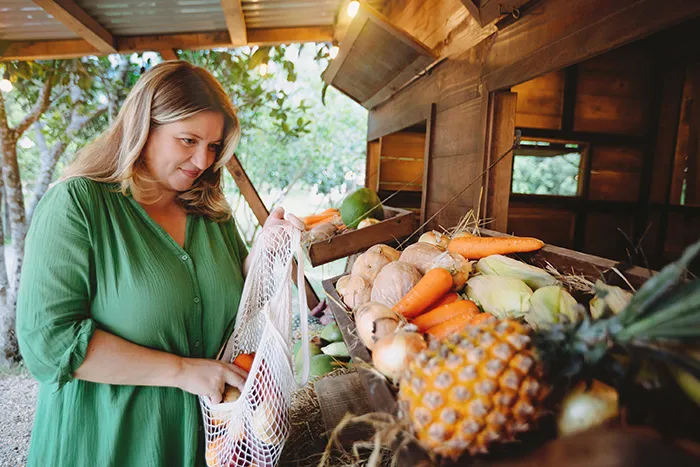
Sure thing. Just come prepared with enough bags to make cross-contamination a non-issue. That means at least one reusable bag for raw meat, poultry, and eggs plus at least one more for fresh produce or other foods that you may not cook before you eat.
It’s also a good idea to wash reusable cloth produce and grocery bags regularly—ideally, after each use—to kill any microbes they may be carrying.
Q: Is it risky to buy bruised ‘seconds’ apples and tomatoes?
Mirrorstudio - stock.adobe.com.
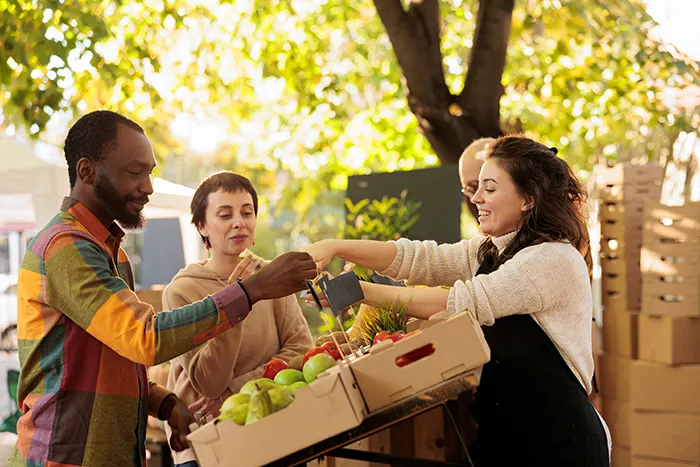
The occasional bruise doesn’t mean that an otherwise-fresh fruit or vegetable has gone bad, just that it’s been damaged slightly. And some “seconds” simply have an odd shape, small size, or other flaw that's purely cosmetic.
That said, produce with more extensive damage may also have cracks or cuts in the skin that could let in microbes. So be sure to cut away brown or soft spots and, when in doubt, “cook those foods,” suggests Lester Schonberger, an associate extension specialist in the department of food science and technology at Virginia Tech. “Make an applesauce or apple butter or tomato sauce.” Or whip up a big batch of chili, soup, or another tomato-based dish that freezes well.
Produce that’s visibly moldy or rotten in spots carries more risks—like the potential for toxins that can make you sick—and shouldn’t be eaten.
You should also avoid produce that grows in trees or up high on stakes that has fallen to the ground, where it can become contaminated with bacteria (like E. coli or salmonella from animal poop) that cause food poisoning. How do you know if that’s what a farmer is selling you?
“As part of farmers’ produce safety training, we tell them that when an apple or tomato falls to the ground, they should leave it on the ground,” says Schonberger. The Food and Drug Administration doesn’t allow farmers to sell those dropped fresh apples or tomatoes directly to the public, but some small farms aren’t covered by the FDA’s rules. To be sure, ask your local farm stand how they select their “seconds.”
Q: Is raw milk from healthy cows safe?
Brian - stock.adobe.com.
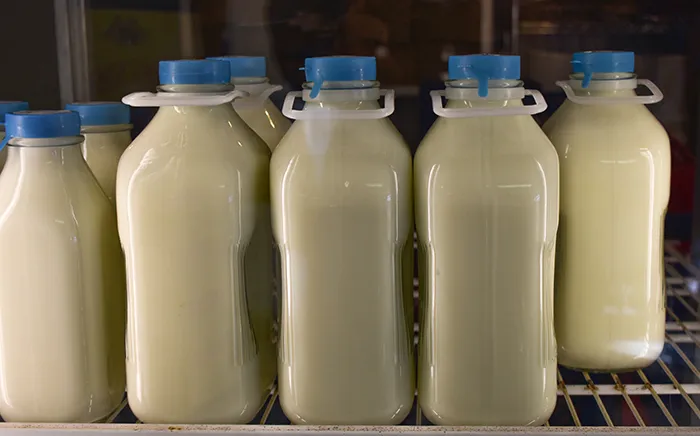
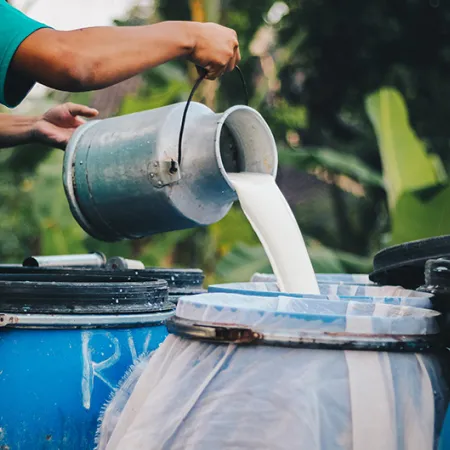
Depending on where you live, you might see raw milk or other dairy products made from raw milk at a farmers market. "Raw" means that the milk hasn’t been pasteurized—that is, heated to a specific temperature for a set amount of time to inactivate viruses like bird flu, parasites like cryptosporidium, and bacteria like E. coli, campylobacter, listeria, brucella, or salmonella. Symptoms of infection can range from diarrhea, stomach cramping, and vomiting to kidney failure or even death.
You may have heard claims that it’s safe to drink raw milk from healthy cows or from farms that carefully clean their milking equipment. Does that make raw milk as safe as pasteurized milk? No. Three reasons why:
Cows can seem healthy but still carry microbes that cause illness.
It’s hard to keep those germs out of milk (even with precautions).
Once milk gets contaminated, germs can multiply quickly.
“Let’s talk about cows,” says Schonberger. “They naturally contain microbes in their guts that can make us sick. Cows will pass those microbes when they poop, and where they poop is right behind where the udder that gets milked is located on that cow’s body.”
Feces can also contaminate cows’ bedding (like hay) and some other areas of the barn. “Farmers do a really good job of keeping spaces that they can control clean,” says Schonberger. “But nature is nature.”
What if the farmer is taking precautions like treating the udder with antiseptic and cleaning their milking equipment? That means “a lower risk of contamination,” says Schonberger, “but it doesn’t mean no risk.” And when contamination happens, “that milk is an ideal environment for those microbes to grow to a level that will make us sick.”
What’s more, good evidence doesn’t support the idea that raw milk is healthier than pasteurized, whether you’re talking about popular claims for immune or digestive benefits or the amount of vitamins and minerals.
Schonberger’s bottom line: “A healthful food isn’t one that’s going to make you sick, and raw milk can make you really sick."
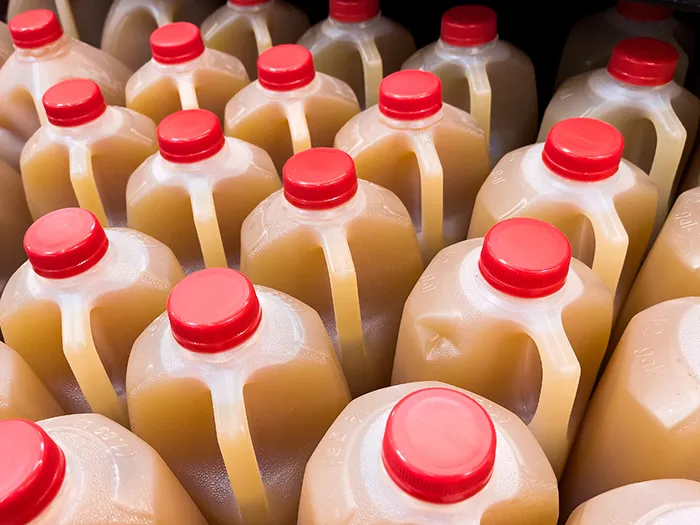
Q: Is unpasteurized juice or cider as safe as pasteurized?
Scott Habermann - stock.adobe.com.
No. Most fruit juice sold in the US at supermarkets has been pasteurized or has undergone “high pressure processing” to kill microbes. Why? Because untreated juice and cider have been linked to occasional food poisoning outbreaks (likely caused by contaminated produce or cross-contamination during juicing). But some farmers markets, cider mills, juice bars, and health food stores sell untreated juice or cider, often with names like “raw,” “fresh-squeezed,” or “fresh.”
Unpasteurized juice or cider must be kept refrigerated and is required to carry a warning label on the bottle, but when in doubt, ask the farmer or vendor how they process their drinks before you decide whether to buy (or sample) them. As the FDA notes, those products can cause serious illness in anyone who is over 65 or under 5, pregnant, or has a weakened immune system.
Q: Do I need to wash fruits or vegetables if they’re organic?
Seventyfour - stock.adobe.com.
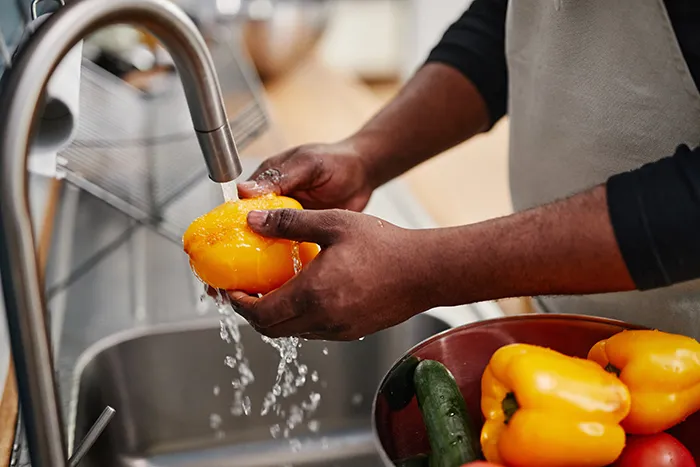
Yes. Rinsing produce under running tap water isn’t just about removing pesticide residues on the surface of a fruit or vegetable. (Organic foods are produced without synthetic pesticides.)
“We’re growing our produce in nature, so there’s a risk of contamination, whether that’s from a bird pooping from a tree branch or a squirrel in the garden,” says Schonberger. “That animal doesn't know the difference between a conventional farm and an organic farm.”
That said, rinsing won’t remove all of the harmful microbes on a piece of contaminated produce, especially if they are tightly bound to the surface or embedded on the inside. But it can get rid of some of them, along with dirt.
The key word is rinsing, not soaking.
“It’s that combination of the running water and friction from rinsing that can help dislodge any remaining dirt that might be on your fresh produce, as well as some of the microbes that may be on there,” Schonberger explains.
What happens if, instead of rinsing, you soak your produce in a big bowl or sink full of water?
“You haven’t washed bacteria away,” says Schonberger. “What you’ve done is create a highway for bacteria to potentially spread from one item of produce to another.” And if you didn’t sanitize your sink immediately beforehand, your produce could pick up any bacteria that may be residing there.
In addition to rinsing, it’s also a good idea to scrub whole cantaloupes with a produce brush. The rough rind’s crevices can trap microbes like listeria or salmonella, which then get transferred to the fruit’s flesh when you cut into it.
CSPI heavily relies on our grassroots donors to fuel our mission. Every donation—no matter how small—helps CSPI continue improving food access, removing harmful additives, strengthening food safety, conducting and reviewing research, and reforming food labeling. We don't take donations from corporations, and our flagship publication, Nutrition Action, doesn't run any ads. That means that everything we do is fiercely independent and unbiased from any bad actors, no matter how powerful. To help keep this online content 100% free, consider donating today to support CSPI.