

Report explores what drives retailers to donate healthy food
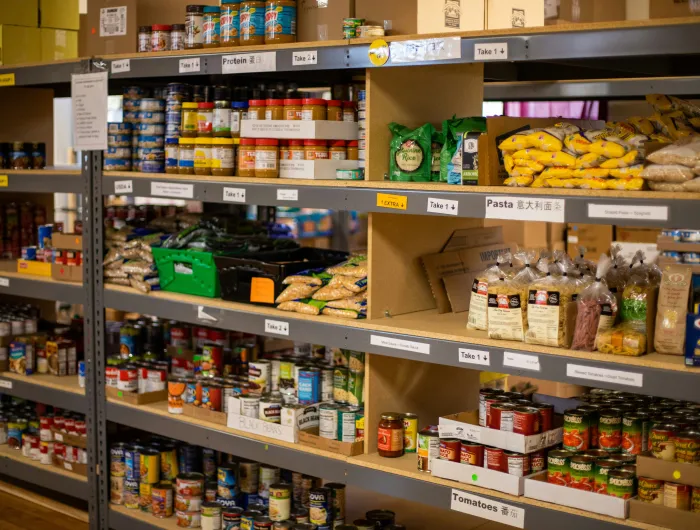
Aaron Doucett - unsplash.com.
Growing corporate focus on sustainability and community impact could help strengthen nutritious food donations
At a time of increasing food prices and cutbacks in federal food aid, a new report from the Center for Science in the Public Interest, Johns Hopkins Bloomberg School of Public Health, and More Than Food Consulting identifies opportunities for grocery retailers and food banks to work together to improve access to nutritious food as the charitable food system faces growing demand and fewer resources.
Due to a shifting federal policy landscape, grocery prices are at an all-time high and food banks lost $1 billion in federal food-purchasing support in 2025. Moreover, Supplemental Nutrition Assistance Program (SNAP) participation has dropped by more than 5 million over the past year, which is having cascading effects, such as fewer children being automatically eligible to receive free school meals. These cuts do not reflect a decrease in need and therefore are placing additional pressure on food banks and pantries. In the DMV area, 74% of Capital Area Food Bank’s partners reported more individuals accessing food at their distributions in 2025.
Food retailers provide around 35% of the food distributed through food banks, making them essential partners in responding to the growing hunger crisis.
The report, Triple Bottom Line: Retail Perspectives on Nutritious Food Donations, draws on interviews with 12 corporate- and store-level professionals across eight grocery companies in the Mid-Atlantic region that are currently donating to food banks. The study found that retailers must balance the “triple bottom line” of profit, people, and the planet while navigating staffing, food safety, and operational pressures that shape what food is ultimately donated.
“At a time when food banks are being asked to serve more people with fewer federal resources, we cannot afford to lose nutritious food to operational barriers,” said Toby Beckelman, MS, MPH, senior policy associate at CSPI, and co-author of the report. “Retailers can make food donation a clear priority, reinforced through mandatory staff training, and use data on surplus food to identify opportunities to increase donations, particularly from perishable departments.”
Researchers found that retailers primarily measure success by the pounds of food donated, and none of the retailers interviewed formally tracked nutritional quality. However, retailers did not view requests for more nutritious foods as a barrier to partnership with food banks. Several reported responding to requests for more produce and proteins, suggesting an opportunity to better align donations with food banks’ nutritional priorities.
“Fresh foods take extra care, and they can’t wait,” said Roni Neff, PhD, Professor, Johns Hopkins Bloomberg School of Public Health. “Retailers told us that they could donate a lot more if pick-ups were more frequent. Investing in such logistics, along with infrastructure like cold storage, is one path to the triple bottom line. Another is making sure staff have the tools to make confident decisions about which items can be donated."
“Retailers want good food to reach communities, and food banks want to provide more nutritious options,” said Katie Martin, PhD, CEO of More Than Food Consulting, and co-author of the report. “Stronger communication, relationship-building, and connecting store staff to the impact of their donations can help turn those shared goals into more healthy food for families.”
The report recommends integrating food donation practices into routine retail operations, increasing communication between food banks and retailers about priority food categories, and investing in the infrastructure needed to safely recover perishable foods. The report also encourages food banks to engage with retailers and policymakers on food waste policies, ensuring that efforts to increase donations support access to nutritious food. Together, these practices can help shift food donation systems beyond a focus on pounds alone and toward improving access to nutritious food.
# # #
Contact Info: Lisa Flores, 202-777-8368 or Toby Beckelman