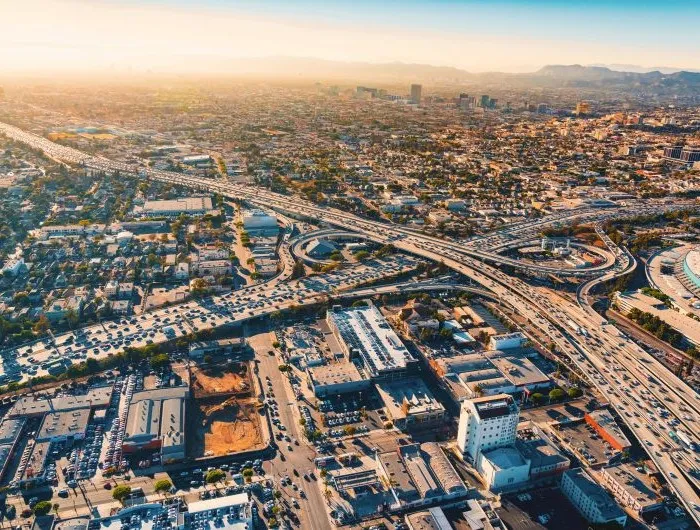
One in four Los Angeles County households have unreliable or limited access to healthy and nutritious food. It’s disturbing to think about that when we consider the amount of wealth and economic output in our region; if LA County were a country, it would have a GDP of $886 billion. My colleagues at the Los Angeles Food Policy Council and our partners in the fight for Good Food know that the issue of food and nutrition insecurity is pervasive and longstanding, but we don’t take it as a foregone conclusion to shrug at, nor do we see it as an unavoidable feature of our market system—there are solutions out there.
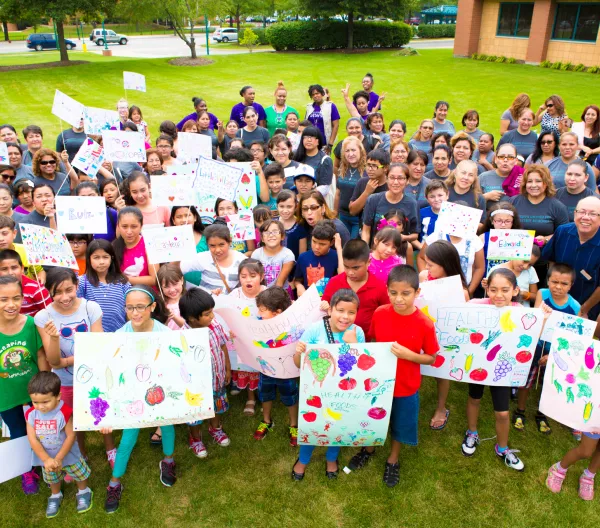
LAFPC has been striving for a more just and equitable food system since 2011. We do this work through collective impact, meaning that we convene over 300 multi-sector stakeholders and connect community-driven movements, public systems, partners, and policy leaders across the greater LA region to develop shared agendas for the change we want to see. Our mission is to ensure that food is healthy, affordable, accessible, fair, and sustainable. Our work centers its focus and intended impact on communities at the front lines of food apartheid, most often low income and communities of color, through the multifold initiatives of our policy and programs teams. Our efforts include working groups, alliances, training and capacity building programs, and community impact initiatives and programs.
Some key milestones across our teams include the 2012 adoption of the Good Food Purchasing Program and establishment of the Healthy Neighborhood Market Network Program, the subsequent establishment of the Center for Good Food Purchasing in 2015, the L.A. County approval of the Urban Agriculture Incentive Zone in 2015, the 2016 LA City motion requiring all Farmers’ Markets within the city to accept EBT benefits, and the 2020 approval of the Good Food Zone Policy which helped establish the current Good Food Zone microgrant pilot program. LAFPC, in its role as a lead convener and support organization, has also strategically developed microgrant initiatives and awarded over $1.5 million in funding to organizations focused on areas including food recovery, food retail, and urban agriculture.
Like the facets of our complex food web, the efforts that happen on the policy side, with our Policy and Coalitions team, and that of our Programs and Innovation team are mutually reinforcing. There are times when shared policy wins or critical gaps and unmet needs identified by our working groups lead to the development of fully formed initiatives like the Good Food Purchasing Program or Good Food Zones. We typically strive to develop initiatives in partnership with other CBOs that are already engaged in work related to the community needs we hope to address, but in some cases, LAFPC will develop and be at the helm of certain initiatives. These initiatives and programs include Healthy Markets LA, Farm Fresh LA, Good Food Zones, and Cultivating Farmers. These programs are diverse in impact and strategies, but are underpinned by our goal to serve as a backbone organization that builds capacity for frontline actors that are rooted in and serve the low-income and communities of color that we prioritize.
In L.A. this means that we are most often building up the capacity of a core part of our food system’s backbone: Immigrants. In Los Angeles, 38% of the population are immigrants, who are disproportionately represented in the food sector from food service to manufacturing. Our Healthy Markets LA program, for example, serves cohorts of 12 neighborhood market and corner store owners each year, and 90% of these entrepreneurs self-identify as immigrants. The corner store is an anchor point in L.A.’s low income, immigrant, and communities of color and we see store owners as partners in the good food mission in neighborhoods where there are no or limited fresh food sources.
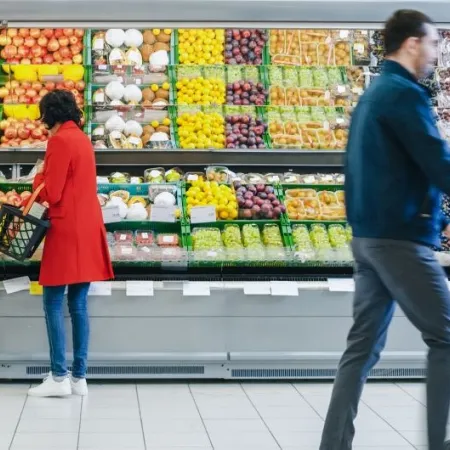
These store owners often raise their own capital and bring expertise from their home countries to establish small businesses that can become pathways for economic resiliency. Healthy Markets LA draws on these existing assets and provides baseline training on foundational food retail practices, invests in equipment and store improvements with funds provided by the City of LA and other partners, and above all, prioritizes the expansion of fresh food inventory in participating stores. The return on investment is inspiring. Some of our store owners start the program with high motivation and experience in the field, but their stores might have faded facades, overdue repairs, and a need for updated lighting and refrigeration, and support with pricing strategies and merchandising plans to begin introducing produce for the first time in some cases. Our team of Program Associates provides consistent one on one support to help enhance these storefronts. What we, the community served by the store, and the store owner share in as the store graduates from Healthy Markets, is often the best version of that corner store. Fresh paint and new signage is added. Brand new displays with varieties of culturally relevant and locally grown produce are on offer. Updated POS systems are in place. Soda alternatives and healthy culturally relevant essentials and snacks line the shelves of brand new refrigeration units.
Moreover, our Healthy Markets stores will sometimes continue on in the pipeline of LAFPC’s Healthy Retail interventions, which include Farm Fresh LA. Farm Fresh LA operates a unique model that functions as a food distribution and nutrition incentive program that reduces food miles and supports our local supply chain. This short supply chain model is made possible through collaboration with our aggregation partner With Love LA and farm partner So Cal Farmers Nepanoliztli. Each week With Love receives over a thousand pounds of fresh produce from the farm collective. They aggregate and pack this produce and deliver it to five store partners, four of whom are Healthy Markets alumni, who then distribute 5-pound bags of produce free of cost to SNAP-Calfresh customers when they spend a minimum of $5 in benefits. Along the way, each partner recoups costs, and store partners are reimbursed at a higher subsidized rate to support their bottom line and operation of the distribution. This program has distributed more than 110,000 pounds of produce since its inception.
When aggressive ICE raids descended upon Los Angeles in June 2025, we were able to count on some of our Farm Fresh LA store partners to respond to the urgent need for a no-questions-asked food distribution for vulnerable, highly impacted immigrant communities. What has resulted is the Canastas del Campo initiative which, modeled on Farm Fresh LA, includes additional grocery staples in each pack of food to address increased food and nutrition insecurity. Immigrant serving organizations and mutual aid groups connect with our team to request food packs each week and have deployed over 3,900 boxes of food throughout Los Angeles. This is the positive, downstream evidence of our collective impact approach. This is a reflection of the resilience and resourcefulness of immigrant food systems leaders and communities in Los Angeles. These solutions are an indication that a brighter food future is possible.
To learn more about the LA Food Policy Council check out our Good Food for All Agenda and follow our work at @lagoodfood on Instagram.