Applebee’s new burgers are a five-alarm fire for your arteries
Applebee's.
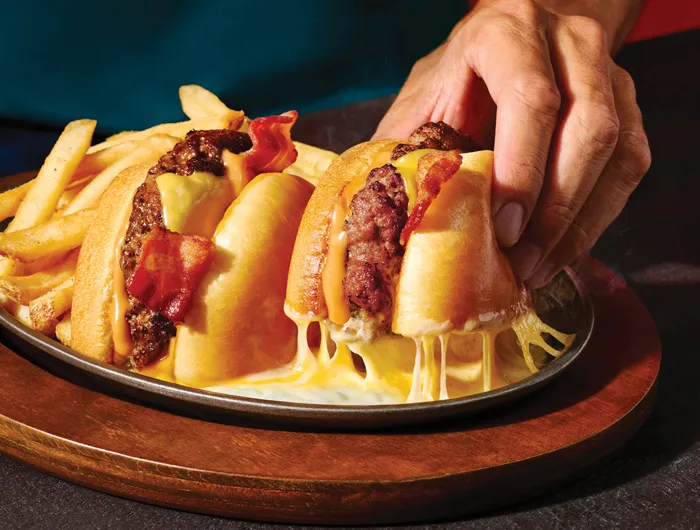
“Calling all cheese lovers!” shouted the January press release. “Applebee’s sizzlin’ start to the New Year just got cheesier with the NEW O-M-Cheese Burger.”
Really? Just five days into the new year and Applebee’s had already launched a limited-time bacon cheeseburger with fries that’s served in a skillet of melted cheese. Gulp!
Then came another press release in April: “Now Even Cheesier: Applebee’s Adds MORE Cheese to O-M-Cheese Burger for $11.99.”
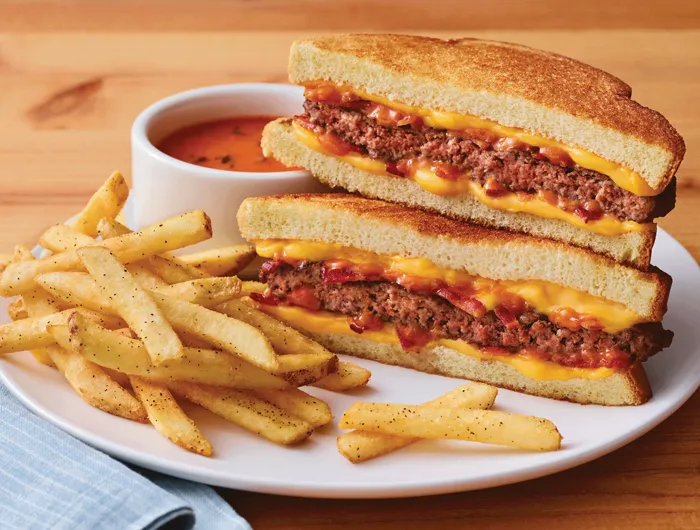
On top of that, Applebee’s offers more, um, innovative ways to pile on the cheese and salt—there’s also a “Grilled Cheese Cheeseburger” on the chain’s menu.
Here’s how much unhealthy fat and sodium those burgers rack up, plus a look at how different restaurant chains’ cheeseburgers compare.
This article comes from Nutrition Action. We don’t accept any paid advertising or corporate or government donations. Any healthier alternatives we recommend have been vetted by our staff and are not advertisements by the manufacturers. They’re just foods we think you’d like to know about!
What’s in Applebee’s O-M-Cheese Burger and the Grilled Cheese Cheeseburger
“Served in a sizzling skillet of molten queso and a blend of Cheddar cheeses, Applebee’s NEW O-M-Cheese Burger features a juicy, all-beef burger topped with American cheese, Applewood-smoked bacon, spicy honey mustard, and served with classic fries,” said Applebee’s.
If you eat all 1,900 calories’ worth of food in the skillet, the total comes to:
50 grams of saturated fat (2-1/2 times the daily recommended maximum)
3,950 milligrams of sodium (more than 1-1/2 times the daily max)
But even those sky-high numbers don’t tell the whole story. Consider the unhealthy ingredients. Nearly all the calories come from red and processed meats (beef and bacon), cheeses (American cheese, queso, and shredded cheese), white flour (the brioche bun), and deep-fried white potatoes (the fries).
That sounds a lot like the ingredient list for Applebee’s 1,610-calorie Grilled Cheese Cheeseburger. Its beef patty is “stacked with four slices of American cheese and our tangy bacon sauce on toasted potato bread,” according to Applebee’s.
Applebee’s Grilled Cheese Cheeseburger entrée has nearly twice as much sodium as adults should consume in an entire day.
Applebee’s.
That’s not all it’s stacked with. The burger and cheese alone supply 2,640 mg of sodium—340 more than the recommended max for a full day! Then there’s the double dose of salty sides: fries (1,000 mg) and tomato basil soup “for dipping” (590 mg).
All told, you’re looking at 4,230 mg of sodium—enough for today...and most of tomorrow. The same goes for the 35 grams of saturated fat.
How do the Applebee’s burgers compare to other cheeseburgers?
Not counting the fries, an O-M-Cheese Burger (plus the molten cheesy goo it’s swimming in) will set you back 1,500 calories. That’s the caloric equivalent of five McDonald’s cheeseburgers. And even the Grilled Cheese Cheeseburger has 1,130 calories without its side of fries or dipping soup.
Here’s why. McDonald’s is no purveyor of health food, but most fast-food burgers are far smaller than the thick patties at “casual dining” (sit-down) restaurant chains like Applebee’s. Even a Quarter Pounder with Cheese (520 calories) or a Big Mac (580 calories) has less than half the calories of an O-M-Cheese Burger.
One fast-food exception: Five Guys. Its Cheeseburger (980 calories) comes with two patties. Even its single-patty Little Cheeseburger (610 calories) tops a Big Mac.
At Applebee’s and other chains like it, big burgers are the norm. Take some of Chili’s cheeseburgers (without fries) for example:
Chili’s Oldtimer with Cheese: 850 calories and 23 grams of sat fat (a full day’s max)
Chili’s Bacon Cheeseburger: 1,130 calories and 31 grams of sat fat (1-1/2 days’ worth)
Chili’s Double Big Smasher Burger: 1,490 calories and 44 grams of sat fat (2 days’ worth)
Chili’s Bacon Rancher Burger: 1,710 calories and 50 grams of sat fat (2-1/2 days’ worth)
In fact, the Bacon Rancher Burger—with its two big beef patties, its cheese, and its six slices of bacon—manages to cram in as much saturated fat as Applebee’s O-M-Cheese Burger. Sheesh!
Why cheeseburgers matter for climate change
The big-burger trend isn’t just a threat to our arteries. It’s also bad news for our overheating planet. That’s because producing a serving of beef releases far more greenhouse gases than producing a serving of chicken, turkey, pork, seafood, or beans.
Diets that are healthy for people and the Earth can have room for small amounts of red meat, but the servings are modest…something an Applebee’s O-M-Cheese Burger or Grilled Cheese Cheeseburger clearly isn’t.
Is saturated fat from red meat and cheese good or bad?
We’re glad you asked. Maybe you’ve seen the new Dietary Guidelines’ harmful advice to eat more meat and prioritize full-fat dairy foods (like cheese). That’s not based on an objective look at the science. The best way to keep your heart healthy is to follow the longstanding evidence-based advice to limit saturated fat to less than 10 percent of your calories—that translates into roughly 20 grams a day if you eat 2,000 calories—and to replace saturated fats with polyunsaturated fats, like those found in nuts, seeds, and vegetable oils.
For more details, see our answers to common questions about whether saturated fat is good or bad.
Tips on ordering healthier meals at restaurants
Tips vary from cuisine to cuisine, but at any restaurant, you can probably find ways to replace red meat, pump up the vegetables, shave off some sodium, and save some of your oversized portions for tomorrow. Here’s what to consider.
CSPI heavily relies on our grassroots donors to fuel our mission. Every donation—no matter how small—helps CSPI continue improving food access, removing harmful additives, strengthening food safety, conducting and reviewing research, and reforming food labeling. We don't take donations from corporations, and our flagship publication, Nutrition Action, doesn't run any ads. That means that everything we do is fiercely independent and unbiased from any bad actors, no matter how powerful. To help keep this online content 100% free, consider donating today to support CSPI.