Is it time to rethink what we know about collagen for skin aging? Some experts have come around on the controversial supplement, but the science isn’t settled. Here’s where the evidence stands.
What is collagen?
Collagen is one of the most abundant proteins in our bodies. It provides the structure that holds our tissues together. “And in skin, it adds bulk and plumpness,” says Michelle Wong, a chemist and the author of “The Science of Beauty.”
“Our natural collagen production declines in our mid-20s and continues to drop with age, especially after menopause,” says Debra Jaliman, a cosmetic dermatologist and assistant clinical professor of dermatology at the Icahn School of Medicine at Mount Sinai. When that happens, skin gets thinner and less supple, leading to signs of aging like fine lines, wrinkles, and sagging.
For years, plastic surgeons injected collagen into patients’ faces to reduce wrinkles and plump up skin. (Many patients had allergic reactions, and practitioners now use other substances, like the filler hyaluronic acid.)
What about collagen pills or powders? Oral collagen products haven’t been approved by the FDA for cosmetic benefits (or for any other use), and the jury’s still out on whether they can improve the look and feel of your skin. If they do work, it could be due to a compound you’ve likely never heard of.
Like all proteins, collagen is made up of a chain of amino acids. But unlike most of the other proteins in our bodies, “collagen contains a unique amino acid called hydroxyproline,” says Wong. As it turns out, more than 99% of the hydroxyproline in our bodies is locked away in our collagen. And collagen’s monopoly on hydroxyproline may matter.
How might collagen supplements work?
When you take a collagen supplement, small fragments (known as collagen peptides, hydrolyzed collagen, or collagen hydrolysate) pass into your bloodstream intact. While those fragments don’t provide the building blocks for your body to make more collagen (a common misconception), they may act as a signal to build new collagen.
That’s where hydroxyproline comes in. Since it’s found almost exclusively in collagen, “your body may detect the hydroxyproline-rich fragments from the supplement and think your own collagen is breaking down, prompting your body to build more,” Wong explains.
If that’s the case, can’t you just eat collagen-rich foods like brisket, chuck roast, skin-on fish, or tripe?
“The collagen in food and the collagen in supplements aren’t equivalent,” says Wong. Supplements are typically hydrolyzed, which means that the collagen has been broken into fragments that are easy to absorb. Non-hydrolyzed collagen (the form in food) is absorbed to a lesser degree.
So why do some hydrolyzed collagen supplements seem to outperform others? Different brands “chop up the collagen to different degrees,” Wong explains. “So you may not absorb some as well as others.”
Do collagen supplements reverse skin aging?
Studies on collagen’s effects in people have had mixed results, says Jaliman. “Some trials showed small improvements in skin hydration, elasticity, and fine lines with collagen supplementation.” Others didn’t.
In an analysis of 14 randomized trials that included 967 adults (mostly women), participants who took 1 to 10 grams a day of hydrolyzed collagen saw moderate improvements in skin hydration and elasticity and slight improvements in wrinkles after 4 to 12 weeks compared to those who took a placebo.
(Heard about another analysis that concluded that collagen has no impact on skin aging after you account for the fact that some of the studies were funded by the supplement industry? Though tantalizing, the analysis contains errors, including misclassifying an industry study as an independent study.)
It’s worth noting that the benefits shown in collagen trials appear modest, at best. And that’s if we take the evidence at face value…which we probably shouldn’t.
Many studies are industry sponsored. (While that’s no guarantee of shoddy science, it does warrant skepticism.) What’s more, the studies test collagen products that vary in how well they’re absorbed. That makes it hard to glean anything from the shaky evidence base.
“The evidence on collagen is so much weaker than it is for topical skincare ingredients like sunscreen, vitamin A, and vitamin C,” says Wong. So if you aren’t already using those—which are known to work well for fine lines, wrinkles, and skin discoloration—there’s little sense in gambling on an unproven, poorly regulated supplement like collagen.
Is a collagen supplement worth it?
The evidence of benefit is strongest for middle-aged and older women. Why? “Because most of the research has been done in that population,” says Jaliman.
If you’re under 30 and want to start an anti-aging skincare regimen, sunscreen, a vitamin-A-based cream, and a vitamin C serum or cream are the way to go. The evidence for those is better, as is the cost. “They’re going to give you much better returns,” says Wong. A daily dose of collagen peptides “could cost as much as a couple of dollars, which is expensive for a supplement,” she points out.
But let’s say you’re in your mid-30s or older and are already doing the basics. If you still want to give collagen supplements a try, pick a low-molecular-weight (more-hydrolyzed) form. (For example, some supplement brands use Verisol, a proprietary low-molecular-weight collagen.) And take at least several grams a day: Most studies that saw anti-aging benefits used between 2.5 grams and 10 grams for at least 8 weeks, Jaliman notes. (Collagen powders that you mix with liquid are more likely to contain a dose in that range than will a collagen gummy or pill.)
And give it time. “Benefits tend to appear gradually over several months,” says Jaliman. Also, keep in mind that if you see any changes at all—and you may not—they’re likely to be subtle.
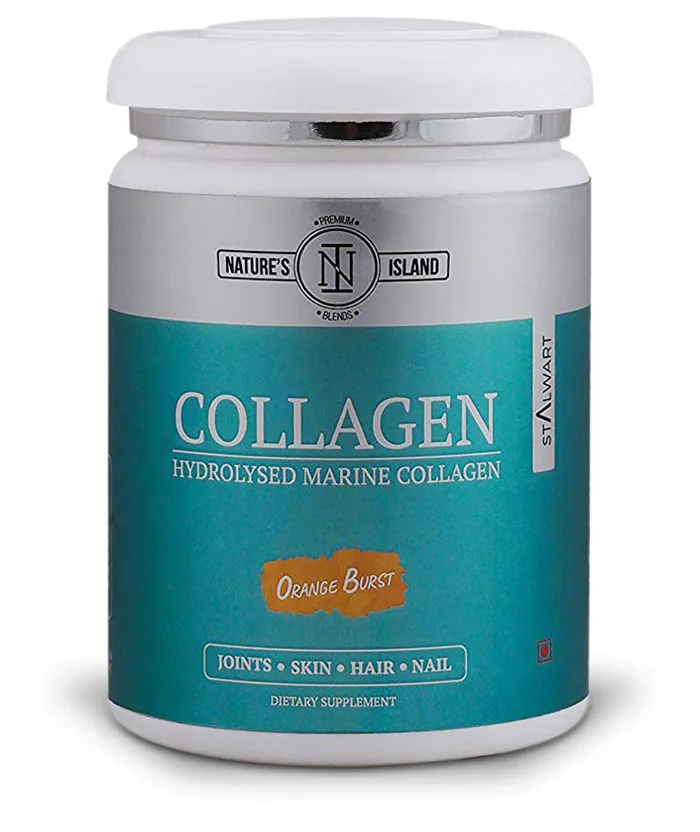
Nature's Island - Wikimedia Commons.
Are collagen supplements safe?
As with pretty much any supplement, collagen comes with risks. “Supplements aren’t tightly regulated,” Jaliman cautions, and products could contain impurities or have inaccurate labeling.
People with fish or shellfish allergies should avoid fish-based collagen. Likewise, those with alpha-gal syndrome (caused by bites from the lone star tick) may react to collagen that’s derived from beef or pork. A supplement’s label should list its source, like bovine (cow), porcine (pig), or marine (fish). (Note: Collagen isn’t vegetarian, though new, less-studied plant-based alternatives are entering the market.)
Collagen supplements can also come with side effects. “Some people experience bloating, fullness, heartburn, or nausea,” says Jaliman. Rarely, others have reported developing rashes or headaches.
If you decide to try a collagen supplement, choose one that carries a quality assurance seal from NSF, ConsumerLab, or USP. That means that the supplement’s contents match its label and it’s free of tested contaminants. (Whether the supplement works is a separate question.)
Bottom line
“Collagen supplements are not a miracle anti-aging treatment, but they may provide subtle improvements, particularly in skin hydration and elasticity, for some people,” says Jaliman. If you want to give collagen a try, use it alongside—not as a replacement for—sunscreen, sun-protective clothing, topical vitamin A and vitamin C products, a healthy diet, and not smoking. “There’s much stronger evidence for healthy skin aging with these than there is with collagen.”
CSPI heavily relies on our grassroots donors to fuel our mission. Every donation—no matter how small—helps CSPI continue improving food access, removing harmful additives, strengthening food safety, conducting and reviewing research, and reforming food labeling. We don't take donations from corporations, and our flagship publication, Nutrition Action, doesn't run any ads. That means that everything we do is fiercely independent and unbiased from any bad actors, no matter how powerful. To help keep this online content 100% free, consider donating today to support CSPI.
Our free Healthy Tips newsletter offers a peek at what Nutrition Action subscribers get—healthy recipes, scrupulously researched advice about food of all kinds, staying healthy with diet and exercise, and more.