This is a Text element. This text style is called Intro. Your Intro text should be short, descriptive, and easy to understand.
On-page SEO overview: This is a heading (H2)
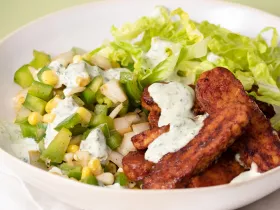
To the left is a left-aligned image. When creating text for your new landing page, spend some time thinking about what users might search in order to find it. This is the basic premise of Search Engine Optimization, which is the art/science of predicting what phrases or questions users will Google to find your content. SEO works by positioning phrases that are important to the content and context of your work, like "GMO foods" or "Crumbl Cookie," in key areas of a webpage so search engines can understand what your content is about. The two articles linked in the previous sentence receive high volumes of traffic from search because they are valuable content that readers will search for, and they both have optimal keyword placement in key areas.
It's confusing and a little overwhelming. Here's a slightly deeper dive into on-page SEO, which will also serve as an example of an embedded video (hosted on YouTube).
Tips for helping new readers find your page (and an example of H3 formatting)
The clearer your content's subject and audience are to Google, the better your page is positioned in search results. Keywords and keyword phrases should be in your page title (or Heading 1 or H1, which for this page is "Elements gallery: Landing page"), any subheadings (labeled H2 and H3 above), and in intro text (at the top of this Text Element) and the first paragraphs of your text.
Before you submit your copy to Comms for page updates or new page builds, try pasting it into this free SEO Review Tool, which will check your content against the list of important keywords you provide. (For unpublished content, the maximum score is 89 points.) You cannot upload or paste images into the reviewer, but you can and should format your page title, headings, and links to make sure the tool is gathering as much data about your future webpage as possible.
Write naturally and don't force it. "Overstuffing," or cramming as many keywords as possible into every piece of text on your page, is as bad as not prioritizing those keywords. That's because Google flags overstuffed content as potential spam, and ranks it lower in search results. When in doubt, just reread and ask yourself if you can rephrase in areas of keyword overuse. Synonyms and related terms–like using "food additives" and "food chemicals" on the same page–can help readers who do not know the precise terms find your content anyway.
This is an Ordered List. Just another formatting option for your Text Element!
Formatting and visual options to consider (H3)
To the right is a right-aligned image. We can also center images across the page, which you'll see below We cannot change the sizes of images in this field, though, so what you see here is what you'll get when you choose to include inline images inside a Text Element.
Immediately following this paragraph is a green Horizontal Rule. Horizontal Rules can help divide long portions of text into smaller, clearer bits of information for readers.
We can format text here the same as any text module: embedded links (with hover text!), bo
ld, italics, underline, strikethrough, superscript, and subscript all work.
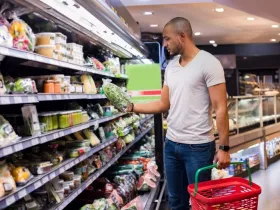
Vergani Fotografia - stock.adobe.com.
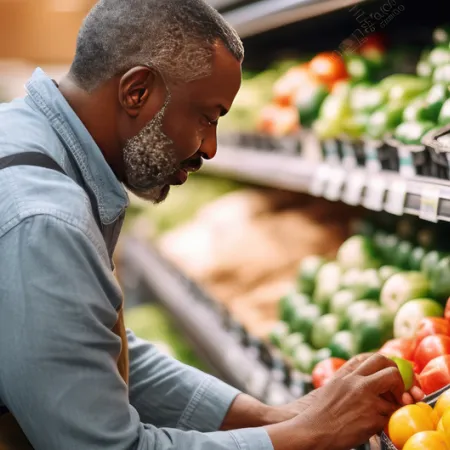
The happy person shopping above is a center-aligned image. Note that this is the maximum width of visual elements inside a Text Element. Also note that all images have a photo credit. If you are supplying images for your new landing page, please ensure that you have permission to use them and that you are crediting them to their creators appropriately.
This is a blockquote. Blockquotes highlight important quotes or language in your text, and can help readers identify key points even if they are only scanning your page.
Do you have a table of information that you'd like to place here? The good news is that we have the technology. There is no bad news.
This is the Table Caption
Your table heading goes here.
And/or here. You choose!
Your data go in these fields
And so on
and so forth
etc
etc.
We can add as many rows as you like
or more columns as needed.
Do you need a larger, prettier table that isn't confined to a Text Element? Great news: We have that technology, too, and we use it for Chemical Cuisine, the Caffeine Chart, and many other pages on the site. When requesting an update or new build, just let us know you'd like a Table, and include all the info you'd like to populate it.
Final thoughts on landing pages (H2)
Though the Text Element is flexible and functional, a giant wall of text can be very offputting to readers. When possible, utilize the other Elements demonstrated below to make sure you're not losing visitors' interest.
These following Elements can be arranged in any order on a landing page. You can use more than one of the same Element, too. While there are no word limits inside most Elements, be conscious of how much text you're adding, as longer paragraphs will increase the size of an Element. Note also that some Elements require specific information, so you'll need to provide Comms with that info when requesting an update. And above all, have fun! Improving the interactivity and visual appeal of your landing page is fun for us, it's fun for readers, and it makes your page more effective.
This is an Accordion (and this is an Accordion Title)
Accordions expand and contract. These are great space-savers for a large amount of text. (This field is called Accordion Description.) This field cannot format as bold, italics, underline, support embedded links or media. You get plaintext only here.
Body: Accordion item 1
This module is excellent for FAQs! Each question becomes a title, and the answers become the bodies nested below the questions. We can format text here the same as any text module: bold, italics, underline, strikethrough, superscript, and subscript all work here. We can now embed links in the text of an Accordion or add images to the body of an Accordion item. Tables inserted here will be formatted as below; we cannot change this.
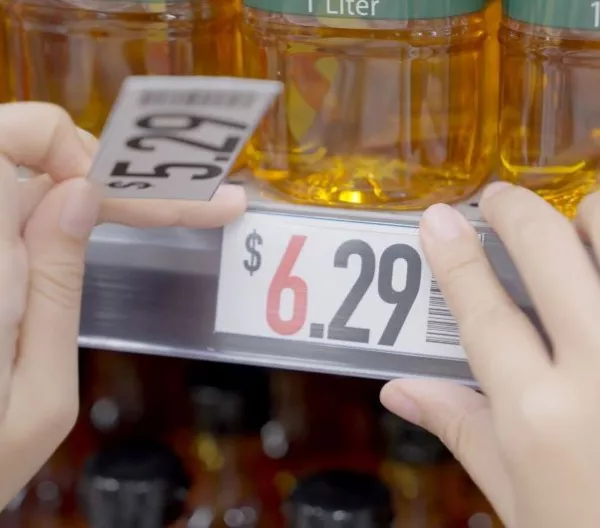
Discount
A reduced-price offer
Food additives are substances added to foods to serve some function in the food, like preventing mold growth or changing color, consistency, texture, taste, or appearance. Additives can be single chemicals or mixtures of many chemicals and they can be natural or synthetic. Here's an embedded link.
Note: the term “food additive” has a specific definition in US federal regulations, but we are using the term in the more generally accepted usage as defined above. As such, our definition of “food additive” includes not just substances defined in regulation as food additives but also includes so-called prior-sanctioned substances (essentially additives used prior to 1958), color additives, and substances that are “generally recognized as safe” or GRAS, each of which are functionally equivalent to food additives. Federal regulations also use the term “additive” to refer to substances used in food packaging and other food contact materials that can migrate into our foods. Currently, Chemical Cuisine only includes substances that are added to food directly.
Great question!
This is a Card Grid with Captions
A Card Grid with Captions can help distill lots of info into smaller, bite-sized pieces with visual impact. We can build three across a page, and as many rows of Cards as you like.
Card Description -- this is the Caption. For each Card, you'll need to provide 1) an image (if you have a specific one in mind), 2) the copy you want to see in this Description, 3) a URL the button below links to, and 4) your preferred text for the button ("learn more" in this example). We cannot add bold, italics, or other text formatting to this field.
Make sure your Titles and Descriptions are doing the work of conveying important information to readers. The health impact of saturated fat (including dairy fat) is a key concern among the nation’s foremost health authorities. Here are common myths and facts you should know about dairy fat. (Card 2 Description)
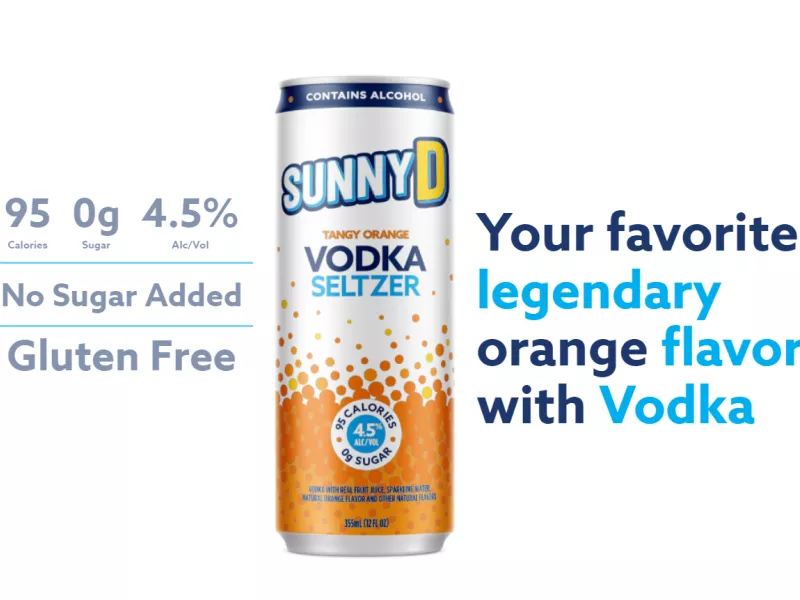
Use strong keywords in Titles and Descriptions. Juice and soda companies like Mtn Dew, SunnyD, and Simply are making versions of their beverages with alcohol. Here's why their marketing matters for consumers, and how federal agencies can do a better job of keeping alcoholic beverages out of kids' hands.
This is a CTA Panel Description. CTA means "call to action." You should provide the text for each field labeled here, as well as 1) the URL of the page you'd like to link to, 2) text for the link button, and 3) an image if you'd like one. (Images are not required.) This box can be GREEN, BLUE, or YELLOW; please indicate your preference.
(Description) CTA Panels without images stretch the full width of the page, but the text is a narrow field. Please provide an Eyebrow (optional), Title (mandatory), Description (mandatory), and a preference for color. This example is BLUE, but you may also choose GREEN or YELLOW.
Slim CTA panels stretch the text into a wider field, and are much more compact than standard CTA Panels. (See "Donate to CSPI" on our homepage for another example.) This one is GREEN. Please provide text and information for all labeled fields.
“"Bone cells are extremely responsive to gravitational force. So exercise in the upright position is critical for bone health. Swimming or biking isn’t as good as doing something in a standing position." (Impact Story Quote)”
Bess Dawson-Hughes, Tufts University (Attribution)
Understanding the new bioengineered disclosure (Title)
Promo Splitter Body: This version has a right-aligned image. We can format text here the same as any text module: embedded links (with hover text!), bold, italics, underline, strikethrough, superscript, and subscript all work here, as do bulleted lists:
GMO (bioengineered) foods currently available are safe. According to the National Academy of Sciences and the FDA, eating them poses no risk to your health.
Many foods will now have to disclose that they contain “bioengineered” ingredients.
Disclosing “derived from” ingredients is voluntary.
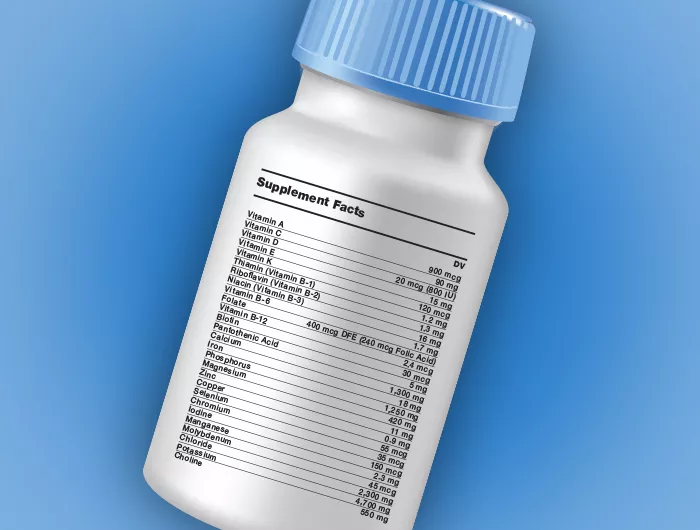
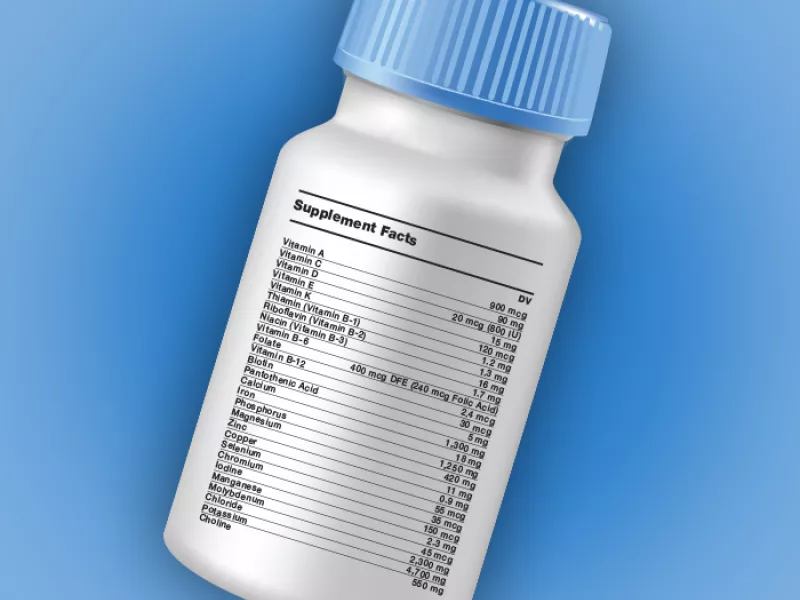
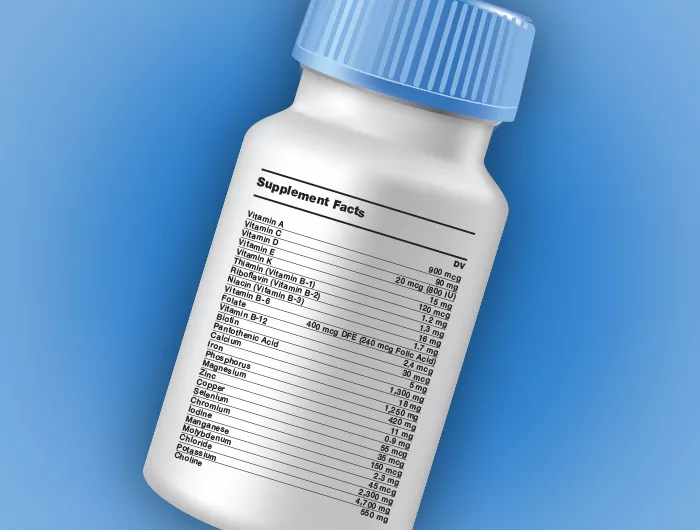
Restaurants, “very small” companies, most alcohol, and foods with meat, poultry, or eggs as a major ingredient aren’t required to disclose bioengineered ingredients. The disclosures are required on supplements.
Think of this as a more compact Text Element. It works the same way as the Text Element at the top of this page, with one limitation: We cannot add images or video to this Element. We can format text here, though: embedded links (with hover text!), bold, italics, underline, strikethrough, superscript, and subscript all work.
This is a Three-Up Publication (Title)
This is a Three-Up Publication Description. Eyebrow and Sub Text are OPTIONAL. URLs and Titles for each publication/page are MANDATORY. Briefly describe the relationship between these three pieces of content and why it matters to your audience: The FDA knew in 1990 that Red 3 causes cancer, yet they still allow food manufacturers to add it to any foods they like. Here's what you should know.
People can be added individually to this list. Please provide a Title and Descripton (text for this field), as well as the list of staff you'd like to feature and the order in which they should appear below. (There does not appear to be a limit to the number of people we can add.)
Anupama Joshi (she/her/hers) leads CSPI’s program strategy on national, state, and local policy advocacy; legislative campaigns; and regulatory affairs to support equitable access to healthy, affordable, and sustainable food. She oversees projects on a wide range of issue areas such as school nutrition, healthy food access, food retail, food service guidelines, pouring rights, labeling, corporate engagement, food safety, additives, dietary supplements, and agricultural biotechnology.
Jeff Cronin is Director of Communications for CSPI. He is responsible for maintaining CSPI's high profile in the news media, for its web site, and for publicizing the group's reports, studies, and Nutrition Action Healthletter.
Lisa Flores (she/her/hers) handles press inquiries, tracks CSPI related media, manages press lists, updates the website, and assists the Communications Team in everyday tasks.
Marian Manapsal (she/her/hers) oversees digital strategy and execution of CSPI’s paid and organic digital efforts on email, website, social media, and digital advocacy in connection with CSPI’s program activities and Nutrition Action.
Adrienne (she/her/hers) is the primary writer and editor at CSPI, tasked with building the newsroom that connects CSPI's advocacy, programming, and policy work to NutritionAction's deep archives of food and health research for readers.
Zachary Goldstein (he/him/his) works with the Communications team to write, edit, and produce articles and other multimedia content for cspinet.org. He also supports improvements to website user experience, tracking of editorial content performance, and updates to subscriber content.
Niamh (she/her/hers) leads and implements CSPI’s email advocacy strategy and develop, code, and deploy day-to-day operations of our email advocacy program. She also implements and optimizes our broadcast SMS program and serve as the main liaison with the Engagement Team on mass emails promoting their work and helps integrate a stronger email portfolio across the Healthy Tips/NA email verticals.
Parker (he/him/his) leadings and implements CSPI’s social media strategy and management of daily operations of CSPI’s social media channels, including identifying and promoting engaging content from Program teams, grantees, and coalition partners. In addition, he serves as lead for the video workgroup to brainstorm video content ideas, write scripts, and train colleagues on video best practices, and assists with digital asset management.
Caitlin Dow (she/her/hers) writes for CSPI's flagship publication, Nutrition Action, addressing the evidence on the latest health trends. Caitlin reviews the science related to nutrition, dietary supplements, exercise, sleep, sustainability, and more.
Art Director and Chief Designer for Nutrition Action
Jorge Bach (he/him/his) designs Nutrition Action and most other CSPI visual communications.
Contact Promo (Body) - A Contact Promo is a way to add a single Person (with a published Person page) to a page with additional information. Unlike the Bio Slider above, we can add only one Person to a Contact Promo.
Peter Lurie (he/him/his) has been President and Executive Director of CSPI since 2017.
Card Grid with Slider (Title)
(Description) Cards can be a useful way to link to multiple pages of content. Cards are arranged in groups of three across the width of a page. We can add an unlimited number of Cards. For the Slider, you'll need a Title and Description.
For each Card, you'll need Eyebrow (OPTIONAL), Title (MANDATORY), Image (MANDATORY), Description (OPTIONAL), and a URL or Referenced Content (MANDATORY).
(Description) List Links can collate large groups of content into a visually appealing list. You can link to articles (on CSPI or elsewhere) or to files (like PDFs).
Vegetables are superstars. Nearly every diet—from Mediterranean to Paleo to Weight Watchers to DASH—wants a piece of them. Think you know your veggies? Some of these 10 things may surprise you.
(Description) - A Promo with Link List lets us attach pieces of content to a larger amount of related text. Here is a great place to explain an issue and link to relevant pieces of content in one module. We'll use titanium dioxide as an example here. The text field does not contract if your text doesn't meet the bottom of the link list at right, so be sure you're filling up this space!
In 2021, the European Food Safety Authority concluded that titanium dioxide is no longer safe in foods due to the same concerns over nanoparticles. As a result, titanium dioxide is now banned as a food additive in the EU. Although studies have shown that the absorption of ingested titanium dioxide is low, evidence suggests that titanium dioxide nanoparticles can accumulate in the body over time. Health Canada deemed it safe in 2022 but noted concerns. Unlike their European counterparts, Canadian officials did not consider studies performed with titanium dioxide nanoparticles alone.
“Unlike some other chemicals used in food, titanium dioxide has no nutritive, preservative, or food safety function—its use is purely cosmetic,” said CSPI principal scientist for additives and supplements, Thomas Galligan. “The prospect of titanium dioxide nanoparticles damaging DNA is concerning enough for us to recommend consumers avoid foods that have it.”
Two-Up Builder CTA PANEL Description - You will need a link (URL) for each CTA PANEL in your two-up builder (you can also do one CTA PANEL and one LINK LIST, or two LINK LISTS), along with the text you would like on the link button. OPTIONAL components include an Eyebrow, Title, Description, Image, and color preference for each of the two components. These can be BLUE, YELLOW, or GREEN.
A LINK LIST is exactly what it sounds like. This component can only link to content published on CSPI. We can use a MANUAL list (you pick the CSPI content you want to include) or a DYNAMIC list (you choose the TOPIC or TAG, and this component will populate with the most recent content in that category). You should limit your MANUAL list to 3-5 links, as this component, as well as the other part of the two-up builder will stretch vertically to contain the full list, and sometimes that means a CTA PANEL will look wonky beside a very long list of links.
As each new month arrives, it’s fun (and healthy!) to consider creative ways to incorporate seasonal produce into your routine. These peak-ripeness fruits and veggies are often grown closer to where you’re buying them, and for a variety of reasons, in-season produce can be more affordable than its hot-house or imported counterparts.
Groceries are expensive enough, and Trump's tariff plans will likely raise food prices even more, making it increasingly difficult for Americans to afford healthy food. Tariffs will not make America healthy again.
It's in our name. And we're working to bring evidence-based solutions to federal and state nutrition, food safety, and health policies, and fight health misinformation from every angle. Help us achieve our vision of thriving communities supported by equitable, sustainable, and science-based solutions advancing nutrition, food safety, and health.